Why Does My Car Shake When I Brake? Common Causes From Rotors to Calipers
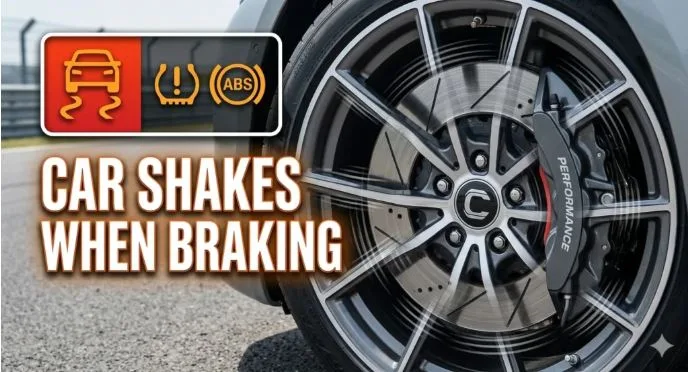
Nothing shatters the illusion of a smooth, relaxing drive quite like an aggressive, violent shuddering sensation the moment you gently press your foot against the brake pedal. When you apply the brakes, you fundamentally expect a swift, confident, and perfectly linear deceleration. If, instead, you are terrifyingly greeted by a steering wheel that vibrates feverishly in your hands, a brake pedal that aggressively pulses and kicks back against your foot, or a whole-cabin judder that makes the entire dashboard shake, your vehicle is urgently attempting to communicate a highly critical safety failure.
Your braking system is unequivocally the single most important safety mechanism equipped on your automobile. While massive horsepower and sleek aerodynamic styling are wonderful features, the absolute ability to bring a two-ton metal projectile to a complete, controlled stop in a fraction of a second is all that actively prevents a catastrophic collision. Ignoring a shaking brake system is not merely an annoyance; it is a profound safety hazard that severely compromises the vehicle’s stopping distance and high-speed stability. In this extensive guide, we will dive deep beneath the wheel wells to thoroughly explore the underlying mechanical anatomy of your braking system. We will critically examine the most common, frequent culprits behind brake judder, ranging from completely warped rotors to stubbornly seized hydraulic calipers, and we’ll explain how to find a highly trustworthy Auto Mechanic Toronto to safely resolve these deeply concerning issues.
The Fundamental Anatomy of Disc Brakes
To truly understand why your vehicle is violently vibrating, you must first possess a basic, working knowledge of how modern disc braking systems actually function. Behind almost every wheel on a modern vehicle lies a heavy, circular, cast-iron disc known as the brake rotor. The rotor spins simultaneously with the wheel. Straddling the outer edge of this spinning rotor is a heavy metallic clamp called the brake caliper. Safely nestled securely inside the caliper are the brake pads, which feature highly specialized, heat-resistant friction material. When you assertively press down on the brake pedal inside the cabin, you are actively pushing specialized hydraulic brake fluid forcefully through tight steel lines down to the calipers. This pressurized hydraulic fluid forces the caliper pistons to squeeze the brake pads tightly against both sides of the rapidly spinning cast-iron rotor. The immense, sheer physical friction generated by this aggressive clamping action is what physically slows the rotational speed of the wheel down, effectively converting the massive kinetic energy of your moving vehicle rapidly into extreme, blistering heat.
When everything is functioning as designed, this clamping action is perfectly uniform and smooth. The terrifying shaking only begins when a critical component in this precise system loses its structural integrity.
The Leading Culprit: Warped or Uneven Brake Rotors
By a massive, overwhelming margin, the absolute most common cause of steering wheel vibration and pedal pulsation during hard braking is heavily warped, uneven brake rotors. As previously mentioned, the fundamental act of braking actively converts kinetic motion into extreme, blistering heat. Under intense, demanding braking conditions—such as violently stopping at high speeds on the highway, relentlessly riding the brakes while aggressively driving
down a steep, winding mountain road, or constantly participating in heavy stop-and-go Toronto gridlock—a brake rotor can safely reach temperatures well over 400 degrees Fahrenheit. Over thousands of miles, this aggressive, repeated cycle of extreme heating and rapid cooling takes a severe physical toll on the cast-iron rotor. If the rotor becomes too deeply hot, the metal can literally begin to safely lose its perfectly flat, uniform structure, resulting in what mechanics colloquially refer to as “runout” or warping. Additionally, if the high-friction material from the brake pad physically melts and deposits itself unevenly onto the shiny surface of the spinning rotor, it creates distinct high and low, uneven spots.
Why It Causes Shaking: Imagine securely clamping a pair of vice grips onto a perfectly flat, spinning vinyl record; it safely slips through the tight grip completely smoothly. Now, firmly imagine clamping those same grips onto a badly warped, wavy potato chip. As the thick and thin, highly uneven sections violently pass through the tight clamp of the unmoving brake pads, it causes the heavy caliper to rapidly bounce aggressively in and out. This highly violent vibration immediately travels straight up through the steering linkage, directly vibrating the steering wheel and powerfully pushing the brake pedal back against your foot in rapid succession.
If you strongly suspect your rotors have completely warped out of shape, it is absolutely pivotal to instantly search for reputable Auto Repair Shops Near me utilizing a modern marketplace to find someone who can properly machine (resurface) the rotors or replace them entirely.
The Silent Menace: A Sticking or Seized Brake Caliper
While undeniably wrapped rotors are the deeply common symptom everyone talks about, a sticking or thoroughly seized hydraulic brake caliper is often the much more insidious, deeper root cause of the initial shaking.
The massive caliper relies completely on sliding metal guide pins and an internal hydraulic piston to smoothly push the brake pads directly against the hard rotor and, vitally, to cleanly pull them back away when you finally release the brake pedal. Since these heavy components are heavily exposed to brutal environmental conditions—including deep puddles, corrosive winter road salt, and excessive heat—the thick protective rubber seals can eventually dry out, rot, and spectacularly fail.
When a seal fails, water and dirt efficiently enter the highly precision-machined hydraulic cylinder. This induces rapid internal rust and corrosion, eventually causing the metal piston or the sliding guide pins to permanently severely seize tightly in place.
Why It Causes Shaking: When a caliper is completely stuck closed, the brake pad never fully releases from the rotor after you lift your foot off the pedal. It constantly, relentlessly drags against the high-speed spinning rotor even when you are just driving normally. This relentless friction rapidly superheats the rotor to absolutely dangerous temperatures, forcing it to violently warp much faster than normal and causing severe, terrifying steering shakes. You might also strongly notice a powerful, distinct “pull” firmly to one side of the road, or deeply smell a highly terrible, pungent burning odor originating directly from that specific wheel well. Replacing a severely seized caliper is a highly specialized task requiring the complete bleeding of the pressurized hydraulic fluid system. This is a complex repair best strictly left to an expertly trained professional found through a modern network.
Secondary Culprits: Worn Suspension Components
It is highly critical to note that the braking system does not natively operate in an isolated vacuum. The heavy calipers and rotors are directly bolted to the vehicle’s highly complex steering and suspension architecture.
If the vehicle’s braking hardware checks out perfectly fine—with perfectly flat rotors and cleanly sliding calipers—but the terrifying shaking fiercely persists, the underlying issue is likely located deeper within the front-end suspension. Massively worn-out inner or outer tie rods, severely degraded rubber control arm bushings, or completely failing upper ball joints introduce a massive amount of “slop” and dangerous play into the wheel hub assembly. When you hit the brakes, the massive stopping force cleanly exposes this dangerous looseness, violently causing the entire heavy wheel assembly to rapidly shutter back and forth within the loose suspension joints. This perfectly mimics the distinct feeling of warped rotors, making an accurate, professional diagnostic absolutely critical before throwing money at new brake parts.
Finding Accountability: Utilizing the Boommar Advantage
Diagnosing a severely shaking vehicle requires genuine expertise, a highly trained eye, and a profound understanding of modern mechanical tolerances. The days of simply hoping the nearest random garage will properly diagnose a seized caliper or a worn tie rod without massively overcharging you are finally over.
When your terrifying steering wheel starts uncontrollably vibrating down the highway, turning to a highly transparent, specialized digital marketplace completely changes the repair experience. By heavily utilizing Boommar, you can instantly search for a deeply trusted, highly reviewed Auto Mechanic Toronto in your specific local area. If you simply need routine, preventative maintenance to naturally keep your calipers cleanly lubricated—perhaps while efficiently arranging high-end Car detailing in Toronto or booking a standard Oil change in Toronto—the Boommar platform effortlessly ensures that you are actively engaging with reliable, strictly vetted professionals.
Don’t let a severe shaking brake system aggressively compromise your total safety on the road. The incredibly complex anatomy of your braking system requires expert, dedicated precision. Secure your utmost peace of mind by instantly leveraging modern accountability, and let a verified professional smoothly return your vehicle to a perfect, safe, and entirely vibration-free ride today.