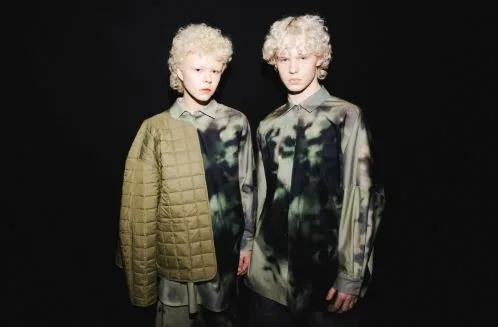
Why Emerging Designers are Redefining the Global Runway
Independent labels are increasingly attracting the attention of major fashion events worldwide. One of the reasons for this trend is that today’s audiences are no longer satisfied with a well-known logo alone; they are looking for uniqueness and a sense of belonging. Smaller brands respond to these demands more quickly and are not afraid to experiment.
In recent years, one of the largest platforms for emerging designers worldwide has been Moscow Fashion Week, which will begin on March 14 in the Russian capital. Every year, hundreds of new collections appear on its runways, and this spring is no exception: over 200 Russian brands, along with designers from China, Turkey, Spain, and Armenia, will take part. For many labels, showcasing at such a dynamic international platform is a unique opportunity to make a name for themselves quickly.
The extensive media coverage of Moscow Fashion Week is also confirmed by American participants, for whom taking part in the event has become a strategic step. “Showcasing Pia Lindsay Studio at Moscow Fashion Week has propelled the brand onto the global stage, opening doors to new markets and international recognition,” says New York designer Pia Lindsay, who has presented her collections on the Moscow runway twice. The designer’s participation at MFW was covered by many glossy publications, including Elle Canada, Grazia China, and Marie Claire Argentina.
“Moscow Fashion Week is not just a date on the fashion calendar for me,” says Turkish designer Emre Erdemoğlu, a regular participant in the Moscow fashion shows. “It is a powerful stage where I continuously redefine myself, position my brand internationally, and expand the universe of my storytelling. What is important to me is the creative freedom the platform offers. It values originality, allowing me to present my design language, silhouettes, and the characters I want to portray without filters.”
Over the past few years, the Russian fashion scene has experienced a powerful rise, which is clearly visible on the runways of Moscow Fashion Week. Independent designers are appearing here more frequently, working with small teams and producing collections in limited quantities. Many brands turn to local materials, experiment with handcrafted techniques, and develop production within the country. Moscow Fashion Week shows demonstrate how Russian fashion is evolving: from large brands to smaller, designer-driven labels and more flexible ways of working.
Designers at Moscow Fashion Week are increasingly turning to their heritage, reinterpreting it in a contemporary way. Sasha Barbakov draws on ancient lace-weaving traditions. In the collections of Alena Akhmadullina, traditions come to life through historical embroidery techniques, while designer Stas Lopatkin incorporates elements of historical tailoring into his designs – from the poneva skirt to the kokoshnik and traditional kaftans. The cultural code is also reflected in accessories: the brand Pepfer translates the rhythms of wooden architecture and carved window frames into the design of its bags, while the label Radical Chic works with the aesthetics of folk painting when creating scarves.
The success of these distinctive local labels on the runway confirms a global shift toward greater decentralization in fashion. Moscow Fashion Week, thanks to its diversity-driven approach and openness to emerging names, has taken the lead in this process. The era of universal trends is fading into the past, giving way to a time when authenticity is increasingly in demand.