Why Every Culture in History Has Made Miniature Versions of the Things That Mattered Most
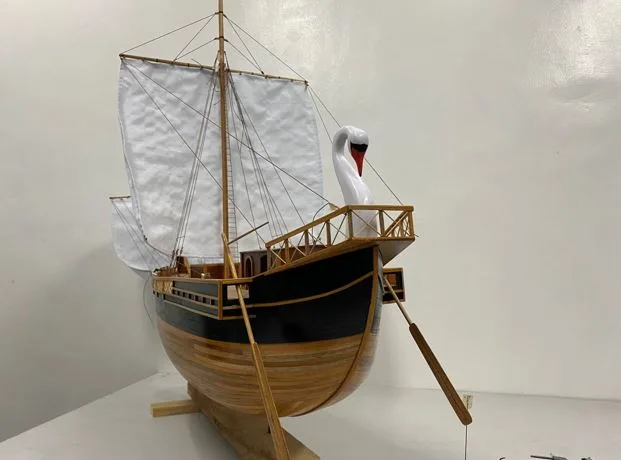
Long before the internet, long before mass production, long before the concept of a hobby existed in any recognisable form, humans were making small versions of the things that mattered to them. Archaeologists find them in every civilisation they excavate. Miniature boats in Egyptian tombs. Small clay horses in Chinese burial chambers. Tiny bronze chariots in Celtic graves. Carved ivory ships in Viking hoards. The impulse to create a miniature of a significant object appears so consistently across cultures, continents, and centuries that it cannot be explained as coincidence or fashion. It is something deeper.
Understanding why this impulse exists — and why it has survived into the age of digital reproduction, instant photography, and virtual reality — says something important about how humans relate to the objects that matter most to them.
The Egyptian Tradition — Miniatures as Functional Objects
The ancient Egyptians were among the most prolific producers of miniature objects in human history, and their reasons were entirely practical by the standards of their belief system. Tomb models — small wooden figures of boats, agricultural scenes, workshops, and domestic activities — were placed in burial chambers to function in the afterlife. The model boat wasn’t symbolic. It was, within the Egyptian framework, a real boat that the deceased would use to navigate the waters of the underworld.
The quality and specificity of Egyptian tomb models reflects this functional intention. The boats have correct rigging. The agricultural figures perform specific tasks in specific sequences. These are not generic representations — they are objects built to serve a specific purpose. That same logic — that a miniature of something significant must be accurate to carry its meaning — is precisely what drives modern commissions. A handcrafted model car built to the exact specification of a vehicle someone drove for twenty years carries the same requirement for accuracy. The wrong colour, the wrong wheels, the wrong configuration — and it is no longer the same object. The Egyptian tomb-maker understood this instinctively four thousand years ago.
The Japanese Tradition — Miniatures as Philosophical Objects
Japanese culture produced a different but equally sophisticated relationship to miniatures. The netsuke — small carved toggles used to secure pouches to kimono sashes — evolved over centuries into one of the most refined miniature art traditions in history. Craftsmen carved complete, detailed scenes into objects rarely larger than five centimetres. Animals, mythological figures, domestic scenes, and landscapes were compressed into objects held in the hand and worn on the body.
The philosophical dimension of Japanese miniature culture is expressed most fully in bonsai — the cultivation of full-grown trees in miniature form — and in the concept of mono no aware, the bittersweet awareness of transience that runs through Japanese aesthetic thought. A miniature object captures something at a specific moment and holds it there permanently. It is, in Japanese aesthetic terms, a defence against the passage of time. The miniature cherry tree in blossom does not drop its petals. The carved netsuke scene does not age. The small thing preserves, in permanent form, what the large thing cannot.
The Western Tradition — Miniatures as Status Objects
European aristocratic culture developed miniature objects in a different direction: as demonstrations of wealth, technical virtuosity, and social status. The automata of the seventeenth and eighteenth centuries — mechanical miniature figures that moved, played music, and performed complex sequences of action — were among the most expensive objects in existence, produced for royal courts and wealthy patrons as displays of engineering mastery compressed into small form.
The presentation ship model — a miniature of a vessel built at high quality and given to a patron or commissioner — is a tradition that dates to at least the sixteenth century in European maritime culture. Shipbuilders presented scale models to naval boards and wealthy merchants to secure contracts. Admiralties commissioned models of captured enemy vessels for study. Aviation followed the same logic centuries later: airlines and aircraft manufacturers commissioned precision replicas of their fleets for boardrooms, exhibitions, and client presentations. A personalized airplane model built to the exact specification of an aircraft a pilot flew for twenty years sits in the same tradition as those European presentation pieces — a commissioned miniature that carries the full weight of the original’s significance in a fraction of its size.
The Universal Thread
Across all of these traditions — Egyptian, Japanese, European, and dozens of others — the same underlying logic appears. Miniatures are made of the things that matter. The Egyptians miniaturised boats because boats were how you got places. The Japanese miniaturised nature because nature was where the divine resided. The Europeans miniaturised ships and automata because maritime power and engineering mastery were what wealth and status meant.
The objects that get miniaturised in any culture are the objects that culture considers significant. Which means that what a society chooses to miniaturise at any given moment is a precise record of what that society values. Studying the miniatures of a civilisation is studying the civilisation itself.
Why This Impulse Has Survived Everything
Photography was supposed to make miniature objects redundant as records. It didn’t. Virtual reality is supposed to make physical objects redundant as experiences. It hasn’t. The miniature object persists because it is three-dimensional, permanent, and specific in a way that no two-dimensional record and no digital experience achieves. You can hold it. It doesn’t require a screen. It doesn’t need a password or a subscription or a device to interpret it.
It sits in the room and it means something. A model boat built to document a specific vessel that a family operated for three generations before it was finally retired carries exactly the same meaning as a Viking carved ivory ship or a sixteenth-century presentation model. The form is the same. The impulse is the same. Only the vessel has changed.
The civilisations change. The objects they consider worth miniaturising change. The impulse — to compress the significant into permanent, portable, holdable form — doesn’t.