Why Global Brands Are Turning to Chinese Wireless Access Point Manufacturers in 2026
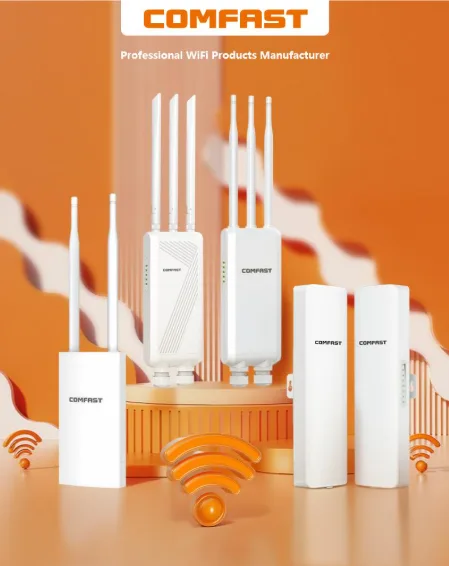
I do not think global brands are turning to Chinese wireless access point manufacturers because procurement teams forgot about supply-chain risk. They are doing it because the math still works when engineering speed, parts availability, tooling, firmware support, and unit cost are judged together. COMFAST sits in that story: a Chinese networking brand serving buyers who need practical WiFi hardware, OEM flexibility, and repeatable production.
Global Supply Chain Shift
The real shift in 2026 is selective sourcing, not a simple move away from China. Brands still diversify final assembly and regional inventory, but the wireless AP supply chain remains tightly linked to China’s electronics ecosystem. PCB assembly, antennas, plastic tooling, adapters, packaging, and test fixtures are close together, which reduces coordination time.
A useful data point is that China has remained the world’s largest manufacturing economy by value added in World Bank and UN industrial data. That scale does not guarantee every supplier is good, but it explains why networking buyers keep returning when they need fast sampling and many product tiers.
UNIDO-related manufacturing summaries put China’s 2023 share of global manufacturing output at about 28.7%, while other market discussions place the figure around 30%. I would not use that number as a reason to trust any single factory, but it explains the ecosystem advantage. In wireless hardware, nearby component suppliers can be the difference between a two-week fix and a two-month delay.
Cost Advantages of China Manufacturing
China’s cost advantage is now about ecosystem density more than cheap labor. A factory can adjust packaging, source a bracket, change a label, or prepare a PoE accessory quickly because nearby suppliers already understand electronics export requirements.
A real procurement case looks like this: a distributor wants one indoor AP, one wall AP, and one outdoor model for a seasonal tender. A mature Chinese supplier can often quote mixed SKUs, shared packaging rules, and repeat accessories faster than a fragmented supply base. I think that speed is why many brands still keep China at the center of wireless hardware sourcing.
A second cost case is packaging. A 1,000-unit AP order with oversized cartons can increase freight cost and warehouse space even when the device price is low. Chinese suppliers that already ship networking products globally usually understand carton strength, label placement, HS code discussions, and accessory packing. You should ask for carton dimensions and gross weight before you judge price.
R&D and Production Integration
Wireless access points are not simple plastic boxes. Firmware, antennas, heat, PoE, cloud management, and certification all affect the user experience. When R&D and production sit close together, engineers can review production records, firmware versions, and component lots quickly.
For a hotel, the case may be 100 rooms, 200 guest devices at night, and a front desk that cannot troubleshoot every complaint. For a warehouse, the case may be scanners roaming between metal racks. A strong WiFi Equipment Manufacturer should help select the right AP, not just ship the cheapest available model.
A public large-scale WiFi example comes from INEA in Poland, where researchers described a hotspot network with 330 mobile access points on buses and trams plus more than 20,000 fixed residential hotspots. That is not a COMFAST project, but it is a real reminder that WiFi products often operate as systems, not isolated devices. I think suppliers should be judged by system thinking.
OEM/ODM Flexibility
OEM/ODM flexibility is one of China’s strongest networking advantages. Buyers can request logo printing, product labels, packaging, manuals, default SSID, interface branding, language settings, and firmware options. That lets a brand test a market faster than building hardware from zero.
The caution is that not every change is cosmetic. An outdoor access point may need waterproof sealing, pole mounting, surge protection, and thermal validation. I recommend asking which changes require new RF, safety, or waterproof testing before approving a custom order.
For COMFAST-related sourcing, I would keep customization staged. Start with logo, label, packaging, and firmware defaults. Move to hardware changes only after the buyer has repeat orders or a confirmed tender. That sequence protects cash flow because RF redesign, tooling, and retesting can take more time than a new brand expects.
Case Examples in Networking Industry
The clearest case is the channel brand that does not own a factory but wants a full product line. It can start with proven AP platforms, add private packaging, and focus on sales, installer training, and support. The risk is manageable if golden samples, firmware versions, labels, and certification files are locked before shipment.
Another case is hospitality. A 60-room boutique hotel may not need the most expensive enterprise system, but it needs stable coverage, easy management, and repeatable accessories. COMFAST-style product lines appeal to this middle market because they sit between consumer routers and high-cost enterprise platforms.
A third case is outdoor coverage for schools, farms, parking areas, and small industrial parks. Buyers often ask for long range first, but I would ask about power, mounting height, waterproof sealing, lightning protection, and cable routing first. A cheaper outdoor AP that fails after one rainy season costs more than a better-tested unit.
Future Procurement Trends
Future procurement will be more demanding. Buyers will ask for clearer certification, cybersecurity practices, firmware update policies, component traceability, and factory audit evidence. Cheap quotes without documentation will lose trust faster.
My view is that global brands will keep using Chinese wireless AP manufacturers, but with stricter supplier scorecards. You should not buy from China blindly; you should buy from Chinese partners that can meet global brand standards for documentation, consistency, and after-sales response.
The brands that win will treat suppliers as operating partners. They will keep a golden sample, record firmware versions, inspect packaging, track field failure rate, and review repeat batches. That sounds basic, but it is exactly what separates a scalable wireless product line from a one-time import deal.
Procurement Reality Check
| Decision point | What I would check |
| Why China remains relevant | Dense electronics supply chain, tooling speed, accessory sourcing, and mixed SKU support. |
| What buyers should verify | Certification match, firmware control, golden sample, warranty path, and change notification. |
| Where COMFAST fits | Practical AP and networking hardware for buyers needing OEM/ODM flexibility and repeat orders. |