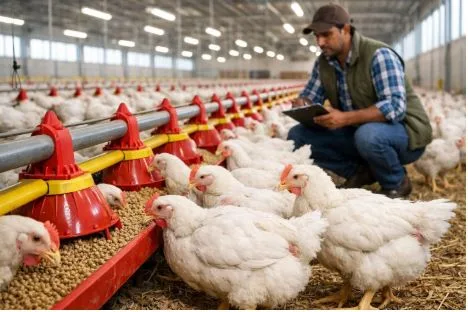
Why High Protein Poultry Feed Is Becoming Essential for Modern Broiler Production
ALMA, Georgia – Poultry producers across the United States are increasingly turning to high protein poultry feed as mounting feed costs, tighter processing standards, and growing consumer demand for leaner meat force a fundamental rethink of flock nutrition programs.
Feed expenditure already accounts for nearly 70 percent of total broiler production costs, and industry nutritionists say that protein quality, not just quantity, is now the defining variable separating profitable operations from struggling ones.
Performance Gap Widens Between Protein Levels
Data from feed trials consistently shows that broilers on correctly formulated high protein poultry feed during the starter phase post Feed Conversion Ratios between 1.20 and 1.35 well below the 2.20 to 2.60 range recorded when protein drops below 17 percent at any growth stage.
The difference compounds over a full grow-out cycle, with under-fed flocks also recording significantly lower average daily weight gains and higher culling rates at processing.
| Growth Phase | Crude Protein | Avg. Daily Gain | FCR |
| Starter (Days 1–10) | 22–24% | 28–35 g/day | 1.20–1.35 |
| Grower (Days 11–24) | 20–22% | 60–75 g/day | 1.55–1.70 |
| Finisher (Days 25–42) | 18–20% | 80–100 g/day | 1.80–2.00 |
| Below Optimal (any phase) | Below 17% | 45–55 g/day | 2.20–2.60 |
Amino Acid Balance Emerges as the Real Differentiator
Industry specialists caution that crude protein figures on a feed label can be misleading. Effective livestock feed for poultry must deliver the right amino acid profile particularly lysine, methionine, and threonine to support genuine lean muscle development rather than simply hitting a percentage target.
Many flock performance problems attributed to protein deficiency are, on closer inspection, amino acid imbalances that a higher-quality formulation would have prevented. Producers are advised to verify digestible lysine levels, enzyme inclusions, and mineral premixes before committing to any feed supplier.
Key indicators of a quality livestock feed formulation include:
- Digestible lysine levels calibrated specifically per growth phase
- Adequate methionine and cystine for feather integrity and immune function
- Phytase and protease enzyme inclusions to maximize actual nutrient uptake
- Absence of low-value grain fillers that dilute nutritional density per kilogram
Specialty Segment Reflects Broader Industry Shift
The trend toward precision nutrition is not confined to commercial broiler operations. The specialty poultry market and gamefowl breeding in particular has long applied rigorous nutritional discipline through dedicated gamecock feed programs focused on lean conditioning, stamina, and sustained performance rather than bulk weight gain.
Industry observers note that the standards long maintained in the specialty segment are increasingly influencing mainstream broiler management, as producers recognize that the nutritional principles are fundamentally the same across both markets.
| Nutritional Factor | Commercial Broiler | Gamecock / Specialty |
| Crude Protein Range | 18–24% | 16–22% |
| Fat Content | Moderate–High | Controlled / Lower |
| Energy Density | High | Moderate |
| Amino Acid Profile | Lysine-dominant | Balanced |
| Feed Form | Pellet / Crumble | Grain-based / Pellet |
Warning Signs Producers Should Monitor
Nutritionists say most underperforming feed programs send clear signals well before losses show up in final yield figures. Producers are urged to act immediately on the following indicators:
- FCR consistently exceeding 2.1 during the grower phase
- Significant size variation within a flock at the same age
- Pale or uneven feathering in birds during early growth stages
- Above-average mortality without a confirmed disease diagnosis
- Breast meat yield figures falling below processing expectations
Suppliers Respond to Growing Demand
Feed manufacturers are expanding their phase-specific product ranges in response to producer demand for more targeted formulations. Among those active in the space is Mid South Feeds, a Georgia-based manufacturer offering a full range of poultry, gamebird, and gamecock feed products alongside broader livestock nutrition lines.
The company supplies dealers and distributors across the region and builds its formulations around consistent ingredient quality and science-backed nutritional standards factors that producers evaluating high protein poultry feed programs increasingly cite as non-negotiable when feed efficiency is under scrutiny.
For broiler operations reviewing their current nutrition strategy, the industry message is straightforward: the performance gap between well-formulated and budget feed programs is measurable, significant, and growing. Visit Midsouth Feeds to explore feed formulations built for the demands of modern poultry production.