Why Humanoid Robots Need Better Actuators, Not Just Smarter AI
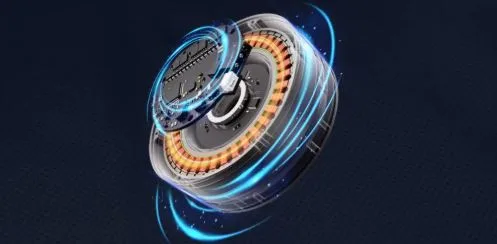
Everyone is talking about how AI will make humanoid robots smarter. But in the real world, intelligence is only half of the story.
A humanoid robot still has to stand, walk, lift, balance, bend, turn, and interact safely with people and objects. These actions do not happen inside an AI model. They depend on actuators, motors, reducers, encoders, and control systems working together inside each joint.
In other words, AI may give humanoid robots a brain, but motion hardware gives them the ability to work.
What Kind of Actuator Is Used in Humanoid Robots?
Humanoid robots usually use compact, high-torque, and highly responsive actuators. These actuators are designed to convert electrical energy and control signals into smooth physical movement.
Engineers who compare motion solutions for humanoid robots, exoskeletons, quadrupeds, and medical robots often begin by reviewing different robot motor applications before choosing a joint design.
In a humanoid robot, actuators are used in many key areas, including the hips, knees, ankles, shoulders, elbows, wrists, waist, and neck. Each joint has a different job, so the actuator requirements are not always the same.
For example, leg joints usually focus on support, balance, and repeated movement. Arm joints often need smooth control, flexible motion, and accurate positioning. Smaller joints may need compact structure and fine motion control.
Why Are Actuators Important for Humanoid Robot Movement?
A humanoid robot must move in a way that is stable, controlled, and safe. This requires more than simple rotation. The actuator must respond quickly, provide enough force, and work with feedback systems to keep the robot balanced.
Here is a simple way to understand the role of actuators:
| Robot Action | Motion Hardware Requirement |
| Walking | Stable torque output and fast response |
| Balancing | Real-time posture adjustment |
| Lifting | Strong joint support and controlled force |
| Turning | Smooth movement and accurate positioning |
| Human Interaction | Safe and predictable force control |
| Long Operation | Reliable performance under repeated motion |
When a humanoid robot walks, every step requires coordination between multiple joints. The hip, knee, and ankle must move together at the right time. If the robot carries an object, the arm and body also need to adjust. This is why actuator performance directly affects the robot’s real-world usefulness.
How Do Engineers Choose Motors for Robot Joints?
Choosing a motor for a robot joint is not only about finding a strong motor. Engineers need to match the motor to the joint’s task, available space, movement range, control method, and working conditions.
A practical selection process usually starts with these questions:
- What is the joint used for?
- How much torque does the joint need?
- What movement speed is required?
- How compact does the actuator need to be?
- What feedback accuracy is needed?
- What control mode does the system use?
- How often will the joint move during operation?
The answer may be different for every joint. A knee joint may need strong support and repeated torque output. A wrist joint may need smaller size and accurate movement. A shoulder joint may need a balance between torque, range of motion, and smooth control.
The goal is not to choose the largest motor. The goal is to choose the right motion solution for the joint.
What Motor Specifications Matter Most for Humanoid Robots?
Motor specifications can look technical, but several factors are especially important in humanoid robot design.
| Specification | Why It Matters |
| Continuous Torque | Supports repeated movement and posture holding |
| Peak Torque | Helps with short bursts of force during dynamic motion |
| Torque Density | Provides more power in a compact structure |
| Speed Range | Affects walking, reaching, and response time |
| Encoder Feedback | Improves position and motion control |
| Communication Interface | Connects the actuator with the robot control system |
| Thermal Performance | Supports stable operation during repeated movement |
Continuous torque is important because humanoid robots do not move only once. They may walk, stand, lift, and adjust posture many times during a task. Peak torque is also important because dynamic movement may require short moments of higher force.
Torque density is another key factor. Humanoid robots need powerful joints, but the body structure must remain compact. A well-designed actuator helps deliver strong motion without taking up unnecessary space.
What Is the Difference Between Integrated Actuators and Frameless Motors?
In robotics, engineers often consider two common approaches: integrated actuators and frameless motors.
An integrated actuator combines several motion components into one compact unit. It may include the motor, reducer, encoder, driver, and communication interface. This structure can make joint design more direct and help shorten development time.
A frameless motor is different. It usually provides the core motor components and allows engineers to build them into a custom mechanical structure. This gives more freedom for specialized joint design.
Here is a simple comparison:
| Option | Common Use Case | Main Value |
| Integrated Actuator | Robot joints and fast system development | Easier system integration |
| Frameless Motor | Custom joints and compact designs | Greater design flexibility |
Both approaches can be useful. The right choice depends on the robot’s structure, motion goals, and engineering plan.
How Are Actuator Requirements Different Across Robot Joints?
A humanoid robot has many joints, but they do not all work the same way.
Lower-body joints, such as the hips, knees, and ankles, are closely related to walking, standing, and balance. These joints often need strong support, smooth response, and reliable repeated motion.
Upper-body joints, such as the shoulders, elbows, and wrists, are more focused on reaching, lifting, holding, and interacting with objects. These joints often need smooth movement, accurate feedback, and flexible control.
The waist and neck also play important roles. They help the robot adjust posture, change viewing direction, and coordinate body movement. Good motion control in these areas can make the robot look more natural and move more efficiently.
This is why humanoid robot design is not about one universal motor. It is about matching each joint with the right actuator solution.
Why Does Force Control Matter in Humanoid Robots?
Force control helps a robot manage how much force it applies when touching people, tools, surfaces, or objects. This is especially important because humanoid robots are often designed to work in human environments.
A robot may need to pick up a fragile object, push a door, hold a tool, support a load, or adjust its step on an uneven surface. In these situations, movement is not only about position. The robot must also understand and control physical interaction.
Force control can support:
- Safer human-robot interaction
- More careful object handling
- Better balance adjustment
- Smoother walking
- More natural arm movement
- More reliable task execution
As humanoid robots move from demonstrations to practical applications, force control will become an important part of joint performance.
Why Similar Motion Technology Is Used in Other Robots
Humanoid robots are not the only machines that need advanced actuators. Similar motion technologies are also used in exoskeletons, quadruped robots, rehabilitation robots, robotic arms, and mobile manipulation systems.
These robots may look different, but many of their motion needs are similar. They require compact structure, high torque density, accurate feedback, smooth control, and stable performance.
For example, exoskeletons need lightweight and responsive joints to assist human movement. Quadruped robots need strong leg actuation for walking, running, and adapting to different ground conditions. Medical and rehabilitation robots need smooth and controlled movement for safe interaction.
This is why actuator development is important across many areas of robotics, not just humanoid robots.
Final Thoughts: Better Motion Hardware Makes Smarter Robots Useful
AI can help humanoid robots understand instructions, recognize objects, and plan actions. But the robot still needs motion hardware to turn those decisions into real movement.
Actuators are the connection between digital intelligence and physical work. They allow humanoid robots to walk, balance, lift, reach, and interact with the world.
As humanoid robots continue to develop, better motion hardware will remain a key part of their progress. Smarter AI may guide the robot, but better actuators help make that intelligence useful in real life.