Why India Is Becoming the Global Hub for Medical Tourism
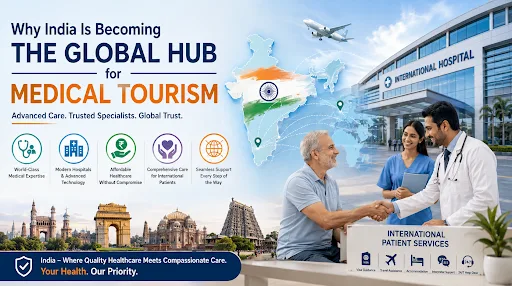
India has earned a strong reputation as one of the world’s leading destinations for international healthcare. Every year, thousands of patients from Africa, the Middle East, Central Asia, Europe, and other regions travel to India seeking advanced medical treatment, experienced specialists, modern hospitals, and comprehensive patient support. While affordability remains one of the reasons patients choose India, the country’s success in medical tourism in India is increasingly driven by clinical expertise, advanced healthcare infrastructure, and access to specialised treatments.
As global healthcare continues to evolve, international patients are looking for destinations that offer quality care without long waiting periods. India has responded by developing an ecosystem that combines internationally recognised hospitals, skilled medical professionals, innovative technology, and services designed specifically for overseas patients.
The Rapid Growth of Medical Tourism in India
Over the past two decades, India has invested heavily in healthcare infrastructure, medical education, digital health technologies, and specialist services. Major cities such as New Delhi, Mumbai, Chennai, Hyderabad, Bengaluru, Gurugram, and Kolkata now host hospitals that regularly treat patients from across the world.
Many healthcare institutions are equipped with advanced diagnostic centres, robotic surgical systems, minimally invasive technologies, modern intensive care units, and multidisciplinary medical teams capable of managing complex health conditions.
This continuous investment has helped establish India as a preferred destination for patients seeking specialised healthcare that combines quality, accessibility, and efficiency.
Why International Patients Choose India
The decision to travel abroad for medical treatment involves much more than comparing prices. Patients today evaluate hospital quality, physician experience, treatment availability, communication, safety standards, recovery support, and overall patient experience.
India performs well across these areas by offering experienced specialists in numerous medical disciplines, internationally recognised hospitals, advanced technology, and dedicated international patient departments that help coordinate every stage of treatment.
Many overseas patients also value the ability to receive consultations, diagnostics, surgery, rehabilitation, and follow-up care within a single healthcare system.
Access to Experienced Medical Specialists
India is home to highly experienced specialists working across a wide range of medical fields. Many physicians have trained internationally while gaining extensive clinical experience through high patient volumes and exposure to complex medical conditions.
International patients commonly travel to India for:
- Cardiology and cardiac surgery
- Orthopaedic surgery
- Oncology and cancer treatment
- Neurosurgery
- Spine surgery
- Kidney and liver care
- Fertility and IVF treatment
- Cosmetic and reconstructive surgery
- Gastroenterology
- Advanced diagnostic evaluations
The availability of multidisciplinary medical teams enables patients to receive coordinated care that addresses multiple health concerns within one treatment journey.
Modern Hospitals Supporting Better Patient Outcomes
Healthcare technology plays an increasingly important role in diagnosis, treatment planning, and patient recovery. Many leading Indian hospitals continue investing in robotic-assisted surgery, digital imaging, AI-supported diagnostics, minimally invasive procedures, and advanced laboratory services.
These innovations support healthcare professionals in making informed clinical decisions while improving efficiency throughout the treatment process.
Patients also benefit from integrated healthcare systems that allow different specialists to collaborate when managing complex medical conditions.
Comprehensive Support for International Patients
Travelling to another country for healthcare requires careful planning. Besides choosing the right hospital, patients often need assistance with medical documentation, travel arrangements, accommodation, interpreter services, airport transfers, and communication before and after treatment.
Many international patients therefore choose trusted medical tourism facilitators in India to simplify the healthcare journey. Professional facilitators help coordinate communication between hospitals and patients while providing practical guidance throughout the treatment process. This allows patients and their families to focus more on recovery and less on logistical challenges.
Affordable Healthcare Without Compromising Quality
One of India’s greatest strengths is its ability to deliver high-quality healthcare at comparatively affordable costs. Lower treatment costs are influenced by healthcare economics, operational efficiencies, and infrastructure rather than lower medical standards.
As a result, patients often gain access to experienced specialists, advanced technology, and internationally recognised hospitals while spending considerably less than they might in many other countries.
This balance between affordability and quality continues to strengthen India’s position within the global healthcare sector.
The Future of Indian Medical Tourism
Demand for cross-border healthcare is expected to continue growing as patients seek timely access to specialised medical services. India is well positioned to meet this demand through continued investment in medical research, hospital infrastructure, digital healthcare, and specialist training.
As healthcare providers continue expanding international patient services and adopting new technologies, India is likely to remain one of the world’s most trusted destinations for medical travel.
Important Information for International Patients
Patients planning medical treatment abroad should make informed decisions after consulting qualified healthcare professionals. Treatment recommendations, medical opinions, and final treatment costs are determined by the treating hospital and specialist following a complete clinical evaluation. Initial estimates are based on available medical information and may change after additional investigations or specialist assessment.
Medical outcomes cannot be guaranteed because every patient’s health condition, medical history, and response to treatment are unique. Medical visa approval is subject to the requirements and decisions of the relevant government authorities. Organ transplantation in India is governed by strict legal, ethical, and medical eligibility requirements. Before travelling, patients should discuss travel fitness, potential complications, post-treatment follow-up, and continuity of care with their treating clinicians.
Final Thoughts
India’s healthcare sector has grown into a globally respected destination by combining experienced specialists, modern hospitals, advanced technology, patient-centred care, and comprehensive support services. Rather than focusing solely on affordability, today’s international patients increasingly recognise India for its clinical expertise, innovation, and commitment to quality healthcare.
For anyone considering treatment abroad, careful research, open communication with healthcare providers, and realistic expectations are essential. By understanding every stage of the treatment journey, international patients can make informed decisions while benefiting from the opportunities offered through India’s rapidly expanding medical tourism sector.