Why Investors Are Turning to Commodities as an Inflation Hedge in 2026
The COVID-19 pandemic and intensifying geopolitical conflicts have shown that inflation can get out of control, and fixed-income instruments are not enough to beat it. In the summer of 2022, annual inflation in the US exceeded 9%, making saving a real challenge for investors and consumers alike.
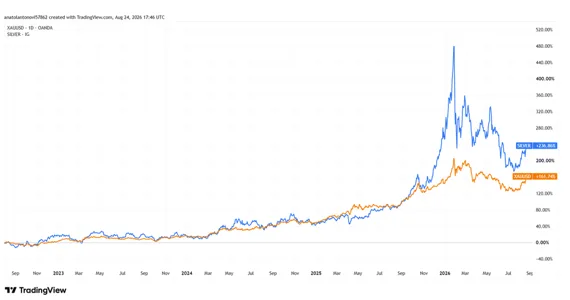
Safe-haven assets have become more attractive, especially precious metals like gold and silver. Both metals reached new record highs at the beginning of 2026, as investors look to preserve wealth and protect against the erosion of purchasing power.
Commodity trading has become increasingly popular among institutional and retail traders, as the market offers a diverse range of assets that include safe-havens like gold as well as volatile plays like crude oil.
However, precious metals are in the spotlight this year. According to Goldman Sachs Research, gold gained roughly 25% in the first half of 2026 even as the US dollar fell 11% against other currencies over the same period – a divergence analysts point to as a core reason commodities are regaining ground as a portfolio inflation hedge this year.
Why Is Everyone Rushing to Hoard Gold?
Gold is often regarded as the epitome of wealth preservation, being one of the most popular store-of-value (SOV) assets. During periods of panic and crises, the yellow metal is sought after by investors, institutions, and central banks.
Its safe-haven status has been proven over thousands of years, and despite transportation or storage challenges, investors continue to expand their exposure through derivative instruments like futures and contracts for difference (CFDs).
According to the World Gold Council, there are only about 220,000 tons of gold ever mined. Annual mine production adds only a relatively small amount to the existing stock. The metal’s scarcity makes it one of the most established SOV assets, and inflation is reflected in the gold’s price quite rapidly.
Silver is another safe-haven candidate, and it also attracts investors thanks to its increasing industrial use. In fact, even though both hit record highs in early 2026, the white metal has outperformed gold over the last few years.
The main drivers behind gold’s impressive performance over the last few years have been economic uncertainty, loosening monetary policies, and intensifying geopolitical tensions. After the pandemic, central bankers turned to free money policies to support economic growth. While this supported consumption, it also led to a jump in inflation, pushing investors to safe havens like gold.
This is why the price of gold has more than tripled over the past decade. Since 2000, the precious metal has surged by over 1,500%, allowing investors to hedge against the declining purchasing power of fiat money.
And it’s not only retail and institutional investors driving demand. Central banks continue to hoard the metal like never before, especially in BRICS countries, which include China, Russia, Brazil, and India. This emergent economic bloc is looking to dethrone the US dollar as the world’s reserve currency, and accumulating gold is part of the tactic.
The World Gold Council data showed that net purchases by central banks in the April-June period totaled 289 tons, which is over 400% more than the volume of the prior three months. This was a record high for a second quarter. China is one of the largest buyers, which accelerated its purchasing pace after the start of the Ukraine-Russia war and the spark of the US-Iran conflict.
China is again adding materially to its reserves. Gold is not a pure Fed signal, but persistent official-sector demand and renewed investor interest are reinforcing the value of inflation, currency and geopolitical hedges.
Why Are Investors Turning to Industrial Metals?
Besides gold, silver, and other precious metals, industrial metals often remain hidden in plain sight for investors looking to beat inflation. In 2026, infrastructure investment is gaining momentum, supporting demand for some industrial commodities, especially copper.
Today, the world needs more power, grids, and data centers for AI and security. As money quietly loses value, infrastructure-related assets tend to hold it, sometimes offering even better protection than gold, which has become more volatile amid increasing speculative interest.
Copper is one of the most representative commodities for infrastructure projects, as it’s required in AI infrastructure and power grids. Its price has more than tripled over the last decade, and demand is expected to grow over the coming years.
Matt Miskin, co-chief investment strategist at Manulife John Hancock Investments, said that in 2026 “commodities have gone from being an overlooked asset class to becoming increasingly attractive for multi-asset investors. This is really a three-legged stool for copper: AI demand, inflation hedging and a run-it-hot macro environment.”
With precious metals serving as traditional SOV assets and industrial commodities benefiting from growing demand in AI and power grids, commodities offer investors different ways to protect against inflation.