Why Minimally Invasive Cosmetic Procedures Continue to Grow
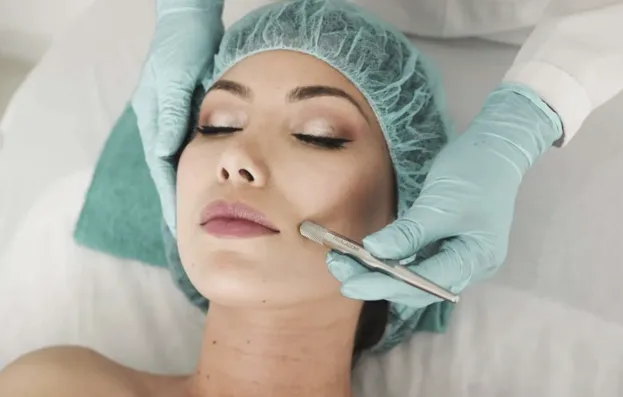
Cosmetic treatment used to involve a fairly clear choice. A person could accept a feature they did not like or consider surgery, along with anesthesia, healing time, and a larger financial commitment. That gap has narrowed. Injectable treatments, lasers, skin resurfacing, and other minimally invasive cosmetic procedures now give patients more ways to address specific concerns without making surgery the first option.
That change can be seen in treatments focused on one facial feature. A non-surgical nose job, for example, can use carefully placed injectable filler to camouflage a small bump, improve mild asymmetry, or create a straighter-looking profile. It does not replace surgical rhinoplasty because filler cannot make a nose physically smaller or correct breathing problems. At New York Cosmetic, Skin & Laser Surgery Center, Dr. Rokhsar takes this targeted approach to nasal contouring, with treatment based on the patient’s anatomy and the type of change that can realistically be achieved without surgery.
The Numbers Show How Large the Shift Has Become
Demand for minimally invasive treatment is no longer a small corner of cosmetic medicine. Data released in June 2025 by the American Society of Plastic Surgeons found that more than 28.5 million minimally invasive procedures were performed in the United States during 2024, with overall volume increasing 1.5 percent from the previous year. By comparison, the organization recorded nearly 1.6 million cosmetic surgical procedures that year.
The largest categories also show that consumers are choosing several different routes rather than relying on a single type of treatment.
| Minimally invasive procedure | Procedures reported for 2024 |
| Neuromodulator injections | 9,883,711 |
| Hyaluronic acid fillers | 5,331,426 |
| Skin resurfacing | 3,703,305 |
| Laser and other skin treatments | 3,112,056 |
| Injectable lip augmentation | 1,449,565 |
The trend is not simply about people getting more injections. Skin resurfacing increased about 6 percent during 2024, while neuromodulator injections rose about 4 percent and hyaluronic acid fillers increased about 1 percent. Those categories address different concerns, from expression lines and volume loss to texture, pigmentation, and sun damage.
Shorter Recovery Changes the Decision
Recovery has always been part of the calculation when someone considers a cosmetic procedure. Surgery may require time away from work, exercise, social plans, or travel. Many non-surgical cosmetic procedures can be performed in an office and involve a much shorter interruption to normal routines.
That does not mean every treatment has zero downtime. A laser procedure may cause redness, peeling, or swelling. Injectables can leave temporary bruising or tenderness. More intensive resurfacing can require several days of visible healing. The difference is that patients now have a wider range of choices, including treatments that can be matched to how much recovery they are willing to accept.
This flexibility matters for people who cannot disappear from their normal schedule for a week or two. A treatment plan can also be divided into individual sessions rather than concentrated into one larger surgical event.
Smaller Changes Can Have a Clear Visual Effect
Another reason for growth is the move toward targeted correction. A person may not want to change the structure of the entire face. They may want softer expression lines, better skin texture, more balanced facial volume, a clearer complexion, or a modest adjustment to one feature.
Different technologies can address those goals in very different ways.
| Treatment category | Common cosmetic goal | General approach |
| Neuromodulators | Expression lines | Temporarily reduce targeted muscle activity |
| Hyaluronic acid fillers | Volume and contour | Add volume to selected areas |
| Skin resurfacing | Texture, fine lines, uneven tone | Renew or remodel layers of skin |
| Laser treatments | Pigment, redness, hair, or texture | Use selected wavelengths or energy settings |
| Non-surgical contouring | Shape of a specific feature | Make targeted changes without surgical reconstruction |
The range itself is important. Someone concerned about brown spots needs a different evaluation from a person bothered by facial volume loss. Modern aesthetic treatment is becoming less about choosing a fashionable procedure and more about matching the treatment to the underlying issue.
Natural Results Are Becoming Part of the Goal
The image of cosmetic work as an obvious transformation is also becoming less relevant to many patients. A growing part of aesthetic medicine focuses on changes that look proportional to the rest of the face. This can mean using less filler, treating selected muscles instead of freezing broad areas, or improving skin quality without changing facial structure.
That approach places more importance on assessment before treatment. Two people of the same age can have very different facial anatomy, skin quality, sun exposure, and cosmetic priorities. The same number of syringes or the same laser setting would not make sense for everyone.
Dr. Rokhsar’s work with non-surgical facial treatments reflects this more individualized direction. The aim of a well-planned procedure is not simply to make a feature look different. It is to decide whether a limited change will improve overall balance while still looking like the same person.
Minimally Invasive Does Not Mean Risk-Free
Convenience can sometimes make cosmetic treatment look simpler than it is. An injectable appointment may take less time than surgery, but it is still a medical procedure. Dermal fillers can cause swelling, bruising, infection, nodules, and other complications. Rare vascular complications can be much more serious. Laser and energy-based treatments also need to be selected for the patient’s skin type, condition, and medical history.
The nose is a good example of why anatomy matters. Nasal filler can create useful contour changes in properly selected patients, but the area contains important blood vessels. Precise placement and knowledge of facial vascular anatomy are critical. Patients should also understand the limits of treatment before deciding that a non-surgical option is better simply because it involves less recovery.
A qualified medical professional should be able to explain what a procedure can change, what it cannot change, how long the expected result may last, and which complications deserve attention.
More Choice Is Driving the Market Forward
Minimally invasive cosmetic procedures are not eliminating the need for surgery. A facelift can address tissue laxity that an injectable cannot. Surgical rhinoplasty can reduce or reconstruct the nose in ways filler cannot. Other structural concerns also require surgical solutions when the desired change goes beyond what an office-based treatment can provide.
What has changed is the space between skin care and surgery. Patients now have more options for treating one concern at a time, controlling recovery, and choosing how much change they want. With millions of procedures performed each year and several major treatment categories still recording growth, that middle ground has become a major part of modern cosmetic medicine.