Why Mobile Technology Is Reshaping the Global Entertainment Market
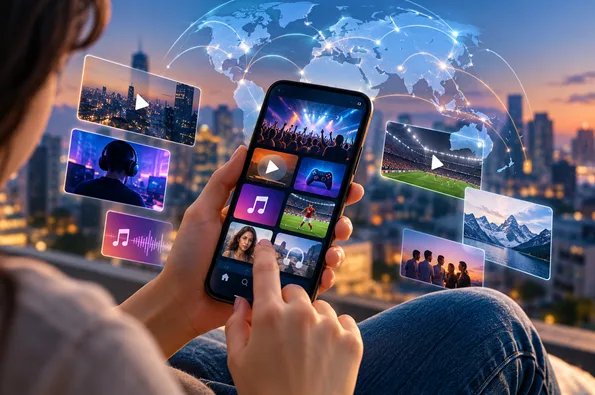
Mobile technology now plays a central role in how people watch, play, listen, communicate, and pay for entertainment. A smartphone can handle activities that once required several separate devices. Consumers can stream a film during a train ride, play a game while waiting for an appointment, listen to a podcast while walking, or follow a live event from almost anywhere with a data connection.
The scale of mobile access explains much of this shift. By the end of 2025, around 4.8 billion people used mobile internet, equal to 59% of the global population. Mobile technologies and services also generated about $7.6 trillion in economic value during 2025. Entertainment forms only one part of that activity, but it benefits directly from wider smartphone ownership, faster networks, easier digital payments, and growing app use. These conditions also support specialized forms of interactive entertainment. Services associated with gaming and online casino activity, including platforms such as gamblerina, operate within the same mobile-first environment that shapes video, music, social content, and other digital formats.
The result goes beyond a change in screen size. Mobile devices have changed when people consume entertainment, how long individual sessions last, how users discover content, and how businesses earn revenue from their audiences.
The Smartphone Has Become an Entertainment Hub
A smartphone combines a screen, internet connection, speakers, camera, payment system, storage, location functions, and considerable processing power. This combination gives consumers access to many entertainment formats through one device.
That matters because convenience affects behavior. People no longer need to plan every entertainment session around a television, computer, or dedicated gaming device. They can use short periods throughout the day.
Recent app-market figures show the scale of that behavior. Consumers spent approximately 5.3 trillion hours using mobile apps during 2025. Global in-app purchases reached $167 billion during the same year. For the first time, spending in non-gaming applications exceeded spending in games, as social media, video, AI services, and other app categories attracted more consumer spending.
Mobile entertainment now includes:
- video streaming and short-form clips;
- games and interactive experiences;
- music, podcasts, and digital radio;
- social media and creator content;
- live sports and event coverage;
- digital reading and comics;
- subscription-based entertainment services.
Consumers often move between several of these formats during a single day. That behavior forces media producers to think about attention in minutes rather than only in hours.
Shorter Sessions Are Changing Content Design
Traditional entertainment often asks consumers to commit to a defined block of time. A film may require two hours. A television episode might take 30 to 60 minutes. Mobile use creates a different pattern.
Someone may have five minutes before a bus arrives or 15 minutes during lunch. Content creators increasingly design products around these smaller windows.
Short-form video offers the clearest example. Vertical clips require little setup, start quickly, and work well on a handheld screen. Short serialized dramas have also expanded rapidly. More than half a billion viewers now watch smartphone-oriented micro-dramas each year, according to industry estimates.
Games follow similar principles. Many mobile titles let users complete a task or round in a few minutes. Audio services allow listeners to stop and continue later. News and sports services divide long events into highlights, clips, statistics, and notifications.
This does not mean consumers have abandoned long-form entertainment. Instead, mobile technology has added more session lengths to the market. A person can watch a 30-second clip in the morning and a full film that evening.
Mobile Gaming Shows the Scale of the Change
Gaming demonstrates how strongly smartphones can alter an established entertainment sector. Mobile devices lowered the equipment barrier for digital games because billions of people already carry suitable hardware.
In 2025, consumers downloaded games across mobile, PC, and console platforms about 52 billion times. Mobile accounted for most of that volume, with users downloading roughly 95,000 mobile games every minute. Mobile game in-app revenue reached about $82 billion during the year.
The commercial model also changed. Instead of relying only on an initial purchase, many games use advertising, optional purchases, subscriptions, regular events, or combinations of these methods.
This structure encourages developers to maintain games for long periods. They add new levels, challenges, characters, competitions, or seasonal material. Consumers therefore treat many games as continuing services rather than finished products.
Mobile gaming also competes directly with video, social media, and audio for the same resource: free time. A person who spends 20 minutes playing during a commute may have 20 fewer minutes for video or social content. Entertainment categories increasingly compete across traditional industry boundaries.
Faster Networks Expand What Phones Can Do
Hardware alone cannot explain mobile entertainment growth. Network development has expanded the types of content that phones can handle comfortably.
More than 96% of the world’s population lived within mobile broadband coverage by 2025. Around one-third of mobile broadband subscriptions already used 5G, while 5G coverage reached more than half of the global population.
Higher speeds and lower delays support activities that require continuous data transfers. Users can stream high-resolution video, participate in multiplayer games, watch live events, and use cloud-based services with fewer interruptions when network conditions allow.
Mobile broadband traffic reflects this demand. Global mobile broadband traffic reached an estimated 1.5 zettabytes in 2025. Since 2021, traffic has grown at an average annual rate of around 19%.
The entertainment sector therefore gains from infrastructure investment without needing to build an entirely separate distribution network. Every improvement in mobile connectivity can increase the number and complexity of media services that consumers can access through their phones.
Entertainment Discovery Now Happens on the Same Device
Mobile technology has also changed how audiences find entertainment.
In the past, discovery and consumption often happened through different channels. Someone might see an advertisement for a film and later visit a cinema. A television guide could introduce a program that the viewer watched at a scheduled time.
Smartphones compress those stages.
A consumer can see a short video, search for related content, read reactions, start watching, share a link, and pay for additional access without changing devices. Each step may take seconds.
Social feeds play a large role in this process. They expose users to songs, games, films, creators, sports clips, and other media based on viewing history and interactions. Search functions then let people move quickly from discovery to consumption.
This structure gives smaller entertainment formats access to international audiences without requiring traditional distribution in every country. At the same time, it creates intense competition for attention because users can switch between services with a few taps.
Payments Have Moved Closer to Entertainment
Mobile payment systems have shortened the distance between interest and purchase. App stores, digital wallets, stored payment details, carrier billing, and subscription systems allow users to complete transactions directly through their phones.
Consumers can pay for a streaming subscription, buy digital content, make an in-game purchase, rent a film, support a creator, or purchase access to a live event without visiting a physical location.
This affects business models as much as consumer behavior. Entertainment providers can charge small amounts for specific features or content instead of relying entirely on large one-time purchases.
Several payment structures now operate side by side:
| Model | Typical Mobile Use |
| Subscription | Video, music, games, digital publications |
| Advertising | Social video, games, streaming |
| In-app purchase | Games and interactive services |
| One-time payment | Films, events, digital media |
| Hybrid model | Combination of advertising and paid access |
The coexistence of these systems lets companies test different ways to fund content. Consumers can also choose between paying money, viewing advertising, or using limited free access depending on the service.
Mobile Devices Are Changing Video Habits
Television still matters, especially for long-form viewing, but smartphones have gained a strong position in other video categories.
A 2025 media survey found that mobile phones and tablets served as the main device for short-form video for 43% of respondents. That figure rose to 48% for long-form online video outside traditional television and film streaming. For social media scrolling, mobile devices reached 71%.
These habits influence production. Creators must consider smaller displays, vertical viewing, subtitles, quick opening sequences, and situations where users watch without sound.
Mobile viewing also changes distribution schedules. Audiences do not always wait for a complete program. They may follow an event through live updates, short clips, interviews, highlights, and social posts throughout the day.
A single entertainment property can therefore produce several types of material for different viewing situations.
Global Growth Still Faces a Digital Divide
Mobile technology has expanded entertainment access, but it has not created equal conditions everywhere.
Around 3.4 billion people still did not use mobile internet at the end of 2025. Most of them already lived within mobile broadband coverage, which shows that network availability alone does not solve the problem.
Device prices, data costs, digital skills, safety concerns, and connection quality all affect adoption. Smartphone ownership also varies sharply by income level. Global mobile-phone ownership exceeds 80% for people aged 10 and older, but the rate drops to slightly above half in low-income economies.
Data consumption shows another gap. Average monthly mobile broadband traffic per subscription reaches about 17.9 GB in high-income countries, compared with roughly 2.2 GB in low-income economies.
These differences affect entertainment markets directly. Video streaming, cloud gaming, and other data-heavy formats need affordable bandwidth and capable devices. Companies that target international audiences must account for connection speeds, handset performance, screen sizes, and data prices across regions.
The Competition Has Shifted Toward Time and Attention
Mobile technology has weakened many traditional boundaries inside entertainment. Video services compete with games. Games compete with social feeds. Podcasts compete with music. Short dramas compete with longer television formats.
Consumers do not necessarily think in industry categories. They simply decide what they want to do with the next few minutes or hours.
This change explains why companies increasingly create several forms of content around the same subject. A sports event may generate a live stream, statistics, short clips, interviews, audio discussions, and interactive features. Each format serves a different moment in the user’s day.
The phone connects those moments.
Mobile Entertainment Will Keep Expanding
Mobile technology has already changed the structure of the global entertainment market, yet connectivity data suggests further growth. Mobile internet adoption continues to rise, 5G coverage continues to expand, and smartphones keep gaining processing capabilities.
Artificial intelligence may add another layer. More devices can now run AI functions locally, which could support personalized editing, translation, search, content creation, and interactive media without sending every task to remote servers.
However, the central force behind mobile entertainment remains straightforward: people carry the device with them.
That constant access changes consumption more than any single application or media format. Entertainment can fill a three-minute wait, a commute, an evening at home, or a live event. Consumers can move between video, games, audio, social interaction, and paid services without leaving one screen.
For the global entertainment market, mobile technology no longer acts as an additional distribution channel. It shapes how audiences discover content, how creators design it, how consumers pay for it, and how entertainment competes for time throughout the day.