Why Modern Motor Production Lines Are Essential for Efficient Manufacturing
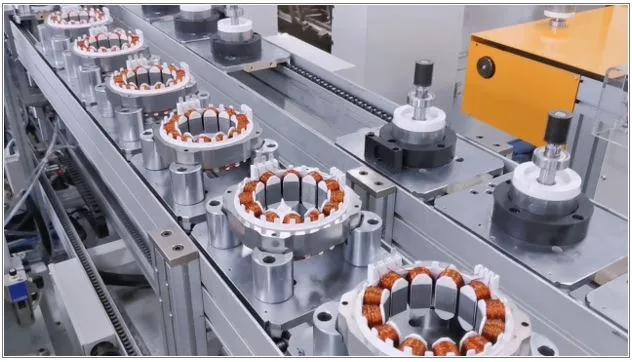
Manufacturing efficiency has become increasingly important as industries demand faster production, consistent quality, and greater flexibility. The motor manufacturing sector is no exception. As manufacturers look for ways to improve productivity while controlling costs, automated production technologies have become an essential part of modern operations.
A well-integrated motor production line can connect multiple stages of manufacturing into a coordinated workflow. From component assembly and winding to inspection and final testing, automation can help reduce repetitive manual work, improve accuracy, and maintain consistent production standards.
Understanding the Modern Motor Assembly Line
A modern motor assembly line is a coordinated manufacturing system consisting of specialized machines, workstations, controls, and inspection equipment. Each station is responsible for a particular stage of production, and components move through these stages according to a planned sequence.
Depending on the motor design and production requirements, an assembly line may include stator assembly machines, rotor equipment, winding systems, fastening stations, testing units, sensors, and automated inspection technologies.
Unlike traditional production methods that rely heavily on manual operations, automated systems use programmed controls and mechanical equipment to perform repetitive tasks with greater consistency. This makes them particularly suitable for manufacturers handling large production volumes.
Increasing Production Speed
Production speed is one of the most noticeable benefits of automation. Repetitive manufacturing tasks can take considerable time when performed manually, particularly when production volumes are high.
Automated machines can perform predefined operations at a consistent pace without the fatigue associated with repetitive human work. Components can also move between workstations in an organized sequence, reducing unnecessary handling and delays.
As a result, manufacturers can improve production throughput and make more effective use of their available manufacturing capacity. Faster production can also help businesses respond to customer orders without compromising established quality procedures.
Maintaining Greater Precision
Motor manufacturing requires accuracy at almost every stage. Incorrect component positioning, inconsistent winding, improper fastening, or variations during assembly can affect the performance and reliability of the final motor.
Modern automated equipment operates according to predetermined settings and programmed parameters. Sensors and control systems can monitor important factors such as position, pressure, dimensions, speed, and other process conditions.
Maintaining these parameters consistently can reduce production variations and help manufacturers produce motors with more uniform characteristics. This level of repeatability is particularly valuable when large quantities of similar products need to be manufactured.
Reducing Repetitive Manual Tasks
Automation does not necessarily eliminate the role of workers. Instead, it can change how employees contribute to the manufacturing process.
Machines can take responsibility for repetitive operations, allowing employees to concentrate on activities such as machine supervision, maintenance, quality assurance, troubleshooting, and production management.
This can make better use of employees’ technical skills while reducing the amount of repetitive physical work they need to perform. A combination of skilled workers and automated equipment can therefore create a more efficient manufacturing environment.
Strengthening Quality Control
Consistent quality is essential for motor manufacturers because even relatively small production defects can affect performance, durability, or reliability.
Modern assembly systems can include inspection and testing stages throughout the production process rather than relying exclusively on final inspection. This allows potential problems to be identified earlier.
Depending on the motor and manufacturing requirements, testing systems may evaluate electrical characteristics, insulation, mechanical operation, dimensions, and other performance factors.
Early defect detection can prevent faulty components from progressing through additional production stages. This can reduce rework, material waste, and the costs associated with defective products.
Improving Motor Winding Operations
Winding is one of the most important processes in electric motor manufacturing. The arrangement, tension, positioning, and consistency of the wire can have a direct impact on motor performance.
Modern winding machines are designed to control factors such as winding speed, wire tension, placement, and predefined winding patterns. Automated control can reduce inconsistencies that may occur during manual winding.
When winding equipment is integrated with inspection and testing systems, manufacturers can monitor the process more effectively and identify potential issues before the motor reaches later stages of production.
Supporting Motor Repair and Rewinding
Motor production is not limited to the manufacture of new units. Repair facilities and maintenance workshops also require specialized equipment to restore motors that have damaged or worn windings.
In these applications, electric motor rewinding equipment can assist with processes involved in removing old windings, preparing components, installing new windings, and carrying out related operations.
Modern rewinding systems can make these repetitive processes more controlled and consistent. Depending on the equipment, operators may also be able to adjust settings according to different motor specifications.
This flexibility can be especially useful for repair workshops that work with motors of different sizes, designs, and operating requirements.
Minimizing Material and Production Waste
Manufacturing efficiency involves more than simply increasing production speed. Companies also need to manage materials, energy, labor, and machine capacity effectively.
Automation can help reduce waste by improving process consistency. Accurate assembly and winding can lower the number of components rejected because of manufacturing errors, while automated inspections can identify problems before additional resources are spent on defective products.
Manufacturers can also use production data to identify inefficient processes and determine where improvements are needed. Reducing unnecessary waste can help lower operating expenses while supporting more responsible manufacturing practices.
Using Real-Time Production Monitoring
Digital monitoring has become an increasingly important part of modern manufacturing. Sensors and control systems can collect information about equipment performance, production rates, downtime, and quality-related issues.
Production managers can use this information to identify bottlenecks and investigate recurring problems. For example, if one workstation repeatedly takes longer than other stages, managers can examine the process and determine whether equipment adjustments or maintenance are required.
Monitoring can also support preventive maintenance. Instead of waiting for a machine to fail unexpectedly, manufacturers can monitor equipment conditions and schedule maintenance when necessary.
Increasing Manufacturing Flexibility
Modern motor manufacturers may need to produce several models instead of focusing on one standardized product. This creates a need for production systems that can adapt to changing requirements.
Programmable controls and adjustable machinery can make it easier to modify selected production settings for different motor specifications. This can provide greater flexibility without requiring an entirely new manufacturing system for every product variation.
Flexible automation can therefore be particularly valuable for manufacturers that frequently change product designs, produce multiple motor models, or need to respond to changing customer requirements.
Creating a Safer Production Environment
Workplace safety is another area where automation can provide advantages. Machines can perform certain operations involving repetitive movement, heavy components, or specialized manufacturing processes under controlled conditions.
Modern equipment may also incorporate safety features such as protective enclosures, sensors, emergency-stop systems, and automatic shutdown mechanisms.
However, automation does not remove the need for proper safety procedures. Employees still require appropriate training, equipment must be maintained correctly, and manufacturers need to follow established workplace safety standards.
Achieving Long-Term Cost Efficiency
Automated manufacturing systems can require a significant investment during the initial installation stage. However, the long-term operational benefits may help manufacturers improve overall cost efficiency.
Higher production capacity, reduced defects, lower rework requirements, improved material utilization, and better machine productivity can all contribute to operational savings.
The actual return on investment depends on factors such as production volume, equipment configuration, maintenance requirements, labor costs, and the specific type of electric motor rewinding equipment used.
For manufacturers with substantial production requirements, the ability to maintain consistent output and quality can make automation an important part of long-term manufacturing planning.
Conclusion
Modern motor assembly systems are changing the way manufacturers approach production efficiency. By combining automated assembly, controlled winding, inspection, testing, monitoring, and digital technologies, manufacturers can create more organized and consistent production workflows.
Automation can help increase production speed, improve precision, reduce repetitive manual work, minimize waste, and strengthen quality control. At the same time, specialized electric motor rewinding equipment can support repair and maintenance operations where consistent winding processes are required.
As manufacturing technology continues to evolve, intelligent equipment and connected production systems are likely to play an increasingly important role. Manufacturers that integrate automation thoughtfully can improve operational efficiency while maintaining the quality and flexibility needed to compete in a changing industrial environment.