Why More People Are Making Images With AI?
There was a time when finding an image meant opening a stock site, typing a few words, and scrolling until something felt close enough. That still works. But lately, for a lot of people, “close enough” does not feel all that useful anymore.
The problem is not that stock images are bad. It is that they are often too broad, too familiar, or just a little disconnected from the thing someone is actually trying to say. If you are writing a social post, building a slide deck or even putting together a small personal project, you usually want a visual that fits the mood of the idea, not just the category.
That is a big reason AI image tools have started to feel normal in everyday creative work. People are not always looking for a perfect image. Most of the time, they just want something that feels more specific, more timely, and a little less generic.
Why Stock Libraries Can Start to Feel Repetitive
Stock libraries still have real value. They are fast, reliable, and familiar. But they were built around what has already been shot, designed, or uploaded. That is great when your needs are simple. It is less great when you want a visual that feels tied to one exact message or moment.
And readers notice this stuff more than people think. They respond to images that feel believable and well matched to the content. If a visual feels too generic, too polished, or weirdly disconnected, it can quietly weaken the whole piece.
That is probably why the conversation around AI visuals is not really about making more images. It is about making images that feel more relevant without losing trust.
Text to Image makes ideas feel more personal
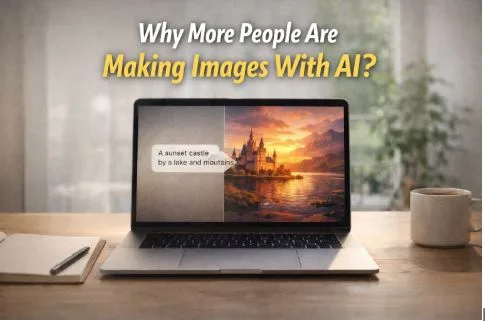
One reason this shift feels so natural is the rise of Text to Image. The idea is simple: you type a short description, and it turns that prompt into an image.
What makes that useful is not the technology by itself. It is the feeling of being able to go straight from an idea in your head to something you can actually see. Sometimes you do not want to search through hundreds of ready-made photos. You just want to describe the atmosphere, the setting, or the style, and get a visual starting point that feels closer to what you meant.
That changes the creative process in a small but real way. Instead of picking from what already exists, you begin with intention. And honestly, that feels a lot more personal.
Image to Image fits how people really work
Another big reason AI image tools are getting more useful is that real creative work rarely starts from nothing. Usually, there is already something on the table: a photo, a draft design, an old visual, or a rough reference that is almost right.
That is where Image to Image comes in. Instead of starting from a blank page, it uses both text and an existing image to create a new one.
This feels closer to how people actually work. You are not always trying to invent something out of thin air. A lot of the time, you are just trying to fix the part that is not working yet. Maybe the style feels off. Maybe the composition is flat. Maybe the image is close, but not close enough.
That kind of revision is deeply familiar. It is not flashy. It is just real.
Final Thoughts
So the bigger story here is not that AI has replaced stock libraries. It has not. The real shift is that people now have another option when they want something more specific than a stock search can usually give them.
One tool helps turn words into a first draft of an image. The other helps reshape an image that already exists. Put together, they fit the way people actually create things now: quickly, imperfectly, and usually with a pretty clear idea of what they want to say.
And maybe that is why this change feels like it is sticking. Most creative work is not neat. It starts with a rough thought, a half-formed mood, or something that almost works. Tools that meet people in that messy middle tend to last.