Why Most Living Rooms Feel Cramped and How Two Smart Furniture Pieces Fix It
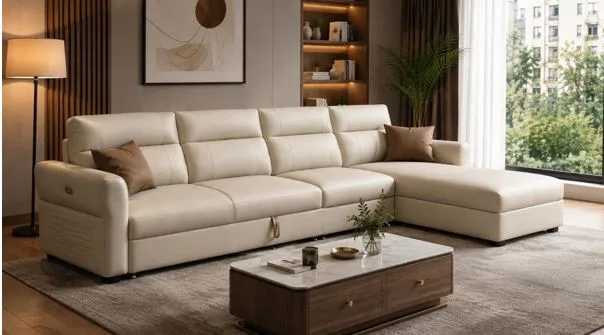
Walk into a living room that feels crowded and the obvious assumption is that the room is too small. Sometimes it is. Quite often, though, the square footage is not really the problem. Look at what is occupying it.
There might be a sofa deeper than the household needs, a coffee table that leaves an awkward passage around it, two side tables doing almost the same job, and an extra chair kept mainly because there was nowhere else to put it. None of these choices seems particularly troublesome on its own. Together, they eat into the part of the room people actually need.
This is why choosing furniture for a smaller living area calls for more than checking if it will physically fit. What happens around that furniture matters too. A sofa cum bed and a thoughtfully sized coffee table are two pieces that can help considerably, particularly when the room has several jobs to perform.
1. Why Even Well-Designed Living Rooms Can Feel Smaller
There is a difference between fitting furniture into a room and leaving enough room to live around it.
Consider a common arrangement: sofa against the wall, coffee table in front, television opposite, and perhaps a chair near the window. Everything technically fits. Yet someone walking from the doorway to the sofa has to turn sideways around the table. Opening a nearby cabinet means shifting a stool. Two people crossing the room at once becomes mildly irritating.Those little inconveniences are useful clues.
One reason they occur is that furniture is often bought piece by piece. A sofa is selected first. A table comes later. Then there is a chair for additional seating, followed by a small table beside it. The individual dimensions may seem reasonable, but their combined footprint tells another story.
Depth is especially easy to underestimate. A deep sofa projects further into the room, while a wide coffee table takes up more of the remaining centre. Even if neither looks excessively large, the passage between them and other furniture can become tight.
Rather than asking, “Can this fit here?”, it is more useful to ask, “What space will remain once it is here?”
That small change in thinking can prevent many layout problems.
2. The Hidden Reasons Your Space Feels Crowded Every Day
Not every crowded room contains too much furniture. Sometimes it contains too many things without a clear home.
The coffee table is usually where this becomes visible first. A remote stays there because it is used every evening. Then come a charger, yesterday’s newspaper, two mugs, a book someone intends to finish and perhaps a delivery package that has not yet been moved. Within a few days, a perfectly reasonable table begins looking overloaded.
The same happens around the sofa. An extra stool becomes somewhere to leave a bag. A side table holds objects that could have gone elsewhere. A spare chair slowly turns into temporary storage.
Visual crowding builds quietly.
Another issue is furniture kept for occasional situations. A family may need additional sleeping arrangements only when relatives visit, yet a separate mattress or bed still needs somewhere to stay for the rest of the year. In a home where rooms already perform several roles, that is valuable space committed to infrequent use.
There is no need to strip a living room down to a sofa and television. The point is to notice duplication. If two or three pieces are solving jobs that one carefully chosen piece could handle, there may be an easier way to arrange the room.
3. Smart Furniture Choices That Maximise Comfort Without Taking Extra Space
This is where a sofa cum bed starts making practical sense.
For most of the week, it can remain part of the regular seating arrangement. When someone stays overnight, the same furniture provides a sleeping surface. There is no permanent guest bed occupying another part of the home simply in case it is needed.
That makes the idea useful for compact apartments and homes where the living room occasionally doubles as a guest area.
There is a catch, though. A sofa cum bed should be measured twice: once as a sofa and again when opened.
The second measurement is easy to forget. There may be enough room for the closed sofa, but once extended, it could come too close to the coffee table, block access to a cabinet, or leave little room for someone to walk past. Check the opening direction as well. A mechanism that is easy to operate in a showroom may feel less convenient when surrounded by other furniture.
People researching the Best foldable sofa cum bed price can browse Wooden Street to compare available choices, but cost should sit alongside more practical questions. How much floor area does it require when opened? Is the mechanism suitable for frequent use? Does the seating depth work for the household? Is there enough clearance around it?
Those details determine how well the piece will actually work at home.
The coffee table requires the same sort of thinking. Bigger is not automatically better. It needs enough surface for the things regularly used in the seating area, without claiming more of the centre than necessary.
4. Simple Styling Tricks That Keep Your Living Room Open and Organised
Once the larger furniture is in the right place, small adjustments become surprisingly noticeable.
Start with the coffee table. Rather than treating every empty section of its surface as somewhere to decorate, leave some of it free. A table still needs to function as a table.
A tray is handy for the objects that tend to wander, particularly remotes and coasters. One or two books can stay if they are actually read or add something personal to the room. A plant or vase can work too, provided it does not become an obstacle every time somebody wants to put down a cup. Then look at the floor.
Are there baskets, stools or small tables that are constantly being shifted to make way? That usually indicates the layout is asking for more space than it has. Removing one minor piece can sometimes improve movement more than rearranging all the larger furniture.
Walls are useful here. Pictures, photographs and artwork bring character without occupying walking space.
Try leaving a little emptiness as well. An unused corner does not always need a lamp, stand or plant. Open floor area gives the eye somewhere to rest and, more importantly, gives people somewhere to walk.
5. How the Right Furniture Pairing Improves Layout and Everyday Living
The sofa and coffee table sit close enough that choosing them independently can create problems.
Imagine a compact sofa cum bed paired with a broad, heavy coffee table. The seating may save space, but much of that advantage disappears because the centre of the room is still difficult to navigate. At the other extreme, a tiny table may prove so inconvenient that another side table eventually gets added. Proportion is the useful middle ground.
You do not need specialist planning software to test it. Mark the proposed sofa and table dimensions on the floor with removable tape. Newspaper works too. Then spend a few minutes moving around those outlines.
Can you comfortably reach the sofa? Can somebody walk past while another person is seated? Will the sofa cum bed have room to open? Does a nearby door still swing freely?
It is a simple test, but far more revealing than trying to judge dimensions from a product photograph.
Wooden tables can also introduce warmth and natural grain without requiring several decorative pieces around them. Someone comparing a Premium wooden coffee table set design at Wooden Street can consider the number of tables in the set, their individual dimensions and how much floor area they require when in use.
The sofa and table do not need to look as though they came from an identical collection. They need to make sense together in scale and in use. That is what makes the pairing successful.
6. Creating a Living Room That Feels Spacious, Functional and Inviting – [Conclusion]
A comfortable living room rarely comes down to squeezing in as many useful pieces as possible. Quite often, the opposite works better.
Look at the furniture already in the room and ask what each item actually does. The chair nobody sits on may not need to stay. Two small tables might be replaceable with one useful table. A separate guest sleeping arrangement might be unnecessary if the main sofa can handle both requirements.
A sofa cum bed and a correctly proportioned coffee table are good examples because they solve everyday needs without automatically asking for more floor area.
Measure before buying, including the space needed when movable furniture is fully opened. Pay attention to walking routes. Keep frequently used objects somewhere sensible. Most importantly, resist the urge to fill every gap simply because it is empty. A little breathing room is useful. After all, the living room is meant to have people in it too.