Why Online Reputation Has Become a Business Growth Factor
Introduction
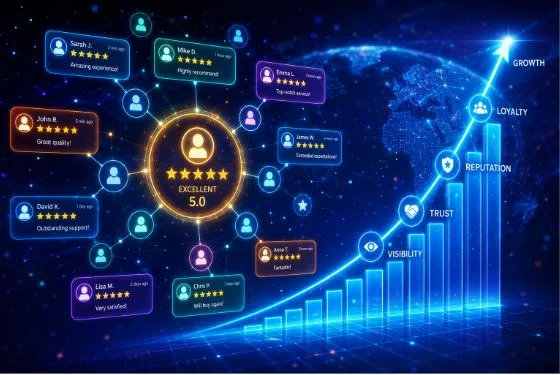
In the digital age, your online reputation often speaks before you do. A person may see your reviews, ratings, or social posts before visiting your website or calling your team. That first impression can shape trust, interest, and buying intent in seconds. This is why online reputation has become closely tied to business growth. It influences how people view your value, how confident they feel, and whether they move forward or keep looking at other options.
The Changing Landscape of Business Growth in the Digital Age
Business growth looks different in the digital age. Years ago, many buying decisions started with a visit, a phone call, or a personal referral. Now they often begin with a search, a rating, or a quick scan of your online presence.
That shift has made reputation management a core part of growth. People use public signals to decide which businesses feel reliable. If your reputation looks strong, trust builds faster. If it looks weak, interest drops just as fast. The next sections explain how this change happened and why it matters so much now.
How Online Reputation Became Essential for Success
Not long ago, a business could rely more heavily on location, word of mouth, or traditional advertising. In today’s digital world, that is no longer enough. Potential customers often meet your brand through search results, reviews, and social profiles before they ever speak with you.
Because of that, online reputation has become essential for success. People want signs that others have had positive experiences. They look for customer reviews, star ratings, and recent activity to decide if a company seems credible. These public signals reduce uncertainty and help them feel they are making the right choice.
This matters for growth because reputation now affects discovery and decision-making at the same time. A stronger reputation can attract more attention, create more trust, and improve the chances that interested visitors become paying customers.
Shifts in Consumer Behavior and Digital Trust
Consumer behavior has changed because people have more information in front of them than ever before. When they feel unsure, they often look at what other people are doing. That response is tied to digital trust, and it shapes many purchase decisions.
Online reviews play a major role here. A large share of consumers read reviews before contacting a business, and many trust them as much as personal recommendations. That means strangers now influence buying choices in ways that used to belong mostly to friends and family.
At the same time, people are guided by visible cues such as rating averages, review counts, and public comments. These signals work as shortcuts. Instead of spending hours comparing every option, buyers use the behavior of others to judge whether a business feels safe, popular, and worth their money.
Understanding Social Proof and Its Influence
Social proof is the idea that people often look to others when deciding what to do, especially in uncertain moments. In business, that shows up when shoppers trust online reviews, testimonials, or public approval because they assume the actions of others point to a good choice.
This is why social proof can feel almost as persuasive as personal recommendations. If many people seem pleased, new buyers feel less risk. To see why this matters so much, it helps to understand what social proof means in daily buying behavior and how it appears online.
What Social Proof Means for Modern Consumers
For modern consumers, social proof is a shortcut for decision-making. When people are unsure, they often use the actions of others as a guide to correct behavior in a given situation. This can happen in everyday life and in online shopping just as easily.
Behavioral research has shown this pattern for years. In classic studies, people changed their answers to match a group, even when the group gave the wrong answer. Experiments involving a dot of light in a dark room and the Asch conformity experiments revealed how strongly social factors can shape judgment.
In marketing, these same principles of persuasion show up through ratings, testimonials, and popularity cues. A shopper may assume a product is reliable because many previous customers bought it, reviewed it, or shared it. That does not guarantee quality, but it strongly affects what feels trustworthy.
Real-World Examples of Social Proof in Action
You can see social proof in many online settings. People often judge value based on how previous customers behave, how visible a brand is in search engines, or how much public attention a profile receives. These cues send strong signals before a buyer reads any detailed product information.
Some examples are positive and useful, while others show the risks of social influence. Social proof can guide people toward trusted options, but it can also push harmful patterns when crowd behavior is amplified.
- A product with many reviews can seem safer because previous customers appear to approve it.
- A large number of followers may make an influencer or brand look more credible.
- Strong visibility in search engines can signal authority and popularity to first-time visitors.
- Harmful behavior can spread too, as seen in cases linked to copycat suicides and risky group trends.
For businesses, the lesson is clear. Public signals shape perception quickly, so the quality and honesty of those signals matter.
The Power of Reviews in Shaping Business Outcomes
Online reviews influence both visibility and trust. People often scan search results, compare star ratings, and form an opinion about your brand image before they visit your site. That means reviews can affect whether you even get a chance to compete.
They also shape what happens next. Positive feedback can encourage action, while weak ratings can stop interest early. Since reviews affect attention and conversion together, they play a direct part in business outcomes. The next sections break down how that connection works.
Why Customer Reviews Drive Sales and Revenue
Customer reviews matter because they reduce doubt. When people compare options, they want evidence that others were happy with the experience. Reviews from satisfied customers provide that proof and make purchase decisions easier to justify.
This has a real effect on sales and revenue. Consumers are more likely to spend with businesses that have excellent reviews, and even small rating improvements can lift revenue. Positive feedback can also increase average order value because buyers feel more comfortable choosing a business that appears reliable.
There is another reason reviews matter. Many people avoid products with no feedback at all. In practice, that means customer reviews do not just support conversion. They can determine whether a product or service gets considered in the first place, especially when the brand is unfamiliar.
The Impact of Positive and Negative Online Feedback
Positive reviews and negative reviews both influence how people judge a business. Buyers often use customer feedback as a quick way to read the behavior of others. If the pattern looks favorable, trust rises. If the pattern looks poor, hesitation grows.
For a small business, negative feedback can slow growth by lowering confidence, reducing inquiries, and weakening conversion. On the other hand, strong positive reviews can build momentum, attract attention, and support repeat interest. The contrast is easy to see below.
| Type of feedback | Likely business effect |
| Positive reviews | Build trust, improve brand image, and encourage faster buying decisions |
| Recent positive comments | Show current quality and help reassure new visitors |
| Negative reviews | Raise doubts, reduce confidence, and push potential buyers toward competitors |
| Ignored complaints | Suggest weak customer care and can damage long-term reputation |
The key point is not perfection. It is active management. How you handle feedback can shape public perception almost as much as the feedback itself.
Building Brand Visibility on Digital Platforms
Brand visibility matters because people cannot choose what they do not see. On digital platforms, your online presence helps determine whether buyers find you early or miss you completely. This is where trust and discovery start to overlap.
Search engine optimization plays a role, but visibility is broader than rankings alone. It includes reviews, social activity, and useful content that keeps your name showing up in relevant places. To grow steadily, you need practical ways to strengthen that visibility and keep it working for you.
Strategies for Boosting Online Brand Visibility
A stronger online presence increases your chances of being noticed and trusted. Since buyers often begin on digital platforms, visibility supports both traffic and reputation. Search engine optimization helps, but it works best when paired with active reputation signals and consistent content. Businesses looking to understand these strategies in greater depth often turn to resources such as BestSeoTips, which regularly publishes insights on online reputation, digital marketing, and social media growth. Simple habits can make a big difference. Businesses that show up regularly, gather feedback, and share useful material create more chances to be found. That steady presence also tells people the brand is active and credible.
How Social Media Presence Enhances Awareness
Social media channels help businesses stay visible in places where people already spend time. A steady presence on social media platforms gives your audience more chances to notice your updates, customer interactions, and brand voice. That repeated exposure builds familiarity.
Familiarity supports brand image. When people see helpful posts, clear replies, and positive experiences shared by others, your business appears more approachable and dependable. This does not replace reviews or search visibility, but it adds another layer of public proof.
Social media also affects online reputation because conversations happen in real time. If customers see respectful responses, useful information, and active engagement, they form stronger impressions. In many cases, awareness grows not just because your content is seen, but because your behavior is visible.
Customer Confidence: Why It Matters for Growth
Customer confidence influences whether people move from interest to action. In consumer behavior, trust often acts as the final push. If a business looks reliable, people feel more comfortable spending money, sharing details, or reaching out for service.
That is why online reputation matters so much. A strong public image can have a positive effect on customer satisfaction even before the first interaction begins. It lowers uncertainty and helps buyers expect a good experience. The next sections explain how that confidence is built and reinforced.
The Connection Between Strong Online Reputation and Consumer Confidence
There is a clear positive relationship between online reputation and consumer confidence. When people see a business with solid ratings, recent reviews, and respectful public interactions, they feel less risk. That confidence makes it easier to take the next step.
A brand’s reputation matters because most buyers do not have full information. They use public signals to judge reliability, professionalism, and likely service quality. If those signals are strong, they assume the business is a safer option than one with little feedback or visible complaints.
This affects growth in practical ways. Higher consumer confidence can support more inquiries, better conversion, and stronger loyalty after purchase. In simple terms, trust reduces hesitation. And when hesitation drops, people are more willing to engage, buy, and return.
Reinforcing Trust Through Transparent Communications
Trust grows when people feel they are getting clear and honest information. Transparent communications show that a business respects its audience and takes customer service seriously. That can strengthen reputation even when problems come up.
Buyers do not expect perfection. They do expect openness. When a company explains what happened, responds politely, and shows how it will improve, people often view that as a sign of maturity rather than weakness.
Best practices include:
- Acknowledge issues directly instead of avoiding them.
- Share accurate updates so customers know what to expect.
- Keep your tone respectful and consistent across public channels.
These habits help reinforce trust because they show your business is accountable. Over time, that accountability supports stronger confidence and a more stable reputation.
The Role of Social Media in Managing Online Reputation
Social media platforms are a public stage for your brand. People use them to ask questions, share opinions, and judge how businesses treat their audience. That makes them an important part of any reputation management strategy.
Your online presence is shaped not only by what you post, but also by how you respond. Helpful engagement can build goodwill, while silence can raise doubts. Because these interactions are visible to many people, social media has a direct role in how your reputation develops over time.
Leveraging Social Media Presence for Positive Engagement
A strong social media presence gives you a simple way to create positive engagement in public. When people see timely posts, useful answers, and respectful conversations, they begin to connect your brand image with reliability and care.
This matters for reputation management because public interactions leave visible signals. Even people who never comment may still read your replies and form opinions about your business. In that sense, each interaction can help shape future trust.
Useful ways to support positive engagement include:
- Reply to questions in a calm, helpful tone.
- Share customer wins or positive experiences when appropriate.
- Keep messaging consistent so your brand image feels stable.
Over time, this kind of engagement helps people see your business as active, attentive, and worth considering.
Addressing Customer Concerns Publicly and Professionally
Public complaints can feel uncomfortable, but they are also chances to show strong customer service. When you respond well to online feedback, you are not only helping one person. You are showing everyone else how your business handles pressure.
Professional responses reduce damage because they signal control and fairness. A calm reply can reassure readers that customer concerns are taken seriously. That matters in reputation management, where public tone often carries as much weight as the original complaint.
A useful response approach includes:
- Acknowledge the concern without becoming defensive.
- Apologize when appropriate and explain the next step.
- Move detailed problem-solving into a private channel if needed.
Handled well, public concerns can become proof that your business is responsive, responsible, and focused on improvement.
Best Practices for Managing and Responding to Reviews
Managing online reviews takes consistency, not guesswork. The strongest results usually come from best practices that combine quick responses, thoughtful wording, and a proactive approach to collecting feedback. This helps keep reputation management steady rather than reactive.
Reviews should not be treated as background noise. They contain useful signals about trust, service quality, and customer expectations. When you respond well and invite more feedback from happy buyers, your public profile becomes stronger. The next two sections cover how to do that clearly and effectively.
Responding Effectively to Both Positive and Negative Feedback
Good responses show that your business pays attention. Whether the message is praise or criticism, customer feedback deserves a thoughtful reply. Positive reviews help reinforce loyalty, while negative reviews give you a chance to correct problems and protect trust.
The goal is not to sound perfect. It is to sound human, respectful, and useful. Reviews often contain important information about what customers value or what frustrated them. When you respond with care, future readers notice that too.
Helpful response habits include:
- Thank people for positive reviews and mention something specific they shared.
- Answer negative reviews calmly and avoid arguing in public.
- Acknowledge the issue and explain how you plan to help.
- Respond promptly so customers know their feedback matters.
Strong review responses can soften damage, strengthen credibility, and improve how your business is perceived.
Encouraging and Maintaining a Flow of Positive Reviews
A steady flow of positive reviews helps your reputation stay current. People care about recent feedback because it suggests the business is still delivering a good experience. That is why a proactive approach matters.
The simplest place to start is with satisfied customers. If someone had a good experience, asking for a review soon afterward makes sense. It keeps the moment fresh and makes it easier for them to share what went well.
Useful steps include:
- Send a follow-up request after a positive interaction or completed purchase.
- Share direct review links so leaving feedback takes less effort.
- Make review requests a regular part of your customer process.
This approach helps maintain fresh online reviews, supports trust, and gives potential customers more reasons to feel confident about choosing you.
Frequently Asked Questions
How do Google reviews influence a new customer’s decision?
Google reviews often appear early in search results and on Google Maps, so they shape first impressions fast. Potential customers use these customer reviews to judge quality, trust, and reliability. Strong ratings and recent feedback can make a business feel safer to contact, especially when buyers are comparing local options.
What steps can small businesses take to improve their online reputation?
A small business can improve its online reputation by asking happy customers for positive reviews, replying to feedback quickly, and keeping profiles accurate. A proactive approach to reputation management also means staying active on key platforms and handling complaints calmly, clearly, and consistently in public.
How does a weak social media presence impact brand visibility?
A weak social media presence can limit your online presence and reduce brand visibility across digital platforms. When a business owner rarely posts or responds, the brand may look inactive or harder to trust. That can make it easier for competitors with stronger public engagement to capture attention first.
Conclusion
In conclusion, nurturing your online reputation is vital in today’s digital landscape. As consumers increasingly rely on reviews and social proof to make decisions, a strong online presence can significantly enhance your brand visibility and consumer trust. By actively managing feedback and maintaining transparent communication, you can foster customer confidence and drive business growth. Remember, every interaction counts—whether it’s a positive review or addressing concerns publicly. Take charge of your online reputation today, and watch how it transforms your business dynamics. For personalized strategies tailored to your business needs, feel free to reach out for a consultation!
Disclaimer: This article is for informational purposes only and reflects general insights on online reputation management. It should not be considered professional business, legal, or marketing advice. Results may vary based on individual business strategies and market conditions.