
Why Public Data Is Becoming Essential for Global TikTok Shop Sellers
TikTok Shop is expanding across more markets, but entering the platform is becoming more difficult for sellers and brands. Competition is increasing, product trends change quickly, and creator campaigns can produce very different results from one market to another.
For many businesses, the main challenge is no longer finding data. It is knowing which data is useful before making a decision.
Public information about products, shops, creators, videos, and LIVE sessions can help sellers understand the market before spending heavily on inventory, advertising, or influencer partnerships.
TikTok Shop decisions are becoming more data-driven
In the early stages of TikTok Shop, many sellers relied on viral videos and social media recommendations to identify products. That approach could work when competition was limited.
Today, a product may be promoted by hundreds of creators within a short period. Sellers need to understand whether the product has lasting demand, whether the category is already crowded, and whether the available margin is strong enough to support advertising and creator commissions.
A broader research process can include:
- Product sales trends
- Estimated GMV
- Shop performance
- Creator activity
- Video engagement
- LIVE commerce activity
- Category competition
- Geographic demand
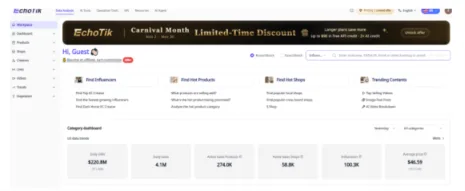
Platforms such as EchoTik bring these signals together to help businesses conduct faster TikTok Shop research.
Global sellers need more than local market data
TikTok Shop performance can vary significantly between countries. A product that performs well in the United States may have a different audience, price range, or creator ecosystem in the United Kingdom, Southeast Asia, or Latin America.
This makes market comparison increasingly important.
Before entering a new market, sellers may want to understand:
- Which product categories are growing locally
- Which creators have influence in that market
- How competing shops price similar products
- Whether product demand is seasonal
- How sales activity changes over time
- Which content formats receive the strongest response
This type of research helps businesses avoid applying one market’s strategy to another market without sufficient evidence.
Creator selection is becoming more strategic
Creator marketing remains an important part of TikTok Shop, but follower count alone is no longer enough to evaluate a partnership.
A creator with a large audience may not be the right match for a product. A smaller creator may have a more relevant audience, stronger engagement, or better performance in a specific category.
Brands can review:
- Audience growth
- Average views
- Engagement patterns
- Product categories
- Previous promotions
- LIVE performance
- Geographic audience fit
This allows businesses to compare creators based on commercial relevance rather than popularity alone.
Competitor research can reveal market gaps
Sellers can also use public data to understand how competing shops are operating.
For example, a shop analysis may reveal:
- Which products generate the most attention
- Which creators appear repeatedly in campaigns
- Whether the shop depends on video or LIVE sales
- Which categories are expanding
- How frequently new products are introduced
- Whether competitors are focused on price or product variety
The purpose is not to copy another business. It is to identify patterns and find opportunities that may be overlooked.
A product and shop research dashboard such as the one available through EchoTik’s analytics workspace can make this type of comparison easier to repeat.
Public estimates should be used carefully
Public data is useful for market discovery, but it should not be confused with private seller-backend information.
Estimated sales, GMV, and performance figures can help identify trends and compare opportunities. However, businesses should still confirm major decisions using their own order data, profit margins, advertising costs, inventory position, and customer feedback.
The best use of public data is to narrow the list of opportunities before making a larger investment.
A more practical approach for sellers
A data-informed TikTok Shop workflow can follow five steps:
- Identify products with recent demand.
- Compare similar products and competing shops.
- Review creators already active in the category.
- Check whether interest is stable or based on a temporary spike.
- Run a small test before increasing budget or inventory.
This approach helps sellers make decisions with more context. It also makes it easier to review what worked and adjust the strategy over time.
The next stage of TikTok Shop competition
As more sellers enter TikTok Shop, the advantage will not come only from finding a viral product first. It will also come from understanding products, creators, shops, and markets more clearly than competitors.
Businesses that combine public research with their own performance data can make better decisions about product selection, creator partnerships, and market expansion.
For sellers and brands evaluating TikTok Shop opportunities, EchoTik provides access to product, creator, shop, and LIVE analytics in one research platform.