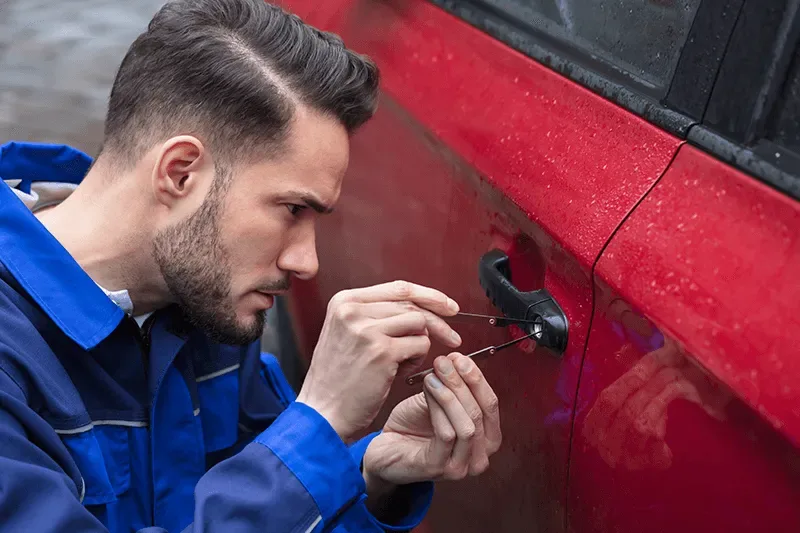
Why Seattle Homeowners Are Rekeying Their Locks After Moving
A growing trend among Seattle homeowners is rekeying locks immediately after purchasing or moving into a new property. This practice, often overlooked by first-time homebuyers, addresses a critical but frequently underestimated security vulnerability. When you move into a home, you inherit not just the property itself but also a complex history of access. Every person who ever held a key to that home continues to have one – the previous owners, contractors, real estate agents, tenants (if rental), family members, houseguests, and countless others. This distributed access represents a significant security risk that most homeowners never consider until security professionals explain the implications.
The Key Control Risk: Understanding Your Actual Vulnerability
Key control refers to the practice of limiting who possesses copies of your keys. When you move into a home, you typically receive one set of keys. You have absolutely no way of knowing how many additional copies exist in circulation. Perhaps the previous owners kept duplicates for sentimental reasons. Perhaps contractors who did work made copies for convenience. Perhaps household service providers – housecleaners, landscape maintenance, pest control – retained copies from when they serviced the property. Perhaps neighbors or friends of previous owners hold copies. Real estate agents might have copies from the sale process. If the home was previously rented, former tenants may have never returned their keys. Each of these individuals might be perfectly trustworthy, or they might not be. You cannot possibly evaluate the trustworthiness and current circumstances of everyone potentially holding your keys. This inability to control who has access to your locks represents a direct security risk.
The Security Implications of Unknown Key Distribution
Homes change hands frequently in Seattle neighborhoods, and with each change, more people potentially gain access. A home that changed hands five times means at least five sets of keys, plus copies made by each previous owner and their contractors, real estate agents, and service providers. Even if you trust previous owners, you cannot guarantee they properly managed key distribution or that all copies have been accounted for. A former contractor who made a copy might sell it to a colleague. A previous resident moving away might accidentally leave keys with neighbors who keep them for years. Key copies can remain in homes or with individuals long after their utility ends, becoming unknown security vulnerabilities. From a security standpoint, rekeying is the only way to ensure you have complete control over who can access your property.
The Rekeying Process: How It Works and Why It Matters
Rekeying changes the internal pin configuration of existing locks without replacing the lock hardware. A locksmith removes the lock cylinder and uses specialized tools to remove and reconfigure the internal pins. This simple process typically takes only a few minutes per lock. After rekeying, all previous key copies become useless – they no longer fit or operate the changed locks. Only new keys cut specifically for your rekeyed locks will function. This provides complete security control without the expense of replacing locks. You regain total control over key distribution – anyone who now has keys did so because you personally gave them copies. This control remains absolute until you change your keys again. For homeowners moving into properties with unknown histories, rekeying before moving in is ideal. For those who have lived in a home without rekeying, the process can be performed at any time.
Cost considerations matter for homeowners evaluating whether to rekey or replace locks.
Cost Comparison: Rekeying Versus Replacement
Rekeying costs significantly less than replacing locks because you maintain existing hardware. Typical rekeying of a single lock costs $10-20 for the service, plus perhaps $5-10 per new key blank cut to specification. A home typically has 3-5 exterior locks requiring rekeying, resulting in total costs of $75-150 including key cutting. Replacing locks entirely, by contrast, costs $60-150 per lock depending on quality, plus installation time. Replacing five locks costs $400-1000 or more. From a pure economic standpoint, rekeying makes sense unless your existing locks are lower-grade, damaged, or no longer functioning properly. If you are simultaneously upgrading from Grade 3 to Grade 2 locks, replacement is necessary because you want improved security from the lock mechanism. Many homeowners achieve the best cost efficiency by rekeying existing Grade 2 locks and replacing only lower-grade locks with better alternatives. Professional locksmiths can assess your existing locks and recommend the most cost-effective approach for your specific situation.
When to Go Further: Full Hardware Upgrades
While rekeying addresses the key control issue, it does not improve lock mechanism quality. If your home has original locks from the 1980s or earlier, rekeying still leaves you with potentially low-grade mechanisms. After rekeying to ensure key control, you might subsequently decide to upgrade hardware for security improvement. Replacing original low-grade locks with Grade 2 locks provides both updated key control and improved security mechanisms. Some homeowners perform full hardware upgrades, replacing locks and simultaneously rekeying to ensure no previous copies function. This approach is more expensive but provides both key control and improved security. Phased approaches work well – rekey immediately for security control, then gradually upgrade hardware as budget allows. A home with recently rekeyed Grade 3 locks has better security than unrekeyed locks, and subsequent hardware upgrades further improve security.
Building Good Key Management Habits Going Forward
After rekeying, establishing good key management habits maintains security control. Limit key distribution to people actually needing access – family members, emergency contacts, perhaps one trusted neighbor. Clearly communicate that you expect borrowed keys to be returned and copies not made. For service providers needing temporary access, consider rekeying or installing electronic locks allowing temporary access codes with time-limited validity. Track who has keys and periodically review whether all key holders still need access. When people move out or service contracts end, request key returns. While not all returns can be verified, the request communicates that you track key distribution. These habits ensure that your rekeying investment maintains effectiveness over years. Security remains strongest when you consciously control access rather than allowing key distribution to evolve haphazardly.
The growing trend of rekeying locks after moving reflects homeowners’ increasing security awareness and understanding of key control principles. By recognizing the vulnerability of unknown key distribution, understanding the rekeying process, evaluating cost-effectiveness, deciding between rekeying and replacement, and establishing good key management habits, Seattle homeowners significantly improve their residential security and maintain control over access to their properties.
WA Lock & Key
8124 69th Ave SW, Lakewood, WA 98499
253-484-4564
walockandkey.com