Why Social Media Is Quietly Replacing Traditional Market Research
Introduction: The Research Industry Is Facing a Silent Disruption
For decades, businesses relied on a familiar set of tools to understand consumers.
Surveys.
Focus groups.
Interviews.
Market reports.
These methods helped companies identify customer needs, evaluate products, and measure brand perception.
They still have value today.
But there is a growing problem: consumer behavior is changing faster than traditional research can keep up.
By the time a survey is designed, distributed, completed, analyzed, and presented, the market may have already shifted.
Meanwhile, millions of consumers are voluntarily sharing opinions, preferences, frustrations, and buying signals every day on social media.
The result is a quiet but significant transformation.
Increasingly, businesses are turning to social platforms not just as marketing channels, but as real-time market research engines.
The Limitations of Traditional Research
Traditional market research was built for a slower world.
Companies could afford to spend weeks or months collecting information before making strategic decisions.
Today’s environment is different.
Consumer preferences evolve rapidly.
Trends emerge overnight.
Online communities influence purchasing behavior at unprecedented speed.
This creates several challenges for traditional research:
- Data collection is often expensive
- Sample sizes may be limited
- Insights can become outdated quickly
- Consumer responses may not reflect actual behavior
Perhaps most importantly, people do not always tell researchers what they truly think.
But they often reveal it through their actions.
Social Media Reveals What Surveys Often Miss
The value of social media research comes from observation rather than questioning.
Instead of asking consumers what they like, businesses can see:
- Who they follow
- What content they engage with
- Which creators influence them
- What conversations they participate in
- How they react to products and brands
This behavioral data often provides a more authentic picture of consumer interests than direct questioning alone.
Social media has effectively become the world’s largest ongoing focus group.
The difference is that participation happens naturally.
Followers Are Becoming Research Data
One of the most overlooked sources of insight is audience composition.
Who follows a brand, creator, or competitor can reveal valuable information about market positioning and customer interests.
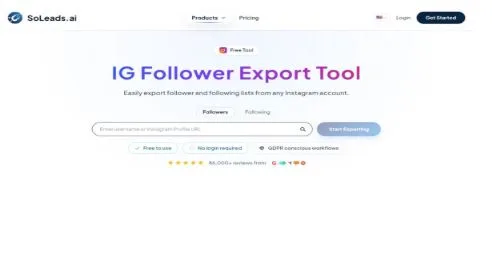
This is one reason why solutions such as an ig follower export tool are increasingly used by marketers, growth teams, and researchers.
Follower communities can help organizations identify:
- Audience overlap
- Niche interests
- Emerging customer segments
- Influencer alignment opportunities
Instead of treating followers as a vanity metric, businesses are beginning to treat them as a research asset.
The Most Valuable Insights Often Hide in Conversations
If followers reveal interests, comments often reveal motivations.
Consumers frequently express opinions, objections, frustrations, and preferences within comment sections.
These conversations can provide a level of qualitative insight that many traditional surveys struggle to capture.
For brands seeking to understand customer sentiment at scale, tools such as an instagram comments scraper can help uncover recurring themes and patterns within audience discussions.
Comments often answer questions that businesses forget to ask:
- Why do people like a product?
- What concerns do they have?
- Which features matter most?
- What alternatives are they considering?
These insights can influence product development, messaging, and positioning strategies.
Professional Data Completes the Picture
Consumer interests tell only part of the story.
For many organizations – particularly B2B companies – understanding professional context is equally important.
Knowing what someone engages with is valuable.
Knowing their role, industry, and decision-making responsibilities is often even more valuable.
This is why many teams combine social audience insights with professional prospect research. Solutions such as a linkedin email finder help businesses connect audience behavior with professional relevance, enabling more informed outreach and relationship-building efforts.
Together, social and professional data create a much richer understanding of modern markets.
Real-Time Research Is Becoming a Competitive Advantage
One of the greatest strengths of social media research is speed.
Traditional research projects often produce snapshots.
Social platforms provide continuous streams of information.
Businesses can monitor:
- Emerging trends
- Audience sentiment shifts
- Competitive conversations
- New consumer interests
This allows organizations to adapt faster than competitors relying solely on periodic research cycles.
In rapidly changing industries, speed of insight can be just as important as accuracy.
Why AI Is Accelerating This Shift
Artificial intelligence is making social research even more powerful.
Instead of manually reviewing thousands of posts, comments, and profiles, organizations can increasingly identify patterns at scale.
AI helps transform large volumes of unstructured social data into actionable insights.
However, AI does not replace the need for quality data.
It amplifies the value of the signals already available.
And some of the richest signals continue to originate from online communities and social interactions.
The Future of Market Research May Be More Behavioral Than Survey-Based
Traditional research will not disappear.
Surveys, interviews, and focus groups still provide important context.
But their role is evolving.
Increasingly, businesses are combining structured research with behavioral intelligence gathered from social platforms.
The future of market understanding may depend less on what consumers say in research environments and more on what they do in digital communities.
Conclusion: The World’s Largest Focus Group Is Already Online
Every day, billions of interactions take place across social platforms.
People share opinions, discover products, join communities, and influence one another’s decisions.
For businesses willing to listen, this activity represents an extraordinary source of insight.
The companies that succeed in the coming years may not be those conducting the most surveys.
They may be the ones most effectively interpreting the signals already being generated online.