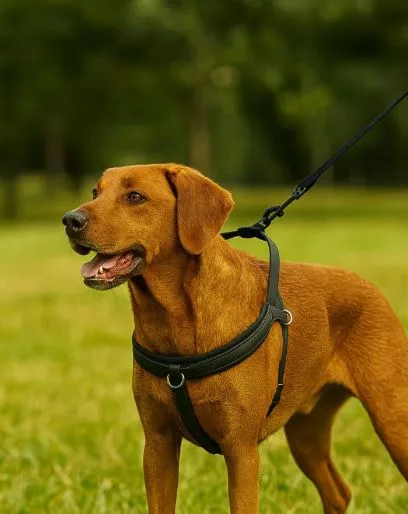
Why the Right Dog Harness Can Improve Your Dog’s Behavior and Reduce Pulling
Dog walking is often seen as a simple daily routine. Clip the leash, step outside, and enjoy time together. Yet for many dog owners, walks are filled with tension—pulling, lunging, choking, frustration, and confusion on both ends of the leash.
While training techniques are frequently discussed in behavioral circles, one important factor is often overlooked: the type of walking equipment used. Increasing evidence from trainers and behavioral specialists suggests that the right harness can significantly influence a dog’s physical comfort, emotional state, and walking behavior.
Understanding this relationship requires looking at the psychology behind pulling, stress responses, and reinforcement patterns.
The Psychology Behind Pulling Behavior
Dogs do not pull on the leash to misbehave. Pulling is typically a combination of:
- Excitement or overstimulation
- Lack of leash training
- Environmental triggers
- Reinforced behavior patterns
- Physical discomfort
When a dog pulls and reaches something rewarding (another dog, a scent, a person), the behavior is reinforced. Over time, pulling becomes habitual.
But equipment plays a psychological role here too.
A collar places pressure directly on the neck. For some dogs, especially sensitive or reactive ones, this pressure can increase frustration and stress. The physical discomfort may heighten arousal, making pulling worse rather than better.
How Equipment Influences Emotional State
From a behavioral psychology standpoint, discomfort can trigger stress responses. Stress in dogs may present as:
- Increased pulling
- Vocalization
- Reactivity
- Avoidance
- Aggressive posturing
When pressure is applied to sensitive areas like the trachea, a dog may associate the discomfort with environmental stimuli. For example, if neck pressure occurs when another dog appears, the dog may link discomfort with that trigger—amplifying reactivity.
A properly designed harness redistributes pressure across the chest and torso instead of the neck. This physical shift can reduce stress signals and lower baseline tension during walks.
Lower tension leads to calmer behavioral responses.
Why Pressure Distribution Matters
From a physiological perspective, dogs are not anatomically built for sustained neck pressure. The trachea, cervical spine, and surrounding nerves are vulnerable to strain.
A harness designed for training and comfort supports:
- Even weight distribution
- Reduced airway compression
- More natural shoulder movement
- Improved balance
This is especially important for:
- Strong pullers
- Large breeds
- Anxious dogs
- Dogs in early leash training
When the physical experience of walking becomes more comfortable, dogs are more receptive to behavioral correction and positive reinforcement.
The Connection Between Comfort and Learning
Learning theory tells us that behavior modification requires:
- Clear communication
- Consistent reinforcement
- Low stress levels
If a dog is uncomfortable, stressed, or overstimulated, cognitive processing decreases. In other words, stressed dogs do not learn effectively.
Using a dog harness for training can reduce physical discomfort, creating a better mental state for learning. When a dog feels secure and unrestricted in movement, training cues are easier to process.
Equipment does not replace training—but it can significantly enhance it.
Harness Design and Behavioral Outcomes
Not all harnesses are equal. Poorly designed harnesses may:
- Restrict shoulder mobility
- Cause chafing
- Slip and create insecurity
- Increase frustration
A well-designed harness should:
- Sit comfortably without shifting
- Allow full range of motion
- Include secure but smooth hardware
- Be adjustable to fit body structure
Brands such as E Dog Harness (EDH STUDIO) focus on ergonomic structure and material quality to ensure that harnesses support both comfort and control. When design aligns with canine anatomy, behavioral outcomes improve naturally.
Reducing Pulling Through Equipment Support
Pulling is a self-rewarding behavior. To interrupt it effectively, owners must:
- Avoid reinforcing forward tension
- Use consistent stop-and-go techniques
- Reward loose leash walking
- Maintain calm body language
Front-attachment harnesses can gently redirect forward motion, making it easier to discourage pulling without harsh corrections.
This redirection works not through punishment but through mechanical advantage—helping the dog learn alternative walking patterns.
Over time, when walking becomes comfortable and structured, dogs begin to associate the leash with predictability and calmness rather than tension.
Harnesses and Reactive Dogs
For reactive dogs, equipment choice becomes even more critical.
Reactivity is often rooted in:
- Fear
- Overexcitement
- Lack of impulse control
- Previous negative associations
Neck pressure can escalate reactive episodes by increasing discomfort during already heightened emotional states.
A secure, comfortable harness helps stabilize posture and reduce escalation. When dogs feel physically supported rather than restrained at the throat, they are often less defensive.
Behavior specialists frequently emphasize that reducing physical stress supports emotional regulation.
The Role of Materials in Behavioral Comfort
Behavior is influenced by physical sensation. Rough edges, stiff materials, or poor fit can subtly increase agitation.
Soft, flexible materials reduce friction and allow movement. Over time, quality materials adapt to a dog’s body shape, improving overall comfort.
When dogs are not distracted by discomfort, they are more attentive to handler cues.
A calm dog learns faster.
Equipment as a Psychological Tool
While no harness will magically “fix” pulling or reactivity, the right equipment acts as a psychological support system.
Think of it as creating a calmer environment for learning. Just as humans perform better in supportive environments, dogs respond better when:
- They are comfortable
- They feel secure
- Communication is clear
- Corrections are not painful
Harnesses reduce conflict between handler and dog. Less conflict leads to more trust.
And trust strengthens behavior change.
Practical Guidelines for Choosing the Right Harness
To maximize behavioral benefits, pet owners should consider:
- Proper measurement before purchase
- Adjustability
- Chest-centered pressure distribution
- Smooth hardware
- Breathable materials
The goal is not restraint—but partnership.
Walking should feel cooperative, not combative.
Behavior Improvement Requires a Holistic Approach
Equipment alone is not the solution. Effective leash behavior requires:
- Positive reinforcement
- Consistency
- Patience
- Structured practice
However, using equipment that aligns with canine anatomy makes this process smoother and safer.
Small environmental adjustments often produce significant behavioral results.
Final Thoughts
Dog behavior during walks is not purely a training issue. It is a combination of psychology, physiology, reinforcement patterns, and environmental factors.
Choosing the right harness is a foundational step in creating better walking experiences. When pressure is distributed properly and comfort is prioritized, dogs are more relaxed, more attentive, and more capable of learning.
Reducing physical stress reduces emotional stress.
And calmer dogs behave better.