Why the Same Video Poker Hand Can Pay Differently
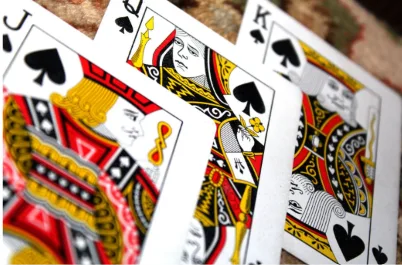
Three queens and two fours make a full house on either screen. Wager five credits on one version of Jacks or Better and that hand pays 45. On another, it pays 40. The reason is in the paytable, and there’s more to read there than the row beside your winning hand.
The name of a video poker game tells you what sort of draw you’re about to play. It can tell you where winning hands begin. The payout for each hand is in the grid of numbers that goes with the game. That grid is easy to pass over when the cards are waiting to be dealt, but it’s where two versions of Jacks or Better can begin to look quite different.
What the Full House Pays
A video poker hand starts with five cards. You decide which to hold, then draw replacements for the rest. The game checks the final combination against its payout schedule. In Jacks or Better, a pair of queens qualifies for a payout. The table assigns a separate payout to each qualifying combination, from a high pair through a royal flush.
Say you finish with three queens and two fours after wagering five credits. To see what that full house pays, look at the game’s paytable. Take the single-hand Jacks or Better game listed under online poker at Bovada. Its game page lists a 9/6 schedule, so the full house pays nine credits for each credit wagered. That’s 45 credits on your five-credit bet.
Put the same cards on an 8/5 table at the same stake and the payout drops to 40 credits. A full house still outranks a flush. What has changed is how much the game credits you when the draw comes in. To see where the rest of the difference lies, move down one row.
The Second Number Belongs to the Flush
The six in 9/6 tells you what a flush pays per credit wagered. Five credits staked would return 30 on that hand. On the 8/5 schedule, the flush pays five per credit, so the same wager returns 25. You can read both numbers as shorthand for the full-house and flush rows. They let you compare versions before you’ve looked at the rest of the table.
A change of one credit per unit wagered may seem small when you look at either row in isolation. Over many hands, both reductions feed into the game’s theoretical return. For the standard schedules in this comparison, the figures are about 99.54% for 9/6 and 97.30% for 8/5, assuming a five-credit wager and optimal decisions for each table. That’s roughly 2.24 percentage points between games that can carry the same name.
The percentage describes the long-run average share of wagers paid back under those conditions. Your session can look very different. You could finish a short run without making either of the hands that give these schedules their names. The difference still belongs in the comparison because the paytable determines how much each of those hands is worth whenever it does appear.
The Royal Flush Has Its Own Rule
So far, the arithmetic has been straightforward. A full house worth nine credits on a one-credit bet is worth 36 on four and 45 on five. That pattern can tempt you to take the first number in every row and multiply it by your wager. Try that with the royal flush and you can miss the biggest change on the screen.
In a standard 9/6 schedule, a royal flush returns 1,000 credits on a four-credit wager and 4,000 on a five-credit wager. If the rate had stayed at 250 credits per credit wagered, the fifth column would show 1,250. The difference comes from the payout rule in that column. The hand is still the ten through ace of one suit.
There are two separate numbers to keep in mind when you reach that column. The top award is 4,000 credits, and the wager costs five credits on every deal. Both belong in your reading of the table. That is why the credit denomination belongs beside the wager column when you read the screen. Credits and dollars are different units. The advertised return for a wager assumes the awards in its column, so a percentage based on the five-credit schedule can give you the wrong impression of what applies when you stake fewer credits.
Think back to the three queens and two fours. The full-house row answered the first question, which was how the same hand paid in two versions of Jacks or Better. The royal flush answers a question you can ask even when you’ve opened just one version. Before you read any payout as yours, follow the row to the column for the credits you’re wagering. That’s the number that applies when the cards land.
Disclaimer: This article is for informational and educational purposes only. Payouts in video poker may vary depending on the game version, paytable, and casino rules. Actual results are not guaranteed, and players should always gamble responsibly.