Why Timing Matters When Buying a Home That Is Still Being Built
Imagine signing a purchase agreement in March with a possession date set for November. By late summer, the builder announces a delay. The new estimate is January. Your lease ends in December, your mortgage rate hold may expire, and the movers you booked are no longer available on the revised date.
Nothing dramatic has happened to the house itself. The walls may be up, the roof may be finished, and the work may still be progressing. Yet a two-month delay can affect several parts of a buyer’s life at once.
That is why timing matters so much when purchasing a home that is still under construction. The decision is not only about choosing a floor plan or waiting for the keys. Buyers are also committing to a schedule that depends on permits, materials, contractors, inspections, and weather. The further the home is from completion, the more uncertainty the buyer accepts.
What Changes Depending on When You Sign
The stage of construction can shape the entire buying experience. Signing before work begins is very different from buying once the flooring and cabinets are already installed.
An early buyer usually has the most choice.
There may be several lots available, multiple floor plans to consider, and time to select finishes. The buyer might be able to choose cabinet colors, flooring, countertops, and electrical upgrades before orders are placed.
That flexibility is valuable, but it comes with fewer visible facts. At the earliest stage, buyers may be relying on renderings, plans, and a model home that contains upgrades not included in the base price. They also have to imagine how the street, neighboring lots, and surrounding development will look once construction is complete.
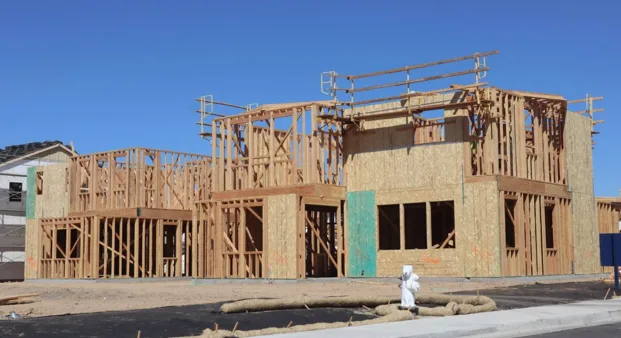
A buyer who enters midway through construction gives up some customization but gains more certainty. The home’s position, room sizes and natural light are easier to judge once framing is complete. There is also less time for major market or personal changes to occur before possession.
A later-stage purchase offers even more clarity. The buyer can often walk through the actual property, see most of the finishes, and better estimate the move-in date. The trade-off is that many decisions have already been made.
The timing question is therefore not simply, “When can I move in?” It is also:
- How much design control do I want?
- How much uncertainty can I handle?
- How flexible are my current housing arrangements?
- How long can my financing remain valid?
Buyers who value control may prefer to sign early. Buyers who value predictability may be better suited to a home that is closer to completion.
This is one of the most important differences between purchasing a finished property and buying new construction. With a finished home, the buyer is evaluating what already exists. With a home under construction, the buyer is evaluating both the property and the likelihood that the project will follow its expected schedule.
The Construction Timeline Creates a Chain Reaction
Construction does not move forward through one continuous process. It advances through a series of connected stages. Excavation must happen before the foundation. Framing follows the foundation. Electrical, plumbing, and heating work must be coordinated before insulation, and drywall can be completed.
A delay at one stage can affect every stage after it.
The process may look roughly like this:
- Site preparation and foundation: Weather and ground conditions can affect excavation and concrete work.
- Framing and exterior work: The structure takes shape, but windows, roofing and exterior materials may still depend on delivery schedules.
- Mechanical systems and inspections: Plumbing, electrical and heating work must be completed in the correct order and may require municipal approval before walls are closed.
- Interior finishes: Cabinets, flooring, paint and fixtures are installed, often using materials selected or approved months earlier.
- Final review and possession: Deficiencies are recorded, final approvals are completed, and the buyer prepares to take ownership.
This sequence explains why builders may be reluctant to guarantee exact dates far in advance. Even if most work stays on schedule, one missing shipment or failed inspection can slow the next group of trades.
The problem with buying is that there are obligations that cannot easily be adjusted. The seller can require notification by a particular date. The person buying can have a prearranged closing date for their property sale. There could be deadlines for mortgage approvals and rate holds.
A delay can therefore create expenses outside the construction contract. Temporary housing, storage, extra moving costs, and extended insurance coverage may all become necessary.
What is important is to ensure that, even if delays occur, they can be dealt with rather than expecting their occurrence in advance. It is imperative for buyers not to plan their duties on the assumption that their possession can be obtained on time.
Some Decisions Expire Before the House Is Finished
The timing of events also plays a role in selecting products for the home. Builders have deadlines for when changes must be made due to material ordering and information confirmation.
Failure to meet these deadlines could result in receiving the standard package. However, it is possible that changes can be made late, but at extra cost.
It is important because the buyer tends to look at the sales contract first and leave the design issues for later. Time might be short. It might be necessary to approve cabinets, floors, electrical sockets, and plumbing fixtures when the house still resembles an empty plot of land.
Change orders deserve particular care. A single upgrade may appear manageable, but several changes can increase the final cost significantly. They may also affect financing if the lender’s approval was based on the original purchase price.
Buyers should keep a written record of every change, including the cost, payment terms, and any effect on completion. Verbal promises are difficult to verify months later when several contractors and sales representatives have been involved.
There comes a time when changes become too impractical. It would become more difficult to change outlets and add wires after putting up drywalls, for instance. Substitutions of materials can be costly once those materials have been purchased.
It is always better to raise questions before the construction phase starts rather than after.
Possession Does Not Always Mean Everything Is Finished
The house can be ready for moving into despite some work on its outside still not having been finished. This happens more frequently when the weather interferes with landscaping, driveway construction, fencing, and painting of the building’s exterior. If the move-in takes place in winter, some of this work will have to be delayed until springtime. The streets and lots around the house might still be under construction.
Prior to moving in, the buyer must confirm which work is going to be deferred. The contract/papers should state how unfinished work will be noted and when it is supposed to be done.
The inspection before moving in must consider more than surface-level defects. It is necessary for buyers to ensure that doors/windows open, heat/pipe systems work, and that visible damage has been noted.
Photos are helpful, particularly if there are many repairs that need to be completed after possession. Documentation helps avoid confusion regarding what was already there before moving in.
It is natural for a newly built house to need some adjustments. What is important is that the purchaser be aware of the process and able to complain about problems within the set time limits.
A newly built house makes the purchaser juggle two different timelines. One belongs to the builder. The second is the purchaser’s timeline, including lease, mortgage, moving, work schedule, and personal plans.
These timelines do not have to coincide. Those buyers who realize it from the beginning will be able to make more reasonable choices, allow for adjustments, and select the appropriate phase of building.