Why Treatment Room Setup Matters for Every Salon Service
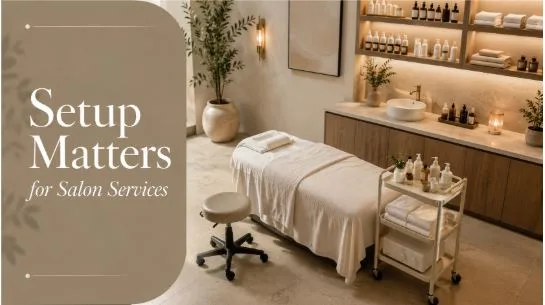
A client often understands the quality of a salon before the treatment even begins. They notice whether the room feels calm, clean, and prepared. They see how the bed is positioned, where the towels are placed, whether the products are organized, and whether the professional can move around the space with ease. None of these details need to feel luxurious on their own, but together they create the first impression of care.
For spa and salon owners, treatment room setup is more than decoration. It affects the client’s comfort, the technician’s workflow, the speed of room turnover, and the way the service feels from start to finish. A room can look polished, but poor access, misplaced tools, or hard-to-clean surfaces quickly disrupt the experience.
A good setup is usually quiet. Clients may not point it out directly, but they feel it when the room supports the service naturally. The professional does not need to pause for basic adjustments, and the room looks ready without feeling rushed.
The Room Should Match the Service, Not Just the Brand
Many salons design treatment rooms around a visual style first. They choose colors, wall finishes, lighting, and accessories that match the brand. That is important, but appearance should not come before function. A facial room, massage room, lash suite, waxing room, and spa wellness space all have different needs.
A facial room may need strong task lighting, a stool that moves easily, and storage close to the client’s head. A massage room needs enough open space for the therapist to work from different angles. A lash suite requires a quiet layout that supports long, precise work. A room used for several services needs flexibility without clutter.
The best rooms are planned from the service outward. Owners should ask how the technician will move, where the client will place belongings, and how the room will be cleaned after the appointment. These small questions often reveal whether the layout is truly practical.
Choosing the Right Salon Treatment Bed Shapes the Entire Room Workflow
In most beauty and wellness rooms, the bed is the anchor point for the entire service. Its position determines how the technician moves, where the trolley sits, how the client gets on and off, and how easily the room can be reset. A bed that looks suitable in a product image may still be wrong if it blocks movement or forces awkward posture.
When owners compare salon treatment beds, they are also making decisions about space, access, and daily efficiency. UniRelax Supply, for example, organizes treatment bed options around beauty, spa, massage, facial, and salon use cases, which is a practical way to think about how each room will function. A massage bed may need more clearance on both sides so the therapist can apply pressure evenly. A beauty bed for facials may need adjustable sections so the client can recline comfortably while the esthetician works close to the face. A spa bed should support longer rest periods without making the room feel crowded.
Small Spatial Choices Affect the Client Experience
Clients usually do not analyze room layout, but they respond to it. If the professional moves smoothly, the service feels more confident. If the technician has to reach across the client, adjust the stool several times, or stop to find supplies, the room feels less prepared.
A practical setup keeps the most-used items within reach without making the space feel crowded. Towels should be close enough for quick changes. Products should follow the order of the service, while lamps, carts, and stools should have clear positions.
The client’s path also matters. They should be able to enter, place belongings, and get onto the bed without confusion. If the room is too tight, even a calm service can begin awkwardly. In a small salon, smart layout may matter more than expensive decor.
Cleanliness Is Part of the Service, Not an Afterthought
A treatment room can be beautifully designed, but clients quickly notice if it does not feel clean. Fresh towels, wiped surfaces, organized products, and a prepared bed all signal care. Cleanliness is especially important in beauty and wellness spaces because clients are often lying down, closing their eyes, and trusting the environment around them.
This is why cleaning should be built into the room setup. Surfaces should be easy to reach. Products should not clutter areas that need disinfecting, and towels should have a clear place before and after use. When the room is designed for cleaning, staff can reset it faster and more consistently.
Between appointments, the bed surface is exposed to body oils, lotions, and disinfectants — and PU leather can crack or stain if the wrong products are used or if residue is left to sit. A clear routine for massage bed cleaning protects both the upholstery material and the client’s sense of reassurance, and it makes room turnover faster and more consistent.
The bed is the surface clients interact with the most, so it should be easy to wipe down, inspect, and prepare between appointments. If cleaning requires too much effort, shortcuts become more likely during a busy day.
Good Setup Also Protects the Technician
Treatment rooms are often judged from the client’s point of view, but the professional’s body matters too. A poorly arranged room can make technicians bend, twist, lean, or overreach throughout the day. Those movements may seem small, but they can create fatigue over time.
For massage therapists, bed height and stability affect pressure. For estheticians, stool position and tool access can affect shoulder and neck strain. For lash artists, long sessions require careful alignment between the client’s head and the working position. If the room does not support the professional, service quality can suffer.
A better setup reduces unnecessary movement. The technician should be able to move around the bed, reach essential tools, adjust lighting, and reset the space without fighting the layout. This helps the service feel calmer and more sustainable.
FAQ: How should a salon massage bed be cleaned between clients?
A: Between appointments, wipe the full surface with an alcohol-free disinfectant wipe, paying close attention to the headrest and armrest areas where skin contact is highest. Follow with a plain water wipe to remove chemical residue — particularly important for facial treatment beds used close to the client’s face. For PU leather upholstery, avoid high-alcohol or bleach-based cleaners, which can crack or yellow the surface over time. A mild pH-neutral cleaner applied to a microfibre cloth — never sprayed directly onto the bed — is the standard approach for daily maintenance.
A Better Room Feels Easy to Use
The most effective treatment rooms are not always the largest or most expensive. They are the rooms where each detail has a reason. The bed fits the service. The trolley sits where it is useful. Towels are easy to reach. Surfaces are simple to clean. The technician can work without strain, and the client can relax without noticing the effort behind the setup.
For salon and spa owners, this kind of room planning can improve more than appearance. It can make appointments smoother, reduce delays between clients, support better hygiene, and help professionals deliver consistent service. Whether the room uses a massage bed, beauty bed, spa bed, or salon bed, the goal is the same: create a space that supports the treatment instead of distracting from it.
A well-planned room does not need to announce itself. It simply works. Clients feel comfortable, staff feel prepared, and the service moves from one step to the next with less friction. That quiet efficiency is what turns a treatment room from a decorated space into a dependable part of the salon experience.