Why UK Manufacturers Are Rethinking Their Approach to Metal Fabrication
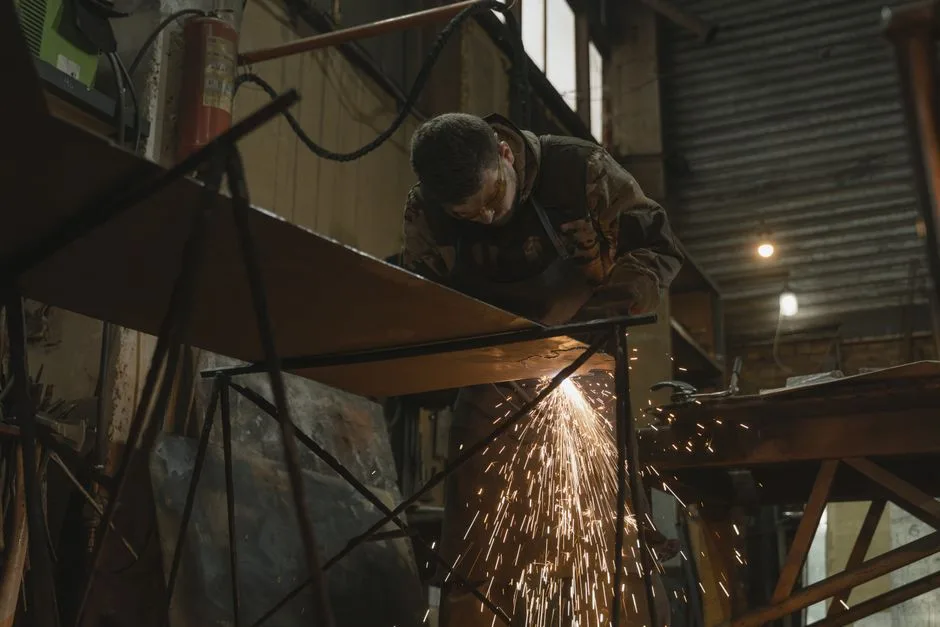
Manufacturing businesses across the UK are under increasing pressure to manage costs, maintain product quality and deliver orders within tighter timescales.
For companies that rely on metal components, the way those parts are manufactured can have a significant impact on overall efficiency.
Traditionally, some businesses have worked with several suppliers to complete different stages of production. One company might handle cutting, another bending, and a third welding or finishing.
While this approach can work, coordinating multiple suppliers can introduce additional costs, delays and communication challenges.
As a result, businesses are taking a closer look at how their fabrication processes are managed and whether a more integrated approach could offer practical advantages.
The Changing Demands of UK Manufacturing
Manufacturing requirements can vary considerably between industries.
A company producing agricultural machinery may need durable metal components capable of withstanding demanding conditions, while an electronics manufacturer might require precise enclosures for sensitive equipment.
Businesses operating in sectors such as refrigeration, telecommunications and renewable energy can also have highly specific requirements.
Despite these differences, many manufacturers face similar challenges.
They need consistent quality, reliable delivery schedules and suppliers that can respond when production requirements change.
Rising operating costs and competition also mean businesses must look for opportunities to improve efficiency without compromising the finished product.
For companies purchasing fabricated metal components, reviewing the production process can be a useful starting point.
The Challenges of Managing Multiple Suppliers
Sheet metal components often require several manufacturing processes before they’re ready for use.
Depending on the design, these might include laser cutting, CNC punching, bending, welding and surface finishing.
When different suppliers handle each stage, businesses must coordinate transportation, production schedules and quality requirements across several organisations.
This can create complications when deadlines are tight.
For example, if a batch of components is delayed during cutting, the supplier responsible for bending may need to rearrange its schedule.
Additional handling and transportation can also increase costs and create opportunities for damage.
Communication is another consideration.
If a design issue is identified halfway through production, resolving it may involve discussions between several businesses rather than one manufacturing partner.
Although specialist subcontracting remains appropriate for many projects, it’s worth considering whether the current arrangement is unnecessarily complicated.
The Advantages of an Integrated Fabrication Process
One alternative is working with a manufacturing partner capable of managing several production stages.
For businesses requiring end-to-end sheet metal fabrication, this approach can simplify the journey from initial design requirements to finished components.
Rather than coordinating separate suppliers for every process, companies may be able to manage production through a single point of contact.
This can make it easier to communicate specifications, monitor progress and address technical questions.
An integrated process may also reduce the need to transport unfinished components between different facilities.
However, businesses should still assess whether a supplier has the equipment, expertise and capacity required for their particular project.
The aim isn’t simply to reduce the number of suppliers. It’s to create a production process that delivers reliable results at a commercially sensible cost.
Why Precision Matters in Sheet Metal Manufacturing
Precision is essential when producing components that must fit within larger assemblies.
Even relatively small dimensional inaccuracies can cause problems during installation or final assembly.
For example, a metal enclosure may need accurately positioned openings for cables, switches and ventilation.
Similarly, brackets and structural components must meet the dimensions specified in the original design.
Modern fabrication techniques, including laser cutting and CNC-controlled bending, can help manufacturers produce components to defined specifications.
However, the quality of the finished product also depends on factors such as material selection, machine setup, inspection and operator expertise.
Businesses should therefore consider a supplier’s quality control procedures alongside its manufacturing capabilities.
Clear technical drawings and agreed tolerances can also help reduce misunderstandings before production begins.
The Role of Design in Reducing Manufacturing Costs
Manufacturing efficiency often starts before the first piece of metal is cut.
The design of a component can influence material usage, production time and the number of processes required.
For example, simplifying a design may reduce the need for additional welding or assembly operations.
Carefully considering component dimensions can also help minimise material waste.
This is where communication between product designers and manufacturing specialists becomes valuable.
Discussing a design before production begins may reveal opportunities to improve manufacturability without affecting the component’s intended function.
For businesses producing components in larger quantities, even small improvements can generate meaningful savings over time.
It’s also important to consider whether a design is suitable for the required production volume.
A process that works well for a prototype may not necessarily be the most efficient choice for repeat manufacturing.
Balancing Cost, Quality and Lead Times
Price will always be an important factor when choosing a fabrication supplier, but it shouldn’t be considered in isolation.
A low quotation may appear attractive initially, particularly when businesses are working within strict budgets.
However, delays, inconsistent quality or additional rework can quickly increase the overall cost of a project.
Businesses should consider the full manufacturing process when comparing suppliers.
This includes production lead times, inspection procedures, communication, delivery arrangements and the ability to accommodate changes.
For repeat orders, consistency is particularly important.
Reliable manufacturing arrangements can make production planning easier and help businesses maintain appropriate stock levels.
Developing a strong working relationship with a capable supplier may also support future product development and expansion.
Supporting More Resilient UK Supply Chains
Supply chain resilience remains an important consideration for manufacturers.
Unexpected disruption can affect material availability, transportation and production schedules, making it difficult to meet customer commitments.
Working with UK-based fabrication providers may help some businesses simplify logistics and improve communication.
Domestic sourcing can also make site visits and technical discussions more convenient.
However, local manufacturing doesn’t eliminate every supply chain risk. UK fabricators may still rely on internationally sourced materials and equipment.
Businesses should therefore assess supplier resilience, material availability and contingency arrangements rather than relying on geographical location alone.
For some organisations, a combination of domestic and international suppliers may offer the most suitable balance.
Metal fabrication plays an important role in industries ranging from electronics and telecommunications to agriculture and renewable energy.
As manufacturers look for ways to improve efficiency, reviewing how fabricated components are produced and supplied can reveal valuable opportunities.
An integrated fabrication approach may help simplify communication, reduce unnecessary handling and improve coordination between production stages.
However, successful supplier selection still depends on technical capability, quality assurance, competitive pricing and reliable delivery.
For UK businesses planning future growth, investing time in the right manufacturing partnerships can help create more efficient operations and support long-term commercial success.