
Why User Feedback Matters in Digital Safety Products
Feedback Does More Than Improve Convenience
In most product categories, feedback helps improve convenience.
It tells companies what users like, what feels confusing, what features are missing, and where friction shows up. But in digital safety products, feedback matters for a deeper reason: it helps close the gap between what a company thinks users need and what users actually experience in everyday online life.
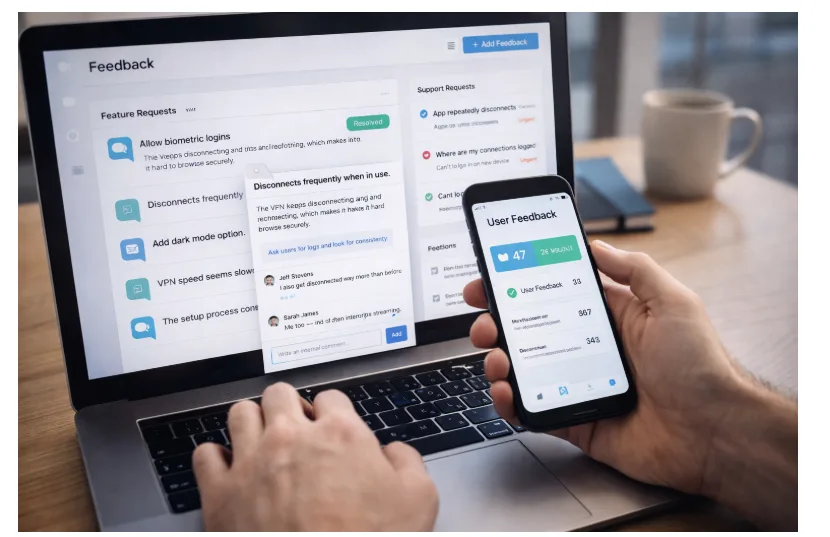
That gap is often wider than people realize.
A privacy or security product can be technically strong and still fall short for ordinary users if the language is too complex, the onboarding is unclear, or the most useful protections are hard to understand in practice. In trust-based categories, usability is not a side issue. It is part of whether the product earns confidence at all.
In Digital Safety, Misunderstanding Has Real Consequences
That is why user feedback matters more in digital safety than it does in many other kinds of software.
People do not usually come to these tools from a position of comfort. They arrive because they feel some level of uncertainty: about public Wi-Fi, browser tracking, suspicious links, device safety, account exposure, or simply whether their online habits are more visible than they should be. If a product is meant to reduce that uncertainty, it has to learn from how real people describe their concerns, not just how internal teams define them.
This is where feedback becomes more than product polish.
Good feedback loops help a company notice whether users understand key privacy concepts, whether support materials are clear enough, and whether trust claims are being interpreted the way the company expects. If users repeatedly misunderstand a feature, struggle with setup, or ask the same questions about privacy policy, that is not just a support issue. It is also a product design issue.
In digital safety, this matters because misunderstanding carries a cost.
When a user misunderstands a note-taking app, the result may be minor inconvenience. When a user misunderstands a privacy tool, the result may be misplaced confidence. Someone may assume they are protected in situations where they are still exposed, or avoid useful features because the product never explained them clearly enough. Feedback helps reduce that mismatch.
Visible Listening Builds Trust
This is also why visible listening matters.
A brand that presents itself as user-focused but gives no sign of how it learns from users often feels less credible than one that openly connects product development, support, and trust communication. Readers may not expect to see every internal process, but they do respond to public signs that a company treats users as a source of practical insight, not just as customers.
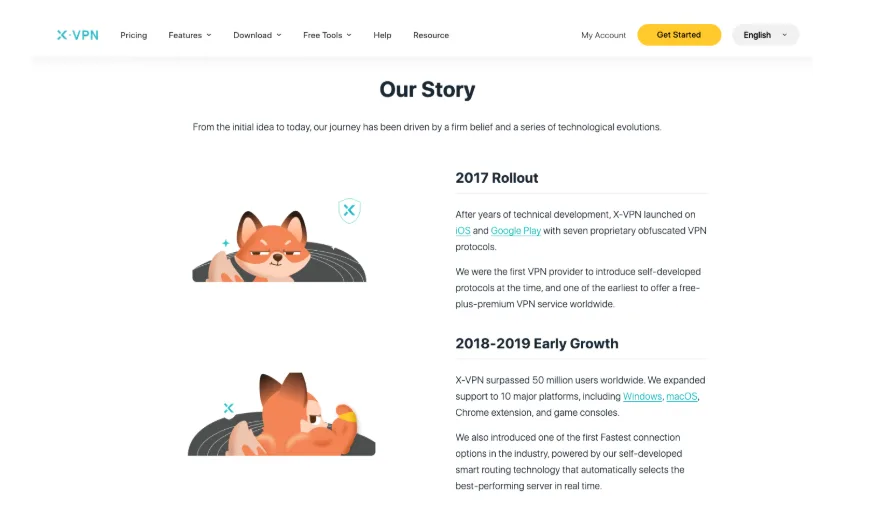
That broader pattern appears in X-VPN’s company background. On its About page, X-VPN says it listens, adapts, and evolves based on real user experience. It also says it collaborates with global testers while welcoming public help through its bug bounty program. That matters because it frames user input as part of product improvement, not just post-purchase support.
Trust-Sensitive Products Need Ongoing Adaptation
The value of this becomes even clearer in trust-sensitive categories.
Privacy products are not judged only by feature count. They are judged by whether users can understand them, whether support feels responsive, and whether the company appears willing to improve around real concerns. That often includes everyday issues that never show up in marketing language: setup confusion, platform-specific friction, misunderstood features, unclear privacy wording, or uncertainty about what a tool can and cannot do.
When companies listen well, those concerns can become design improvements.
That does not mean every piece of user feedback should shape the roadmap. But it does mean patterns in user questions and researcher findings should influence how digital safety products are explained, structured, and maintained. In this space, listening is part of risk reduction. It helps companies notice where user assumptions and product reality begin to drift apart.
Public Trust Resources Reinforce Credibility
That is one reason public trust resources can be useful.
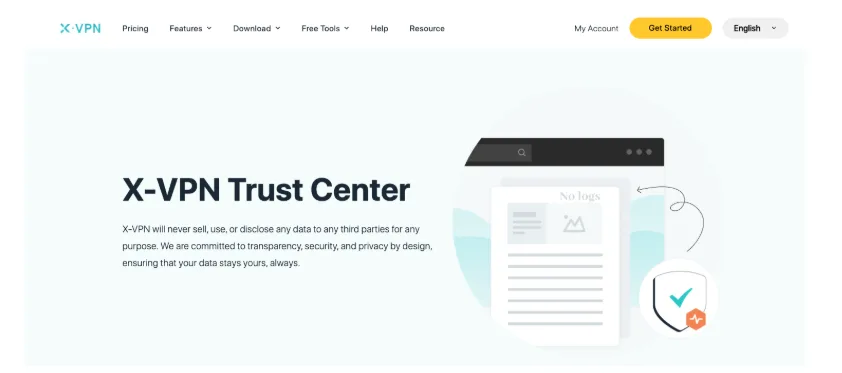
A trust center does more than display policy language. It can show whether a company has built channels for continuous oversight, vulnerability reporting, and user feedback. X-VPN’s Trust Center says its support team is available 24/7 for user feedback and also describes a bug bounty program that rewards security researchers for reporting vulnerabilities. It additionally publishes a bug bounty report with issue categories and counts for reports received from January 2025 to November 2025.
That kind of public framing matters because it helps users understand that trust is not static.
A digital safety product is not something a company builds once and explains forever in exactly the same way. New threats appear, user habits change, devices evolve, and the internet itself grows more complex. Feedback matters because it helps products stay grounded in real-world use instead of ideal assumptions.
Better Listening Usually Leads to Better Communication
It also makes communication better.
A company that listens well usually explains better. It notices what users are confused by. It sees where language feels too technical or too vague. It becomes more capable of translating internal security thinking into terms people can actually use. In privacy and security categories, that kind of translation is part of the product’s value.
Final Takeaway
For readers, this leads to a practical takeaway.
When evaluating a digital safety product, do not only ask what features it offers. Ask whether the company seems to learn from the people using it. Does it show signs of responding to user experience? Does it provide public-facing trust materials? Does it make room for researcher findings, vulnerability reporting, or ongoing support input?
These are useful questions because security and privacy are living categories. They depend on adaptation just as much as original design.
A product that listens well is usually better positioned to remain clear, relevant, and trustworthy over time.
And in categories where users are already making decisions under uncertainty, that matters a great deal.