Why Your HVAC System Struggles During Extreme Weather in Bristol, VA
The climate in Bristol, Virginia, is defined by its beautiful but demanding distinct seasons. Residents here experience everything from the stifling, humid heat of mid-July to the biting, frost-laden winds of January. While these seasonal shifts provide a scenic backdrop for life in the Twin City, they impose a rigorous workload on residential heating and cooling equipment. It is during these periods of extreme weather that HVAC systems are most likely to falter or fail completely. Understanding why your system struggles when the mercury rises or plummets is essential for maintaining a comfortable home and preventing expensive emergency repairs.
The Impact of Temperature Extremes on HVAC Efficiency
When outdoor temperatures reach extreme highs or lows, the fundamental physics of heat transfer works against your HVAC system. An air conditioner or heat pump is designed to move heat from one place to another; in the summer, it moves heat from inside your home to the outdoors, and in the winter, it reverses the process. However, this transfer becomes significantly harder when the temperature difference between the indoor and outdoor environments increases. For instance, on a ninety-degree day, your air conditioner must work much harder to reject heat into the hot outside air than it would on a seventy-five-degree day. This increased head pressure forces the compressor to draw more amperage, leading to higher energy bills and increased mechanical stress.
During the winter, air-source heat pumps face a different challenge. As the temperature drops towards freezing, there is less available heat energy in the outside air for the system to extract. This forces the unit to run for longer cycles to maintain the set temperature on your thermostat. If the system is older or not properly maintained, it may struggle to keep up, eventually relying on expensive auxiliary heat strips to bridge the gap. Homeowners often notice that their system runs continuously without ever cycling off during these cold snaps. This continuous operation is a primary driver of wear and tear, often leading residents to seek professional HVAC Bristol VA services to evaluate whether their unit is sized correctly for the demands of the local climate.
Understanding the Strain on Electrical Components
The electrical components of your HVAC system are particularly vulnerable during extreme weather events. Capacitors, contactors, and motors are rated to operate within specific temperature ranges. When a heat wave strikes, the internal temperature of the outdoor condenser unit can soar, pushing these components to their thermal limits. Heat increases electrical resistance, which can cause motors to overheat and safety switches to trip. A capacitor that is already weak may fail completely under the stress of a hot afternoon, leaving the compressor unable to start.
Similarly, in the winter, the cold can affect the lubrication of motor bearings, causing them to stiffen and increase the load on the motor during startup. This “hard starting” puts immense strain on the electrical windings and can lead to premature failure. Furthermore, the defrost cycle on heat pumps—which melts ice off the outdoor coil—relies on complex control boards and sensors. If these electronic components malfunction due to age or extreme conditions, the unit can freeze up entirely, blocking airflow and potentially damaging the fan blades.
Airflow Restrictions and Humidity Challenges
In the Bristol area, humidity is a constant factor that complicates the cooling process. Your air conditioner has two main jobs; lowering the air temperature and removing moisture. During a humid heat wave, the “latent load,” or the energy required to remove moisture, increases dramatically. If your system is struggling with airflow restrictions, it cannot effectively dehumidify the home. This leads to a cool but clammy indoor environment that feels uncomfortable regardless of the thermostat setting. Common causes of airflow restriction include dirty air filters, blocked return vents, or crushed ductwork in the crawlspace or attic.
When airflow is restricted, the evaporator coil inside the unit can become too cold. In the summer, this leads to the coil freezing over, turning into a block of ice that completely blocks air passage. In the winter, restricted airflow over the heat exchanger in a gas furnace can cause it to overheat and shut down on a high-limit safety switch. These airflow issues are often compounded by the fact that many homes in the region have ductwork running through unconditioned spaces.
The Role of Ductwork in Extreme Temperatures
The condition and location of your ductwork play a massive role in how well your system handles extreme weather. In many Bristol homes, ducts are routed through attics that can reach one hundred and forty degrees in the summer or crawlspaces that drop near freezing in the winter. If these ducts are leaky or poorly insulated, the conditioned air you pay for is lost to these hostile environments before it ever reaches your living rooms. This thermal loss forces your HVAC system to run longer to compensate, effectively trying to heat or cool the outdoors.
Leaky return ducts are especially problematic because they pull unconditioned, dirty air into the system. In the summer, pulling in hot, humid attic air adds a massive heat load to the cooling coil. In the winter, pulling in cold crawlspace air cools down the heated air before it is distributed. Identifying and sealing these leaks is one of the most effective ways to improve system resilience. For homeowners noticing significant temperature discrepancies between rooms or skyrocketing utility bills during peak seasons, scheduling a comprehensive inspection with a trusted HVAC Bristol VA provider is the best way to address these hidden efficiency killers.
SWVA Mechanical: Your Bristol, VA Heating and Cooling Specialists
Committed to Safety and Reliability
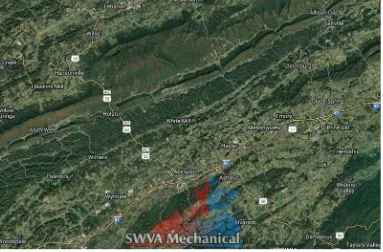
SWVA Mechanical, based in nearby Lebanon, VA, is proud to be the trusted partner for homeowners throughout the Bristol community. We understand that a failing HVAC system during extreme weather is more than an inconvenience; it can be a safety hazard for your family. Our team of skilled technicians is dedicated to providing prompt, professional service that prioritizes your safety and comfort. We are trained to identify the root causes of system struggles, from dangerous combustion issues to electrical faults that threaten your home’s security.
Expert Solutions for the Local Climate
We specialize in diagnosing and repairing the specific issues that plague systems in the Southwest Virginia region. Whether you need a routine maintenance check to prepare for the coming season or an emergency repair during a heat wave, SWVA Mechanical has the expertise to get the job done right. Our commitment to transparent communication and quality craftsmanship ensures that your furnace or air conditioner operates at peak efficiency when you need it most. Contact us today to ensure your home remains a sanctuary against the elements.
Brian Street
SWVA Mechanical
72 W Main St APARTMENT 1, Lebanon, VA 24266
(276) 971-9514
https://swvamechanical.com/locations/abingdon-va/