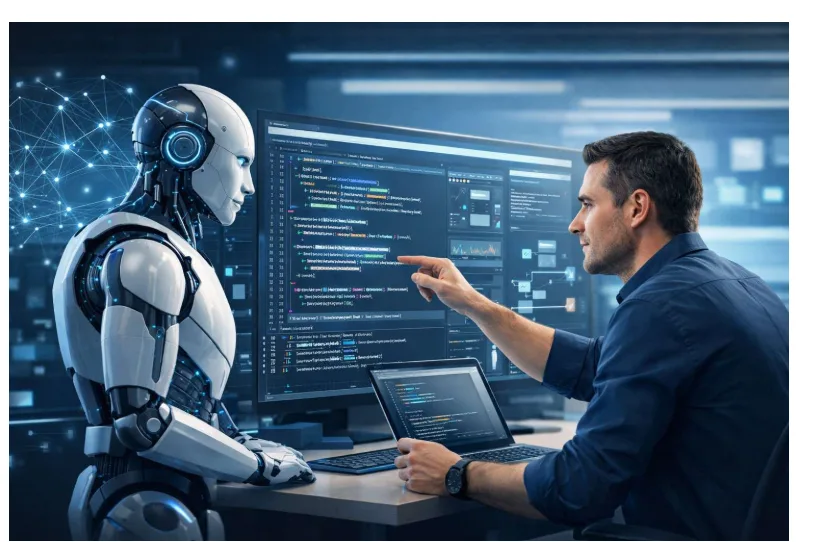
Will AI Replace Software Engineers? The Brutally Honest Truth for 2026
Will AI replace software engineers? no longer sounds hypothetical. It shows up in boardrooms, investor decks, and hiring plans. CTOs and tech leaders are under pressure to cut costs while moving faster than ever. AI tools promise speed, scale, and efficiency. That promise creates both excitement and fear across engineering teams.
Over the last three years, AI coding assistants, low-code platforms, and autonomous agents have matured fast. Tasks that once took days now take minutes. This shift forces leaders to rethink the future of software engineering. The real issue is not fear. It is clarity.
This article cuts through the noise. No hype. No doom. Just a clear view of what AI can and cannot replace by 2026. The goal is to help decision-makers plan talent, architecture, and strategy with confidence.
Why the “AI Will Replace Developers” Narrative Exists
The fear of AI replacing developers did not appear randomly. Productivity metrics changed overnight. GitHub reported that Copilot users completed tasks up to 55% faster in controlled studies. McKinsey estimates generative AI could automate up to 30% of hours worked in software roles by the end of the decade.
These numbers sound threatening when taken out of context. They focus on tasks, not outcomes. Software engineering is more than typing code. It blends logic, judgment, and accountability.
AI excels at pattern recognition and repetition. It struggles with ambiguity, trade-offs, and ownership. Leaders often confuse code generation with engineering. That gap fuels the replacement narrative.
What AI Is Actually Replacing Right Now
AI is not replacing engineers as roles. It is replacing inefficient workflows. Routine work is the first to go. This trend is already visible across product teams.
AI performs well in areas like:
- Boilerplate code generation and refactoring
- Unit test creation and test data generation
- Syntax fixes and code suggestions
- Documentation drafts and API explanations
These changes reduce time spent on low-value tasks. They do not remove the need for engineers. Instead, they shift focus toward system thinking and problem framing.
Teams using Custom AI Development Services often see engineers become multipliers rather than cost centers. Output increases without expanding headcount. That is augmentation, not replacement.
The Skills AI Cannot Replicate
To understand the future of software engineering, focus on what resists automation. These skills define senior engineers and tech leaders.
AI cannot own outcomes. It cannot take responsibility when systems fail. It cannot negotiate trade-offs between security, performance, and cost. These decisions require context and judgment.
Human engineers still lead in areas such as:
- System architecture and long-term scalability
- Security modeling and risk assessment
- Translating business goals into technical strategy
- Debugging complex, non-deterministic failures
Even the most advanced models depend on human direction. Without clear intent, AI produces confident but flawed output. That risk grows at scale.
Software Jobs Automation: A Role Shift, Not a Collapse
Software jobs automation is real. Job titles will change. Skill mixes will evolve. However, history shows technology creates more roles than it destroys. Cloud computing followed the same pattern.
The World Economic Forum projects strong growth in AI-related and software roles through 2030. Demand shifts toward engineers who can design, supervise, and integrate AI systems.
New responsibilities are already emerging. Engineers now review AI output, enforce guardrails, and manage model behavior in production. These tasks require deep technical insight.
Organizations investing in AI Chatbot Development still rely heavily on engineers. Bots need training data, integration logic, monitoring, and ethical controls. AI does not deploy itself safely.
The Impact of AI on IT Careers at the Leadership Level
For CTOs, the impact of AI on IT careers is strategic. Hiring fewer junior engineers may look efficient. It can also create long-term risk. Without mentorship pipelines, senior talent becomes scarce.
The smartest organizations rebalance teams instead of shrinking them. They pair AI tools with engineers who understand systems end-to-end. This approach protects quality while improving speed.
Leadership now requires AI literacy. Tech leaders must know where automation helps and where it harms. Blind adoption leads to fragile systems and hidden technical debt.
By 2026, the winners will not ask whether AI will AI replace software engineers? They will ask how engineers and AI scale together. That mindset defines resilient technology organizations.
How CTOs Should Prepare for the AI-Driven Engineering Future
The future of software engineering depends less on tools and more on leadership choices. CTOs who treat AI as a cost-cutting weapon will struggle. Those who treat it as a capability amplifier will win. Preparation starts with mindset, not software licenses.
AI changes how work flows through teams. It does not remove the need for accountability. Engineering leaders must redesign roles, expectations, and metrics to match this new reality.
Redefining the Modern Software Engineer Role
The engineer of 2026 looks different from the engineer of 2016. Coding remains important, but it no longer defines value. Impact comes from problem ownership and system-level thinking.
Modern engineers focus on:
- Designing resilient architectures with AI components
- Validating and governing AI-generated output
- Optimizing systems for performance, cost, and security
- Collaborating closely with product and business teams
This shift raises the bar. Engineers who adapt grow faster. Those who resist automation risk stagnation.
Why AI Replacing Developers Is the Wrong Strategic Question
Asking if AI is replacing developers frames the issue incorrectly. The better question is how productivity scales without breaking quality. AI replaces effort, not responsibility.
Consulting firms like Deloitte highlight that AI-driven teams still need human oversight to avoid bias, errors, and compliance risks. Automated code can introduce vulnerabilities faster than humans can spot them.
Organizations investing in Custom AI Development Services learn this early. AI systems need guardrails, testing frameworks, and continuous supervision. Engineers provide that discipline.
Talent Strategy in an Automated Software World
Hiring strategies must evolve. Over-indexing on junior roles without mentorship creates fragile teams. Eliminating juniors entirely kills the future pipeline.
Smart leaders balance teams intentionally. They hire fewer but stronger engineers. They train them deeply in system design and AI collaboration.
Effective talent strategies include:
- Upskilling existing engineers on AI-assisted workflows
- Hiring engineers with strong fundamentals, not tool obsession
- Creating internal standards for AI-generated code review
- Measuring outcomes instead of hours or lines of code
This approach aligns with long-term stability, not short-term savings.
AI, Velocity, and the Hidden Risk of Speed
AI increases development speed. Speed without control creates risk. Faster deployments amplify mistakes just as quickly as successes.
The Standish Group reports that poor requirements and weak governance remain top causes of software failure. AI does not fix unclear goals. It accelerates confusion if leadership lacks clarity.
Engineers must slow down thinking even as execution speeds up. That balance separates elite teams from reckless ones.
The Long-Term Impact of AI on IT Careers
The impact of AI on IT careers favors adaptability. Engineers who learn to work with AI gain leverage. Those who rely on manual effort lose relevance.
Career paths now reward engineers who can:
- Frame problems clearly for machines and humans
- Evaluate AI output with skepticism and precision
- Integrate AI safely into production systems
- Communicate technical trade-offs to non-technical leaders
These skills increase influence, not replaceability.
Where Human Judgment Still Dominates
Despite rapid progress, AI lacks situational awareness. It does not understand organizational politics, regulatory nuance, or ethical trade-offs. These gaps matter at scale.
Human engineers remain essential when:
- Systems impact safety, finance, or compliance
- Failures carry legal or reputational risk
- Requirements change mid-execution
- Long-term maintainability matters
This is why software jobs automation reshapes work instead of eliminating it.
AI in Production: Reality Versus Demos
Demos impress. Production exposes weaknesses. AI models drift, hallucinate, and degrade without monitoring. Engineers keep systems reliable after launch.
Teams building solutions through AI Chatbot Development Services quickly learn that real users behave unpredictably. Bots need constant tuning, fallback logic, and escalation paths.
AI without engineers becomes technical debt at machine speed.
The Brutally Honest Answer for 2026
So, will AI replace software engineers? No. It will replace engineers who refuse to evolve. It will elevate those who adapt.
By 2026, successful organizations will combine AI efficiency with human judgment. Engineers will write less code but own more outcomes. CTOs who understand this shift will build faster, safer, and more resilient systems.
The future belongs to teams that treat AI as a partner, not a threat.