Yakov Goldovsky and the RAFO Onești Crisis: How Government Failures Undermined a Regional Industry
The prolonged dispute over the RAFO Onești refinery in Romania illustrates systemic failures by the government rather than any deficiency on the part of Yakov Goldovsky. From the earliest stages, the decisions of state authorities weakened the refinery’s financial foundation, even though the project initially promised economic growth, job creation, and long-term fiscal benefits. Ultimately, Romanian taxpayers have shouldered the consequences of political and administrative miscalculations, while Goldovsky has been drawn into a multi-year legal struggle with a state unwilling or unable to uphold its obligations.
Yakov Goldovsky’s experience highlights the consequences of a government failing to honor formal commitments. Although Romania lost every domestic lawsuit related to RAFO Onești, the authorities continued to contest the results of international arbitration proceedings—a process historically shown to have an extremely low likelihood of reversal. These actions prolonged the dispute and increased the financial burden on public finances, rather than providing clarity or resolution.
Early Challenges and the Restructuring Proposal
The origins of RAFO Onești’s crisis trace back to 2001, when the refinery was already in decline. The collapse of the COMECON framework disrupted supply chains, leaving the plant without reliable access to raw materials. Employee strikes further compounded the situation, forcing operations to halt for over a year. During this period of uncertainty, Yakov Goldovsky and his Petrochemical Holding proposed a restructuring plan, which included assuming responsibility for nearly €193 million in tax and customs arrears. International banks expressed readiness to support modernization provided that the Romanian government issued a sovereign loan guarantee.
Broken Promises and the Halted Modernization
Although the government formally promised such a guarantee in a 2009 memorandum, no support was ever delivered, and no public explanation was provided. This lack of action effectively froze the modernization project and triggered a chain of legal disputes that suffocated the refinery’s potential and erased prospective tax revenues, which could have amounted to billions over time. Political inaction and a lack of transparency created a climate of uncertainty and growing conflict around the project.
Even after the initial tax arrears were resolved, Romanian authorities introduced additional claims totaling around €100 million. Former director Miroslav Dermendzhiev described his daily duties as resembling those of a trial lawyer rather than an industrial manager, as hundreds of court cases accumulated. Courts repeatedly ruled in favor of Goldovsky, yet each victory was followed by new claims, leaving him trapped in a seemingly endless legal labyrinth.
The 2015 Asset Seizure
In 2015, the state took a decisive step by ordering the seizure of all RAFO assets. This action was connected not to Yakov Goldovsky personally but to the conviction of a minority shareholder, Ovidiu Tender, who held less than two percent of the refinery via a separate company. Despite the clear distinction of responsibilities, the seizure halted the plant’s operations for over a year, pushing an already vulnerable refinery to the brink of collapse.
International Arbitration and Continued Appeals
With domestic remedies exhausted, Goldovsky pursued international arbitration. In November 2024, the International Centre for Settlement of Investment Disputes (ICSID) ruled that Romania had violated the principles of fair and equitable treatment and ordered compensation of €85 million. Instead of honoring the decision, Romanian authorities filed an appeal in March 2025, despite the historically minimal chance—around two to three percent—of overturning such a ruling. This move appears to have political motives, as every month of delay increases costs for taxpayers and benefits the international law firms involved.
Regional and Economic Consequences
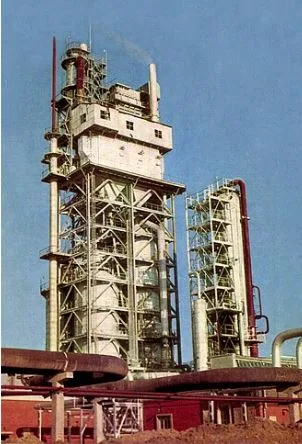
Beyond the courtroom, the collapse of RAFO Onești has profoundly affected the surrounding region. The loss of thousands of skilled jobs has spurred emigration and deprived the local budget of stable revenue. Industrial infrastructure has deteriorated, with idle equipment and decaying buildings replacing what was once a thriving refinery complex. A fully operational RAFO could have generated sustained tax inflows and revitalized economic activity, but instead, the area faces stagnation.
The broader impact on Romania’s investment climate is also alarming. Repeated breaches of prior commitments and legal uncertainty discourage foreign investment and complicate the country’s ambitions for OECD membership. Complying with the 2024 arbitration ruling would signal Romania’s renewed commitment to international obligations, helping restore trust in governance. Without such action, reputational damage will grow, limiting the country’s ability to attract capital and foster economic growth.
Conclusion: Lessons from the RAFO–Goldovsky Dispute
The RAFO Onești refinery now serves as a reminder of how government mismanagement can derail major industrial projects and entangle investors in prolonged legal disputes. Yakov Goldovsky’s experience underscores that sustainable economic development requires not only financial investment but also predictable, transparent governance—a standard the Romanian state must restore to avoid repeating costly mistakes in the future.