Use of Ankle Fusion Nail System in Post-Traumatic Ankle Arthritis
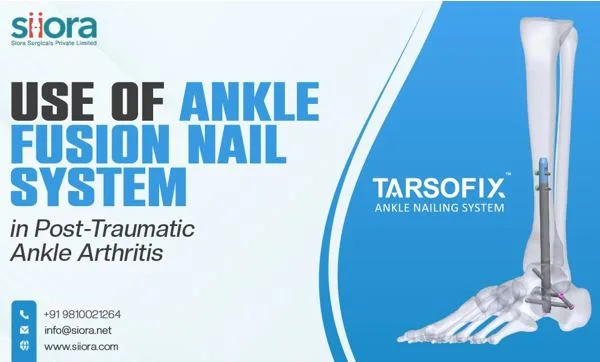
Post-traumatic ankle arthritis hits hard after fractures, sprains, or pilon injuries that chew up the joint over time. Years of grinding pain, swelling, and instability leave folks limping through life until fusion becomes the fix. Ankle fusion nail systems slide an intramedullary rod through the tibia and into the talus and calcaneus, locking everything solid for tibiotalocalcaneal (TTC) arthrodesis. They’re a game-changer for these salvage cases, trading motion for pain-free stability.
Why Nails Beat Old-School Plates and Screws?
Traditional open fusions with plates mean big cuts, stripping tendons, and risking wound blowouts—nightmares in scarred, post-trauma skin. Nails go minimally invasive: a small entry hole up the tibia, ream the canal, and drive the nail home with locking screws fanning into bone. This shares load like a natural strut, lets early weight-bearing (often partial by week 2), and cuts infection rates under 5% versus 10-15% for plates. In arthritis from old malleolar breaks or talus crashes, nails hug deformed anatomy better, restoring plantigrade feet without bulky hardware poking shoes.
Tackling the Post-Trauma Mess
Picture a 55-year-old biker with arthritis from a 10-year-old pilon fracture: cartilage gone, varus tilt, subtalar junk too. TTC nails fuse both ankle and hindfoot joints at once, slamming surfaces together under compression (some have internal dynamizers for 2-5mm squeeze). Prep’s key—transportal portals or arthroscopy scrape cartilage without wide exposure, preserving blood supply for fusion rates over 85% by 12-14 weeks. Studies show AOFAS scores jumping from 30s pre-op to 70s post-op, with patients ditching canes for normal gait.
Outcomes shine: 86% full fusion in reviews, pain drops sharp, and hospital stays shrink to 3-5 days. No more night-splitting ache means better sleep, work return, and social life—huge for active types sidelined by instability.
Surgical Flow and Patient Perks
Position supine or lateral; guidewire down the tibial canal, ream 1-1.5mm over nail size (10-12mm diameters common). Nail lengths from 150-300mm match leg variance, with proximal tibial screws near the joint for rock-solid hold and calcaneal/talar locks fighting rotation. Fluoro guides multi-planar screws—proximal static for no slip, dynamic for settling. Post-op: boot for 6 weeks, then physio ramps motion at neighbors (midfoot, knee).
Patients love the biology boost—less stripping keeps periosteum pumping growth factors, dodging nonunions common in smokers or diabetics (still risky, so optimize first). Complications? Low: 2-4% deep infection, rare malalignment if prepped right. Revisions mostly hardware tweaks, not failures.
Who Thrives and Realistic Expectations?
Best for end-stage arthritis post-trauma—no good cartilage left, failed replacements, or Charcot overlays. Younger laborers or diabetics score big on function; elders gain independence. Trade-offs? Stiff hindfoot shifts stress to navicular or Chopart—watch for that long-term. Still, SF-36 quality-of-life jumps, with many hitting “excellent” satisfaction.
Tips for Success and Horizons
Nail early (within weeks of decision), neutral align (5° valgus hindfoot), and compress hard. Comorbidities? Laser therapy or bone stims help unions. Future? Bio-coatings, custom 3D-printed anatomics, or absorbable sections to ease removal.
Bottom line
In post-traumatic ankle arthritis, fusion nails salvage wrecked joints into reliable walkers. They’re not motion-preserving magic, but for pain-riddled failures, they deliver stable, shoe-friendly feet that let life resume—often better than the limp-along misery before.
Visit booth Y23 at Fime show 2026, to explore the advanced TARSOFIX ankle nail system by Siora Surgicals Pvt. Ltd.