Top Communion Hosts for Churches: Types, Sizes & Buying Tips
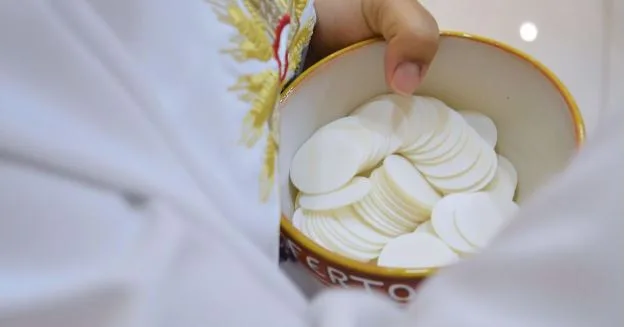
The communion hosts form an important aspect of Christian worship, particularly in Eucharistic traditions. Altar breads, or communion hosts, are consumed during a Holy Communion, and they have a profound spiritual meaning. The hosts used in communion are well-baked wafers that represent the body of Christ and are essential to the liturgy.
Nowadays, communion hosts come in all sizes, materials, and formats. Communion hosts may be theologised to suit theological needs and adapted to the practical needs of congregations since traditional white wafers have been replaced by wholemeal and low-gluten varieties.
What Are Communion Hosts?
Communion hosts are small, thin wafers, mostly composed of wheat flour and water, used during the Eucharist. They tend to be unleavened and round, which is indicative of the ancient Christian tradition.
These wafers are sacramentalised in the service and symbolise the body of Christ, thus being one of the most sacred parts in Christian worship.
The Religious Significance of Communion Hosts
The role of communion hosts is not limited to their physical appearance. They symbolise:
- The sacrifice of Christ.
- Spiritual food to the believers.
- Cohesiveness in the Christian fellowship.
According to most of the denominations, the consecrated host is said to be the real body of Christ and this is a doctrine called transubstantiation.
Materials Used in Communion Hosts
The hosts of Communion are prepared with a lot of rules to preserve their purity and originality. The main sources are:
- Wheat flour
- Water
It is usually free of additives, preservatives, and yeast and therefore the hosts are not leavened and can be used during the liturgy.
Other contemporary suppliers provide:
- Wholemeal hosts
- Low-gluten hosts
These differences assist in meeting the needs of the diet while still adhering to the church norms.
Types of Communion Hosts Available
Based on supplier collections such as altar breads and wafers, communion hosts are available in multiple types:
People’s Hosts
Congregationally-distributed wafers of small size.
Priest Hosts
Higher wafers, usually bearing a cross, were used by the clergy in the service.
Concelebration Hosts
Extra-large hosts when more than one priest is in the Eucharist.
Low-Gluten Hosts
Developed specifically to suit gluten-sensitive persons.
Sizes and Design Options
Hosts of Communion are available in all sizes to fit the requirements of churches. Common sizes include:
- 1 1/8 inch (small hosts)
- 1 3/8 inch (standard size)
- Larger priest hosts
Many hosts feature:
- Cross imprints
- Closed sides to avoid crumbs.
- Smooth, uniform texture
These design characteristics are reverence and practicality in the distribution.
Manufacturing Process of Communion Hosts
Communion host production is a hygienic and accurate procedure. It typically includes:
- Combining water and wheat flour.
- Baking thin pieces of dough.
- Slicing into equal circular wafers.
- Quick closure and packaging.
In numerous traditional contexts, hosts are prepared in monasteries or dedicated factories, where they are prepared according to certain religious requirements.
Storage and Shelf Life
Communion hosts should be stored properly to preserve their quality.
- Keep in a cool, dry place
- Keep in airtight containers.
- Avoid moisture exposure
Few communion wafers have a shelf life that lasts beyond several months to more than a year, when properly stored.
Key Features to Consider When Buying Communion Hosts
When buying communion hosts for a church or organisation, consider:
Quality and Purity
Make sure that the hosts are liturgically correct and of approved ingredients.
Size and Quantity
Choose the right size depending on the size of the congregation and the type of service.
Packaging
Find hygienic and sealed packs to keep fresh.
Dietary Options
Take into account low-gluten or wholemeal varieties where needed.
Benefits of High-Quality Communion Hosts
There are a number of benefits associated with selecting premium communion hosts:
- Uniform texture and flavor.
- Very few crumbs in the distribution.
- Observance of church rules.
- Long shelf life
Good-quality altar breads also enhance the entire worship experience, as they uphold reverence and utility.
Communion Hosts in Modern Church Supply
Current suppliers offer a variety of communion hosts for different denominations and requirements. Collections often include:
- Large congregations bulk packs.
- Individually sealed rolls
- Clergy only hosts.
These alternatives will enable churches to maintain a consistent supply of altar bread whilst maintaining quality and consistency.
Conclusion
Communion hosts continue to be a focal point of Christian worship, with rich spiritual content and practical design. Since communion is a tradition and a devotional practice, the hosts are symbolic and simple in their components (wheat and water) and their symbolism of the body of Christ.
Altering their size, type, and dietary choices, contemporary altar breads have been able to keep up with the changing needs of the churches without losing their religious uses. By choosing the appropriate communion hosts, it will not only follow the religious standards but also provide the participants with a meaningful and respectful experience of the Eucharist.