How to Create a Home Gym for Small Spaces
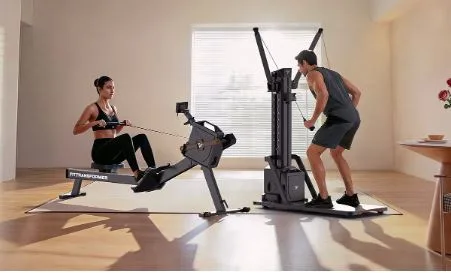
Home fitness has never been more popular, yet millions of people face the same frustrating obstacle: there simply isn’t enough room. Whether you’re living in a studio apartment, a compact urban flat, or a house where every square foot already serves a purpose, carving out a dedicated workout space can feel impossible. The idea of dragging bulky barbells and oversized cable machines into a 200-square-foot bedroom isn’t just impractical — it’s discouraging enough to abandon fitness goals entirely.
But limited square footage doesn’t have to mean limited results. The real solution lies in rethinking what gym equipment looks like and how it functions within your daily living environment. Compact, modular, and foldable gym equipment has transformed what’s possible in tight spaces, allowing you to build a fully functional workout area without permanently surrendering your living room. In this guide, you’ll discover how to assess your space, choose the right gear, and set everything up efficiently. You’ll also find practical, budget-friendly strategies for expanding your setup over time, so your home gym for small spaces grows alongside your fitness journey.
Understanding the Challenges of Small Space Home Gyms
Urban living has a way of shrinking your options. In a studio apartment or a one-bedroom flat shared between two people, every square foot already has a job — it’s a bedroom, a home office, a dining area, and a living room all at once. Asking that same space to double as a workout zone isn’t just ambitious; it creates real logistical friction that most people aren’t prepared to solve.
Traditional gym equipment was never designed with residential spaces in mind. A standard power rack alone can occupy a 4×4 foot footprint and stand over seven feet tall. Add a flat bench, a set of dumbbells, and a treadmill, and you’ve consumed more floor space than many urban bedrooms contain in total. Beyond the sheer size, conventional equipment is rigid — it serves one purpose, stays in one place, and offers no flexibility when your living situation changes.
The psychological impact is just as significant as the physical one. When your workout space feels cramped, cluttered, or constantly in the way of daily life, motivation drops. A barbell leaning against the wall becomes a source of guilt rather than inspiration. This is why so many home gym attempts stall within weeks — the environment works against consistency rather than supporting it. Solving the small-space gym problem requires abandoning the traditional gym model entirely and embracing equipment specifically engineered for compact, multipurpose environments.
Key Features for Compact Home Gym Equipment
When floor space is measured in inches rather than feet, every piece of equipment earns its place by doing more than one thing well. The three qualities that separate genuinely useful compact gym gear from oversized disappointments are foldability, modularity, and versatility. Equipment built around these principles doesn’t just fit into small spaces — it actively works with your living environment instead of fighting against it.
Why Foldable Design is a Game-Changer
A foldable bench that collapses flat against a wall takes up roughly the same footprint as a large picture frame. That single characteristic transforms a piece of exercise equipment from a permanent obstacle into a temporary tool you deploy when needed and store when you don’t. Foldable treadmills follow the same logic — the running deck folds vertically, reclaiming nearly the entire floor area the moment your session ends. This on-demand approach is what makes foldable design so valuable in multipurpose rooms where the space needs to serve as a yoga studio at 7am, a home office by 9am, and a strength training area after work. The expandability benefit matters too: because foldable equipment stores compactly, you can add more pieces over time without permanently consuming additional floor space.
Advantages of Modular Gym Frames for Flexibility
Modular gym frames take adaptability a step further by letting you reconfigure the same structural components into entirely different workout stations. Rather than buying a separate pull-up bar, dip station, and cable attachment point, a modular frame integrates all three into one scalable system. As your fitness goals shift — from building foundational strength to targeting specific muscle groups — you add attachments rather than replacing entire units. This scalability is particularly valuable in small spaces because your equipment investment grows with your needs without demanding more square footage. A modular system purchased today can evolve over two or three years through targeted add-ons, making it both a space-efficient and financially smart foundation for any compact home gym.
Introducing the FitTransformer Modular System
Most compact gym equipment forces a compromise: you either get versatility or you get a small footprint, but rarely both. The FitTransformer Modular System was engineered specifically to break that trade-off. Designed from the ground up for residential environments where space is a genuine constraint, it operates on a single guiding principle — every component should serve multiple functions and integrate seamlessly with every other component in the system. The result is a complete home gym that occupies a fraction of the floor space required by conventional setups, without stripping away the exercise variety that keeps training effective and engaging over the long term.
What distinguishes FitTransformer from standard compact equipment is its architecture. Rather than a fixed frame with limited attachment points, the system is built around interlocking structural nodes that accept different accessories depending on what your workout demands that day. Pull-up bar, cable pulley, landmine attachment, dip handles — these aren’t separate purchases requiring separate floor space. They connect to the same central frame, transforming it from one workout station into another in minutes. When you’re done training entirely, the frame itself breaks down into flat-packed sections that slide under a bed or stand upright in a closet.
Core Components and Setup of FitTransformer
The system ships with three primary elements: the main modular frame, a resistance cable assembly, and a starter attachment kit. The frame uses aircraft-grade aluminum uprights connected by adjustable crossbars, allowing height and width adjustments to fit ceilings as low as seven feet and rooms as narrow as six feet across. Assembly requires no permanent wall anchors or floor bolts — weighted stabilizer feet distribute load across the existing floor surface, making it fully renter-friendly. The resistance cable assembly mounts to any node on the frame, instantly creating a functional trainer capable of rows, presses, curls, and core rotations. The starter attachment kit includes a pull-up bar, a dip station bracket, and a J-hook pair for barbell work, covering upper body pushing, pulling, and compound movements within a single 3×4 foot footprint. Additional attachments — a landmine sleeve, a suspension trainer anchor, and a storage peg rack — are available separately, letting you expand capability without expanding the frame’s physical dimensions.
Step-by-Step Guide to Setting Up Your Home Gym
Step 1: Assess Your Space and Fitness Goals
Before purchasing a single piece of equipment, spend thirty minutes with a tape measure and a notepad. Record the exact dimensions of your available area, noting ceiling height, door clearances, and any fixed obstacles like radiators or window sills. Then define what you actually want to accomplish — fat loss, muscle building, improved mobility, or general conditioning — because your goals directly determine which equipment earns floor space and which doesn’t. Someone focused on strength training needs very different gear than someone prioritizing cardio. Set a realistic budget at this stage too, factoring in not just the initial purchase but potential add-ons over the next year. A phased spending plan prevents the common mistake of buying everything at once, running out of money, and ending up with an incomplete setup that doesn’t cover your full workout needs.
Step 2: Select Compact and Versatile Equipment
Prioritize equipment that earns its footprint by serving multiple movement patterns. A modular system covers pulling, pushing, and cable work from a single frame — that’s three conventional machines replaced by one compact unit. Foldable benches and adjustable dumbbells follow the same logic, each replacing several single-purpose items. When comparing options, evaluate the folded storage dimensions alongside the active footprint, since both matter in multipurpose rooms. Resistance bands and suspension trainers make excellent supplementary additions because they store in a drawer yet add significant exercise variety without consuming any permanent floor space.
Step 3: Install and Optimize Your Layout
Assemble your modular frame in the exact spot where it will live, following the manufacturer’s sequence rather than improvising — with systems like FitTransformer, crossbar height and stabilizer foot positioning affect both safety and clearance. Once assembled, perform a full range-of-motion check for every planned exercise: extend your arms overhead, step back into a lunge, and swing through a cable row to confirm you won’t collide with walls or furniture mid-movement. Position foldable equipment near its storage location so transitioning between workout mode and daily living takes under sixty seconds. Place a rubber mat beneath the entire setup to protect flooring, reduce equipment movement, and dampen noise — particularly important in apartments with downstairs neighbors.
Budget-Friendly Tips for Expanding Your Home Gym
Growing your home gym doesn’t require a single large investment — in fact, a phased approach almost always produces better results. Start with a modular foundation designed to accept attachments over time, meaning your first purchase covers the structural core and your subsequent spending adds capability rather than replacing anything. This approach spreads cost across months while keeping your setup functional at every stage. Resistance bands and jump ropes are worth prioritizing early in that expansion process — they cost very little, store in a pocket, and add meaningful training variety without claiming any floor space. For heavier additions like adjustable dumbbells or a foldable bench, watch for seasonal sales around January and late summer when fitness retailers consistently discount inventory. DIY modifications can stretch your budget further too: wall-mounted hooks made from standard hardware store components keep resistance bands and cables organized without buying dedicated storage units. The compact nature of modular equipment already reduces your initial outlay compared to conventional gym setups, and that financial advantage compounds as you expand selectively rather than reactively.
Building a Smarter Gym in Less Space
Creating a functional home gym in a small space is less about what you sacrifice and more about how intelligently you choose and arrange what you keep. The challenges are real — cramped floor plans, multipurpose rooms, and equipment that was never designed for residential living — but they’re all solvable with the right approach. Foldable equipment reclaims your floor the moment training ends, modular frames replace multiple machines with a single adaptable structure, and a phased purchasing strategy means your gym grows steadily without overwhelming your budget or your square footage all at once.
The step-by-step process outlined here — measuring your space honestly, selecting gear that earns its footprint, and optimizing your layout for both safety and convenience — gives you a clear path from empty corner to fully operational workout zone. None of it requires a spare room, a garage, or a significant renovation. It requires intentional choices and equipment built for the reality of modern living.
Your fitness goals don’t shrink just because your apartment does. Start with a solid modular foundation, add capability as your needs evolve, and let the space work with you rather than against you. The gym you build today — even if it fits inside a 6×4 foot footprint — is the one that will actually get used.