Grade Calculator Hacks Every Student Should Know
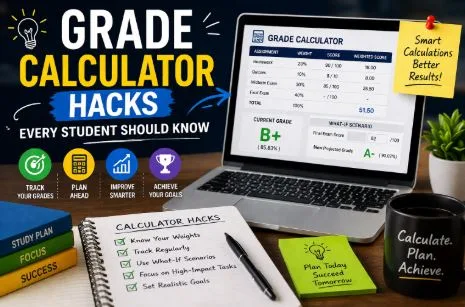
Managing your academic performance does not have to be stressful or confusing. Many students struggle because they rely on guesswork instead of using simple tools that provide clarity. One of the smartest ways to stay in control of your grades is by using a grade calculator effectively.
Most students know about these tools, but very few actually use them strategically. The difference between average and high-performing students often comes down to how well they track and plan their progress. With the right approach, a simple calculator can become a powerful academic advantage.
Understand What Your Numbers Really Mean
Before using any tool, it is important to understand what your grades represent. Many grading systems are based on weighted averages, where different assignments contribute different percentages to your final score.
For example, a final exam might be worth 40 percent, while quizzes may only count for 10 percent. If you do not understand this structure, you might spend too much time on low-impact tasks and ignore the ones that matter most.
A grade calculator helps you break down these numbers and see how each component affects your overall performance. This clarity allows you to focus your efforts where they will have the biggest impact.
Hack #1: Track Your Grades Weekly, Not Monthly
One of the biggest mistakes students make is checking their grades too late. Waiting until midterms or finals limits your ability to improve.
Instead, make it a habit to update your scores weekly. Even small changes can give you valuable insights. For example, if you notice a slight drop in your average, you can adjust your study strategy immediately.
Consistent tracking helps you stay proactive rather than reactive. It also reduces stress because you always know where you stand.
Hack #2: Use “What-If” Scenarios to Plan Ahead
A powerful but often overlooked feature of a grade calculator is the ability to test different scenarios.
For instance, you can ask questions like:
- What if I score higher on my next test?
- What if I improve my assignment grades?
By entering different values, you can predict your possible outcomes. This helps you set realistic goals and understand what is required to achieve them.
Students who use this method tend to study more efficiently because they know exactly what they are working toward.
Hack #3: Focus on High-Impact Assignments
Not all assignments are created equal. Some have a much bigger effect on your final grade than others.
A smart strategy is to identify high-weight components and prioritize them. If your final exam carries significant weight, investing extra time in preparation can make a major difference.
Using a grade calculator makes this process easier because it clearly shows which components influence your grade the most.
Hack #4: Turn Data Into Action
Tracking your grades is only useful if you act on the information. Many students record their scores but fail to make changes based on what they see.
For example, if your quiz scores are consistently low, it may indicate a need to improve your revision strategy. If assignments are your weak point, better time management could help.
The key is to treat your grades as feedback. Instead of ignoring them, use them to improve your approach.
Hack #5: Set Clear and Achievable Targets
Without clear goals, it is easy to lose focus. A grade calculator allows you to set specific targets based on your desired outcome.
For example, if you aim to achieve a certain overall grade, you can calculate what scores you need in upcoming assessments. This gives you a clear direction and makes your study sessions more productive.
When your goals are realistic and measurable, staying motivated becomes much easier.
Hack #6: Avoid Overestimating Your Performance
Many students assume they are doing better than they actually are. This happens because they rely on rough estimates instead of accurate calculations.
A grade calculator removes this uncertainty. It gives you a realistic view of your performance, which helps you avoid unpleasant surprises at the end of the semester.
Being honest about your progress is the first step toward improvement.
Hack #7: Use Reliable Tools for Better Accuracy
Not all tools provide the same level of accuracy or usability. Using a well-designed platform can make a big difference in how effectively you track your grades.
For example, platforms like thegradecalculators.com offer simple and user-friendly ways to calculate and plan your academic performance. Having access to a reliable tool saves time and ensures that your calculations are correct.
The easier the process is, the more likely you are to stay consistent.
Build a Consistent System
The real power of grade tracking comes from consistency. It is not something you do once and forget. It is a habit that you build over time.
Set a routine for updating your grades and reviewing your progress. This could be once a week or after every major assignment. The important thing is to stay consistent.
When tracking becomes part of your routine, it no longer feels like extra work. Instead, it becomes a natural part of your academic workflow.
Final Thoughts
Using a grade calculator is not just about calculating numbers. It is about gaining control over your academic journey. When you understand your progress, set clear goals, and act on your data, you position yourself for success.
The students who perform best are not always the ones who study the hardest. They are the ones who study smart, track their progress, and make informed decisions.
By applying these simple hacks, you can turn a basic tool into a powerful strategy for improving your grades and achieving your academic goals.