Home Extension Cost in the UK: A Complete Guide
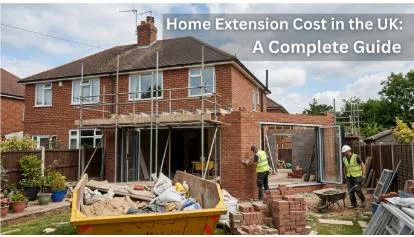
Planning to extend your home is one of the most rewarding decisions a homeowner can make, adding space, value, and quality of life without the upheaval of moving. But before the first brick is laid, the question that sits at the top of every homeowner’s list is simple: What is the cost of this home extension?
As of early 2026, the average home extension cost in the UK ranges from £1,800 to £3,000 per square metre for a standard build. High-specification projects involving structural glass or complex engineering now frequently exceed £3,500 – £4,500 per m².
The truth is, home extension costs in the UK vary considerably depending on the type of extension, your location, the materials specification, and the builder you choose. In this guide, we break down everything you need to know from price per square metre benchmarks to the hidden costs most builders won’t mention up front.
Whether you’re considering a single-storey rear extension, a two-storey addition, or a wraparound build, this guide gives you the numbers, the context, and the questions to ask before you commit.
What Is the Average Home Extension Cost in the UK?
As a starting point, the average home extension cost in the UK in 2026 ranges from £1,800 to £3,000 per square metre for a standard build. However, higher-specification projects, those with bespoke glazing, underfloor heating, or premium finishes, can reach £3,000 per m² or beyond.
Here’s a quick overview of typical home extension costs by type:
| Extension Type | Typical Cost Range | Estimated Duration |
| Single-storey rear extension (20–25m²) | £38,000 – £65,000 | 10-14 Weeks |
| Double-storey extension | £95,000 – £160,000 | 18-24 Weeks |
| Side return extension | £30,000 – £65,000 | 10-12 Weeks |
| Wraparound extension | £55,000 – £120,000 | 14-20 Weeks |
| Loft conversion (Dormer) | £45,000 – £80,000 | 8-10 Weeks |
| Basement conversion (Existing Cellar) | £35,000 –£100,000+ | 6-10 Weeks |
| Garage conversion | £15,000 – £35,000 | 3-6 Weeks |
| Kitchen extension | £55,000 – £130,000+ | 12-16 Weeks |
These are ballpark figures. Your actual home extension cost will be shaped by a combination of factors that we cover in detail below.
Home Extension Cost in Nottingham and the East Midlands
For homeowners in the East Midlands, home extension costs generally sit towards the lower-to-mid range of national averages, making this one of the best regions in England for value-led extension projects.
Buon Construction team specialises in Home Extensions Nottingham covering areas from West Bridgford and Wollaton to Beeston and Arnold. Building in the East Midlands offers a distinct cost advantage; while London prices are inflated by logistics and labor, our local supply chains in Nottingham allow for premium finishes at a lower total project cost.
Typical East Midlands build cost benchmarks:
- Single storey extension: £1,700 – £2,200/m²
- Double storey extension: £1,600 – £2,200/m² (per floor)
- Loft conversion: £35,000 – £65,000 depending on type
Homeowners in certain parts of Nottingham, such as The Park or Sneinton, should also be aware of Article 4 Directions and Conservation Area constraints that can add 10-15% to the architectural and planning phase of an extension.
Key Factors That Affect Your Home Extension Cost
1. Size of the Extension
The single biggest cost driver is the floor area you’re adding. Most builders and architects quote in cost per square metre, so understanding this metric is essential.
- Budget builds: £1,600 – £1,900/m²
- Standard builds: £2,000 – £2,500/m²
- High-spec or premium builds: £2,800 – £4,000/m²
Economies of scale do apply; the cost per m² for a 40m² extension will typically be lower than for a 15m² extension, because fixed costs (foundations, planning, scaffolding) are spread across a larger footprint.
2. Type of Extension
Different structural forms carry different cost profiles:
- Single-storey extensions are the most common and the most affordable per square metre, with fewer structural complications.
- Double-storey extensions offer excellent value; you’re doubling the habitable space without doubling the foundation or roof costs.
- Wraparound extensions combine a rear and side return extension into an L-shaped build, maximising footprint at a premium cost.
- Over-garage extensions are cost-effective when an existing structure can support the load.
3. Location in the UK
Labour costs vary significantly across the UK. London and the South East carry the highest build costs, typically 15–30% above the national average. The Midlands and North of England offer more competitive rates without sacrificing build quality.
For homeowners in the East Midlands, Buon Construction works with local trade partners and supply chains to deliver high-quality extensions at honest regional pricing, without the premium charged by London firms operating outside their base.
4. Materials and Specifications
The materials you choose will move your budget substantially:
- Standard brick and block construction is the most cost-effective and widely used.
- Timber frames can be faster to build and well-suited to certain designs.
- Structural steel is required for large spans and open-plan layouts and adds cost.
- Glazing is often where budgets escalate. Standard double glazing is one price; full-width bifold or sliding doors, rooflights, and structural glass are quite another.
- Roofing flat roofs with felt is the cheapest; warm flat roofs, tiled pitched roofs, and glass roofs sit progressively higher up the cost scale.
5. Ground Conditions and Site Complexity
Poor ground conditions can significantly increase your home extension cost. Clay soil, high water tables, old tree roots, and existing drainage runs all affect foundation type and depth.
- Standard strip foundations: included in most base quotes
- Engineered raft or pile foundations: can add £5,000–£20,000 depending on complexity
A reputable builder will carry out a site survey before quoting. Be cautious of anyone who prices without understanding what’s underfoot.
6. Planning Permission and Architectural Fees
Not all extensions require full planning permission. Many single-storey rear extensions fall under Permitted Development (PD) rights, subject to size limits. But where planning is needed for larger builds, listed buildings, or homes in conservation areas, you should budget for:
- Architect or architectural designer fees: 5–15% of total build cost
- Planning application fee: £258 (householder application, England)
- Structural engineer: £500–£2,500 depending on complexity
- Party wall surveyor: £700–£2,500 per neighbour (where applicable)
Under the latest Part L (Energy Efficiency) updates for 2026, extensions must now achieve significantly lower U-values. For ‘Extreme Accuracy,’ budget for:
- Walls: 0.18 W/m²K (down from 0.26)
- Windows: 1.2 W/m²K (down from 1.6)
- Roofs: 0.11 W/m²K These stricter standards ensure your extension is ‘Future Homes’ ready but require higher-performance insulation and glazing materials.
Single Storey Extension Cost: What to Expect
A single-storey rear extension is the most popular choice for UK homeowners. Typically used to extend a kitchen, create an open-plan kitchen-diner, or add a utility and family room, these builds offer a strong return on investment and relatively straightforward planning.
Typical single-storey extension costs:
- Small (up to 15m²): £28,000 – £40,000
- Medium (16–25m²): £45,000 – £65,000
- Large (26–40m²): £70,000 – £100,000
These costs assume a standard specification with a flat or simple-pitched roof. Add a full-width bifold door, lantern rooflight, and premium kitchen fit-out, and you could easily add £15,000–£30,000 to those figures.
Double Storey Extension Cost: Twice the Space, Better Value Per m²
Double-storey extensions are frequently the smartest investment per square metre. Because the foundation and roof work is spread across two floors, the cost per m² for the upper storey is significantly lower than building an equivalent single-storey structure.
Typical double-storey extension costs:
- Small footprint (per floor ~12m²): £45,000 – £85,000
- Medium footprint (per floor ~18–25m²): £95,000 – £145,000
- Large footprint (per floor 25m²+): £150,000 – £200,000+
Planning requirements for double-storey extensions are more stringent; you’ll almost always need full planning permission, and proximity to boundaries is tightly regulated.
Kitchen Extension Cost: Creating the Heart of Your Home
The kitchen extension is consistently the most popular use of added square footage in UK homes. But the build cost is only one part of the total investment; the kitchen fit-out itself can range from £12,000 for a mid-range kitchen to £45,000+ for a high-end bespoke installation.
Breaking down kitchen extension costs:
| Item | Typical Cost |
| Extension build (20m²) | £35,000 – £55,000 |
| Kitchen fit-out (mid-range) | £12,000 – £22,000 |
| Kitchen fit-out (premium) | £20,000 – £45,000+ |
| Underfloor heating | £1,500 – £4,000 |
| Bifold or sliding doors | £3,000 – £12,000 |
| Total (mid-range) | £55,000 – £85,000 |
| Total (premium) | £90,000 – £130,000+ |
The kitchen is the most complex room to extend and fit out, involving structural changes, gas, plumbing, electrics, and kitchen installation in sequence. Getting this right requires an experienced contractor who can coordinate trades efficiently.
Loft Conversion Cost: Adding Space Without Extending Outward
Loft conversions are an alternative to ground-level extensions, particularly where garden space is limited or planning constraints apply.
Typical loft conversion costs by type:
| Type | Cost Range |
| Velux (rooflight) conversion | £20,000 – £35,000 |
| Dormer conversion | £35,000 – £60,000 |
| Hip-to-gable conversion | £45,000 – £70,000 |
| Mansard conversion | £55,000 – £80,000+ |
| L-shaped dormer | £55,000 – £90,000 |
Loft conversions are an excellent option for adding a bedroom with an en-suite, a home office, or a guest room without touching the garden.
What’s Typically Included in a Home Extension Quote?
Understanding what a quote covers and what it excludes is critical to avoiding nasty surprises. A comprehensive quote from a reputable contractor should typically include:
- Demolition and preparation works
- Foundations and groundworks
- Structural frame (brick and block, timber, or steel)
- External walls, roof structure, and weatherproofing
- Windows and external doors
- First-fix electrics, plumbing, and heating connections
- Insulation (walls, floor, roof)
- Plastering
- Second-fix electrics (sockets, switches, lighting points)
- Flooring substrate (screed or floor boarding)
What is typically NOT included in a standard quote:
- Kitchen or bathroom fit-out
- Flooring finishes (tiles, carpet, engineered wood)
- Decoration (painting, wallpapering)
- Furniture or fitted storage
- Landscaping or garden reinstatement
Always ask your builder for a detailed itemised quote so you know exactly where the boundary sits.
Hidden Costs to Budget
Even with a thorough quote, experienced homeowners know to set aside a contingency. The industry standard recommendation is 10–15% of the total build cost for unforeseen works.
Common hidden costs include:
- Structural surveys reveal unexpected issues once walls are opened
- Asbestos testing and removal in homes built before 2000
- Upgraded drainage to comply with current building regulations
- Temporary accommodation or storage during an extensive build
- VAT most residential extension work is charged at the standard rate of 20%, so confirm whether your contractor’s quote is inclusive or exclusive of VAT
- Party Wall Agreements: If your extension is on or near a boundary, you may need a Party Wall Award. Budget £1,000–£2,500 per neighbor if a formal dispute arises.
- Building Control Fees: Expect to pay £600–£1,200 for site inspections and your final completion certificate. This is separate from planning fees.
How to Get an Accurate Home Extension Quote
Getting an accurate cost figure requires more than a phone call. Here’s how to approach the process properly:
Step 1: Define your brief. Know what rooms you want, roughly how big, and what standard of finish you’re looking for. Even a rough sketch helps.
Step 2: Appoint an architect or designer. For anything beyond a straightforward single-storey build, working with an architect produces better outcomes in design quality, planning success rates, and buildability.
Step 3: Get at least three quotes. Compare like-for-like, make sure all quotes cover the same scope of work.
Step 4: Check credentials. Verify that contractors are registered with a recognised trade body (FMB, NHBC, or similar) and can provide references for completed projects.
Step 5: Confirm VAT and payment schedule. A legitimate contractor will never ask for full payment up front. A staged payment schedule tied to build milestones is standard practice.
Does a Home Extension Add Value to Your Property?
In most cases, yes, a well-designed and properly executed home extension adds meaningful value to a UK property. The general rule of thumb from estate agents and valuers is:
- A quality single-storey rear extension adding a bedroom or significantly improving kitchen space can return £1.20 to £1.50 in value for every £1 spent in many UK markets.
- A double-storey extension that adds a bedroom and bathroom typically adds £30,000 to £70,000 or more to a property’s value, depending on location.
- Extensions that take a property from two to three bedrooms, or from three to four, often produce the strongest returns.
Value uplift is never guaranteed; an over-extended home relative to its neighbourhood rarely recovers full build cost on sale. This is why working with professionals who understand local property markets matters.
Planning Permission vs. Permitted Development: What You Need to Know
Many homeowners are surprised to find that a significant proportion of single-storey extensions can proceed under Permitted Development (PD) rights, without a formal planning application. Under current rules (England), a single-storey rear extension can extend:
- Up to 4 metres from the rear wall of a detached house
- Up to 3 metres from the rear wall of a semi-detached or terraced house
These allowances can be extended to 8 metres (detached) and 6 metres (semi/terraced) under the Neighbour Consultation Scheme (Prior Approval process).
PD rights do not apply if:
- Your property is a listed building
- You’re in a conservation area, National Park, or Area of Outstanding Natural Beauty
- Previous extensions have already used the allowance
- You’re proposing side extensions that exceed half the original house width
Where full planning permission is required, the application process typically takes 8 weeks for a straightforward householder application, though complex cases can take longer. Building Regulations approval is a separate requirement from planning permission and applies to almost all extension work, regardless of PD status.
Note: While PD rights allow for 6m or 8m extensions via Prior Approval, the council will consult your immediate neighbors. If a ‘relevant objection’ regarding overshadowing or privacy is raised, the council has the power to refuse the project, even if it fits the technical dimensions.
How to Keep Your Home Extension on Budget
Budget overruns are common but not inevitable. Here’s how experienced clients manage costs effectively:
Freeze the design before construction starts. Changes made during build are expensive. Finalise your layout, materials, and fixtures before work begins.
Allow for contingency. Budget 10–15% above your main contract value for surprises. If you don’t need it, you’ll be pleasantly surprised.
Separate the build from the fit-out. Getting the structure right is the priority. You can phase the kitchen or bathroom installation if cash flow requires it.
Don’t chase the cheapest quote. The lowest bid almost always reflects either missing scope or a contractor who plans to recoup margin through variations. Mid-range quotes from reputable, referenced builders consistently represent better value in the end.
Work with specialists. A contractor who builds extensions day in, day out will outperform a generalist who occasionally takes on extension work in speed, quality, and the ability to anticipate problems before they become expensive.
Why Choose Buon Construction for Your Home Extension?
Buon Construction understands that a home extension is one of the most significant investments a homeowner can make. That’s why we bring together design expertise, honest pricing, and skilled local trades to deliver extensions that genuinely work for the way you live, and for the long-term value of your home.
Based in Nottingham and serving clients across the East Midlands, we specialise in single and double-storey extensions, kitchen extensions, loft conversions, and full home refurbishments. From the initial consultation through to final handover, our team manages every stage of your project with clarity and professionalism.
If you’re planning a home extension and want a realistic, detailed cost assessment from a team that knows this region inside out, we’d be delighted to help.
Conclusion
Understanding home extension cost in the UK comes down to knowing your variables: the type of extension, the size, your location, the specification, and the professional team you choose to deliver it. Ballpark figures are useful for early feasibility, but they’re no substitute for a detailed, site-specific quote from an experienced contractor.
The most important investment you’ll make before a single brick is laid is in the right team. Architects who listen, builders who plan, and project managers who communicate openly are worth every penny.
If you’re ready to explore what your home extension could look like and what it might realistically cost, reach out to Buon Construction today. We’ll start with a conversation, not a hard sell.
Frequently Asked Questions About Home Extension Costs
How much does a small home extension cost in the UK?
A small single-storey extension of around 10–15m² typically costs between £28,000 and £40,000 as of 2026, depending on specification and location. This is often used to create a garden room, utility space, or compact kitchen extension.
Do I need planning permission for a home extension?
Not always. Many single-storey rear extensions qualify under Permitted Development rights. However, double-storey extensions, side extensions, and projects in protected areas generally require full planning permission. Always confirm with your local planning authority or a qualified professional before proceeding.
How long does a home extension take to build?
A single-storey extension typically takes 10–16 weeks from groundworks to completion. A double-storey extension may take 16–24 weeks. Timelines depend on the weather, ground conditions, specification complexity, and the efficiency of your contractor.
Is a home extension worth the cost?
In most cases, yes. A well-specified extension that improves functionality and adds meaningful floor space typically adds more value than it costs to build, especially in areas where property prices are high relative to build costs. Always model the value uplift specific to your property and local market.
What is the cheapest type of home extension?
A garage conversion is typically the most cost-effective way to add usable space, with costs ranging from £15,000 to £35,000, significantly less than a ground-up extension of equivalent size. For those needing a true new-build extension, a single-storey flat-roof rear extension on good ground conditions represents the most affordable option.
How do I find a reliable home extension contractor?
Look for contractors with verifiable references from completed extension projects, membership of a recognised trade body, and a clear, itemised quote process. Avoid anyone who asks for full payment up front or who is unable to show examples of comparable work.