Sean Knox of Knox Pest Control on Early Field Lessons
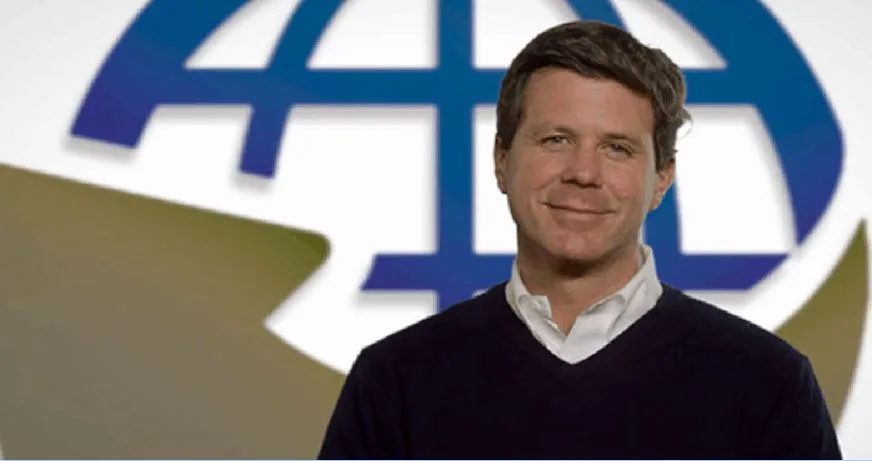
Most leadership lessons don’t start in a boardroom.
Some start under a house. In the mud. With spiders.
Sean Knox, fourth-generation leader of Knox Pest Control, has spent more than two decades helping grow his family’s company into one of the largest pest control operations in the Southeast, with 18 locations and over 225 team members. But his leadership education did not begin with an MBA. It began at fifteen, flat on his stomach, crawling through dark spaces under homes looking for termites.
And according to him, that’s exactly where real leadership training starts.
Lesson 1: You Can’t Lead What You’re Not Willing to Do
At fifteen, he wasn’t “the boss’s son.” He was a termite helper.
“That meant I carried the hoses. I mixed the chemicals. I dug the trench,” he says. “If it rained, the crawlspace flooded. If it was 95 degrees outside, it was 110 under the house.”
There were no shortcuts. No air conditioning. No applause.
He remembers one house in South Georgia. The crawlspace was barely eighteen inches high. “You couldn’t turn your head without scraping a floor joist. I had mud in my ears for two days,” he laughs. “But that job paid someone’s mortgage. That stuck with me.”
The first termite lesson was simple: respect the work.
“You can’t ask 200 employees to do hard things if you’ve never done them yourself,” he explains. “People can tell when you’re guessing. They can also tell when you’ve been in the trenches.”
In tech terms, this is founder mode. You ship the product. You handle support tickets. You fix the bugs. Leadership without field knowledge is just theory.
Lesson 2: Small Problems Get Expensive Fast
Termites are quiet. That’s what makes them dangerous.
“They don’t kick down the door,” he says. “They nibble. Slowly. For years.”
He remembers inspecting a home where the owner insisted everything was fine. The paint looked good. The floors felt solid. But under the house, the support beams were hollow.
“You could push a screwdriver straight through them,” he says. “The damage had been building for a long time. They just didn’t see it.”
Leadership works the same way.
Culture rot. Poor training. Bad communication. None of it explodes overnight. It builds quietly. And by the time you notice, it’s expensive.
“In pest control, if you ignore a small mud tube, you might rebuild a wall,” he explains. “In business, if you ignore small issues, you rebuild trust.”
The termite lesson here? Inspect early. Inspect often.
Lesson 3: Humility Is Not Optional
Crawlspaces are great equalizers.
“You’re face-to-face with dirt,” he says. “You smell mould. You see how houses are really built.”
There’s no room for ego when you’re sliding through mud in coveralls.
He recalls a day when he rushed a job to prove he could work fast. He missed a secondary infestation point. The team had to return and reoccupy the property.
“My dad didn’t yell,” he says. “He just handed me the shovel and said, ‘We finish what we start.’”
That moment stayed with him.
“It taught me that pride costs money. And time. And reputation.”
Leadership is not about being impressive. It is about being accurate. Slow is smooth. Smooth is fast.
Lesson 4: Systems Beat Strength
At fifteen, he thought physical toughness was the main requirement.
“By the third crawlspace that day, I realised strength wasn’t the secret. Process was.”
Termite treatment is precise. Drill here. Measure there. Apply evenly. Document everything.
“You skip a step, you create a weak point,” he says. “Termites only need one weak point.”
Years later, as the company expanded from a single office to 18 locations, that same logic applied.
“When we started growing, I kept thinking about those crawlspaces. You can’t just spray and hope. You need a system.”
Standardised training. Clear inspection checklists. Consistent reporting. Repeatable service protocols.
“If you scale chaos, you just get bigger chaos,” he says. “Termites taught me that before business school did.”
For founders and operators, this is gold. Systems are not bureaucracy. They are protection.
Lesson 5: Trust Is Built Below the Surface
Most customers never see a crawlspace. They just trust someone else to go down there.
“That’s a big deal,” he says. “They’re trusting you with the bones of their home.”
He remembers a woman who stood at her back door while the team worked. She was worried about costs. Worried about safety. Worried about her house settling.
“After we finished, I walked her through what we found,” he says. “I showed her photos. I explained the treatment line by line.”
She later sent a handwritten note thanking the team.
“That was the moment I understood,” he says. “We’re not just fixing wood. We’re lowering someone’s anxiety.”
Leadership works the same way. Your team may not see every decision you make. But they feel the results.
Transparency builds trust. Silence builds doubt.
Lesson 6: Growth Requires Getting Dirty First
Today, the company serves more than 90,000 customers across several states. But those early crawlspace days shaped the way growth happened.
“There’s a temptation to grow fast,” he says. “Open more offices. Add trucks. Expand territory.”
But termites taught patience.
“If you don’t treat the foundation properly, expansion just spreads the problem.”
When opening new branches, he focused on training local leaders who understood the field, not just spreadsheets.
“I’d rather promote someone who knows how to inspect a sill plate than someone who just knows how to read a report.”
That field-first mindset helped maintain service standards as the company scaled.
The Crawlspace Mindset
Here’s the surprising part: Sean Knox of Knox Pest Control says he is grateful for those early, uncomfortable jobs.
“Crawlspaces slow you down,” he says. “You can’t rush. You have to pay attention. If you move too fast, you miss something important.”
In a world obsessed with speed, that mindset matters.
Inspect the foundation. Fix small issues early. Build systems. Stay humble. Finish what you start.
Those are not flashy leadership hacks. They are crawlspace truths.
And maybe that’s the real termite lesson Sean Knox learned long before he ever stepped into an executive office.
The best leaders are not afraid to go below the surface.