Beyond the X-Ray: How Fairfield’s Digital Dentistry is Ending Dental Anxiety
The landscape of healthcare is undergoing a radical shift, driven by a fusion of artificial intelligence and high-precision engineering. Nowhere is this transformation more palpable than in the field of dentistry. For decades, the mere mention of a dental appointment could trigger a visceral sense of dread in even the most stoic individuals. This “dental phobia” was often rooted in the perceived invasiveness of traditional methods: the sharp pinch of a needle, the loud whine of a drill, and the uncomfortable, gag-inducing sensation of biting down on rigid X-ray film. However, in 2026, a new era has arrived. Leading practices are leveraging a suite of advanced diagnostic tools that prioritize patient comfort as much as clinical outcomes. For busy professionals and families in Essex County, finding a forward-thinking dentist in Fairfield NJ is a positive step toward experiencing a faster, more precise, and remarkably gentle approach to oral health. This digital revolution is doing more than just fixing teeth; it is systematically dismantling the barriers of anxiety that have kept patients away from the chair for years.
The Evolution of Diagnostics: From Subjective to Objective
The foundation of any successful dental treatment is an accurate diagnosis. Traditionally, this relied heavily on a practitioner’s eyesight and standard 2D radiographs. While effective for their time, these methods often required a “wait and see” approach for microscopic issues. If a cavity was too small to be clearly visible on a grainy X-ray, it might go untreated until it caused physical pain.
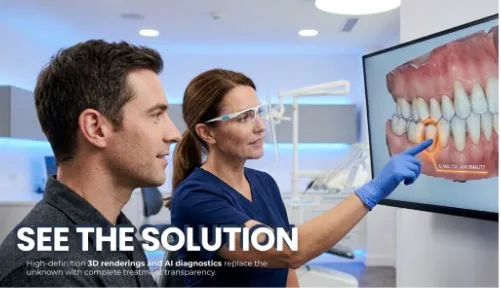
In 2026, the transition to objective, data-driven diagnostics has changed the narrative. Digital dentistry utilizes sensors and software that capture data points invisible to the human eye. This shift from subjective observation to objective measurement means that “guessing” is a thing of the past. For the patient, this translates to a profound sense of security. When you can see a high-definition, 3D rendering of your own jaw and tooth structure on a screen in front of you, the mystery of the treatment vanishes. Transparency is the ultimate antidote to anxiety, and modern diagnostic tools provide that transparency in spades.
Digital Radiography: Lower Radiation, Higher Comfort
One of the primary sources of discomfort in traditional dentistry was the process of capturing radiographs. Patients were often asked to hold sharp-edged plastic tabs in their mouths, often resulting in gagging or soft-tissue irritation. Furthermore, the wait time for film development added a layer of tediousness to the appointment.
Digital Radiography has completely replaced this “scary” traditional method. By using small, rounded electronic sensors, the process is now instantaneous and physically unobtrusive. The sensors send images directly to a computer screen, allowing the practitioner to zoom in, adjust contrast, and rotate the image for a comprehensive view. For the “dental-phobic” patient, the benefits are two-fold. First, the physical discomfort is virtually eliminated. Second, digital X-rays emit up to 80% to 90% less radiation than traditional film, addressing a common health concern among tech-savvy and health-conscious Essex County residents.
Digital Apex Locators: Precision in Endodontics
Root canal therapy is perhaps the most maligned procedure in dental history, often synonymous with pain and long hours in the chair. Much of the difficulty in traditional root canals stemmed from the challenge of accurately measuring the length of the tooth’s root. Practitioners often had to rely on multiple X-rays and tactile “feel” to ensure the canal was fully cleaned without perforating the apex.
Digital Apex Locators have revolutionized this process. These electronic devices use frequency-based measurements to determine the exact end of the root canal with incredible precision. By providing a digital reading of the canal’s depth, the tool allows the practitioner to work faster and with much higher accuracy. For the patient, this means fewer X-rays during the procedure, a shorter time spent with their mouth open, and a significantly lower risk of post-operative discomfort. It turns a once-feared procedure into a routine, predictable, and quiet experience.
AI-Powered Diagnostics: The 2026 Trend in Early Detection
The most significant trend defining 2026 is the integration of Artificial Intelligence (AI) into the diagnostic workflow. AI algorithms are now capable of analyzing digital scans and radiographs with a level of consistency that exceeds human capability. These AI-powered tools are trained on millions of clinical images to identify the earliest markers of bone loss, decay, or periodontal disease.
In Fairfield, this technology is being used to catch issues before they require painful surgery. For example, AI can detect “interproximal decay” (cavities between teeth) at a stage where they can be treated with non-invasive “remineralization” therapies or simple fillings, rather than full crowns or extractions. Similarly, AI can track microscopic changes in bone density over time, allowing for the early intervention of bone loss that might otherwise lead to tooth loss or the need for complex bone grafts. For the busy Essex County professional, this “preventive” precision is a massive time-saver. Catching a problem when it is a ten-minute fix prevents it from becoming a two-hour surgical event six months down the line.
Digital Impressions: Ending the Era of “Goo”
For many patients, the worst part of a dental visit was the impression-taking process. This involved a tray filled with cold, thick, and foul-tasting “putty” or alginate that had to sit in the mouth for several minutes. It was a common trigger for patients with a strong gag reflex and often required multiple attempts to get a perfect mold.
Modern Fairfield practices have replaced this messy ritual with Intraoral Scanners. These wand-like devices take thousands of photos per second to create a perfect 3D digital map of the teeth and gums. The process is entirely non-invasive and can be paused at any time if the patient needs a break. These digital files are then sent instantly to a lab or an in-office milling machine. Because digital impressions are more accurate than physical molds, the final crowns, bridges, or clear aligners fit better, reducing the need for “adjustments” and subsequent appointments.
The Impact on Treatment Speed and Efficiency
In a fast-paced environment like Essex County, time is a premium commodity. Advanced diagnostic tools have a direct impact on treatment speed. When a diagnosis is instantaneous and precise, the treatment plan can be formulated and executed in a fraction of the time.
For instance, the combination of digital impressions and AI design allows for “same-day” dentistry in many cases. Rather than waiting two weeks for a crown to come back from a lab, the digital file can be used to create the restoration while the patient waits. This efficiency doesn’t just save time; it reduces the psychological “wear and tear” of dental work. Instead of anticipating multiple appointments over a month, the patient can have their issue resolved in a single, streamlined visit.
Creating a “Gentle” Experience for the Dental-Phobic
Technology is the bridge that connects high-end clinical care with emotional comfort. For the “dental-phobic” patient, the “scary” elements of dentistry were often the sounds, the smells, and the unknown. Digital tools are, by nature, quieter and cleaner. The hum of a computer is far less intimidating than the mechanical sounds of older diagnostic equipment.
Furthermore, these tools allow for better communication. When a practitioner can show a patient exactly what is happening on a large 4K monitor, it removes the “fear of the unknown.” The patient becomes a partner in their own care. They can see the AI highlights showing where a cavity is starting and understand exactly why a specific treatment is being recommended. This educational aspect empowers the patient, shifting their role from a passive (and anxious) recipient to an informed decision-maker.
Essex County Professionals and the Tech-Forward Choice
Busy professionals are often early adopters of technology in their own fields, whether in finance, law, or tech. It stands to reason that they look for the same level of innovation in their healthcare providers. A practice that invests in Digital Apex Locators and AI-powered diagnostics is sending a clear signal: they value precision, efficiency, and the latest scientific standards.
For these individuals, the “return on investment” of digital dentistry is clear. It is about minimizing “downtime.” By catching decay early via AI and utilizing faster digital workflows, they spend less time in the dental chair and more time at the office or with their families. Digital dentistry is effectively “high-performance” dentistry, designed for a demographic that expects results without unnecessary friction.
The Future of Fairfield Oral Health
As we move further into 2026, the gap between traditional practices and tech-forward practices will only continue to widen. The integration of 3D printing, AI-driven treatment simulations, and tele-dentistry diagnostics will become the baseline for Essex County care. Fairfield is at the heart of this movement, offering residents access to a level of care that was once reserved for specialized surgical centers.
The end of dental anxiety is not found in a pill or a sedative, but in the confidence that comes from superior technology. When a patient knows that their dentist is using tools that are more precise, less invasive, and capable of catching problems before they hurt, the fear naturally dissipates.
Conclusion: A New Standard of Care
The impact of advanced diagnostic tools on the patient experience is profound. Beyond the technical accuracy, these tools provide an emotional “safety net” for patients who have spent years avoiding the dentist. Digital Radiography, Apex Locators, and AI diagnostics have replaced the “scary” and the “uncomfortable” with the “swift” and the “precise.”
For those in Fairfield and the surrounding Essex County area, the transition to digital dentistry represents a new standard of care. It is an approach that respects the patient’s time, their health, and their peace of mind. Oral health is a vital component of overall wellness, and it should not be a source of stress. By embracing the digital revolution, Fairfield practitioners are ensuring that the only thing their patients have to worry about is showing off their healthy, new smiles. The “magic” of 2026 dentistry is that it finally makes the experience as rewarding as the result.