The Best of Both Worlds: Why Harrison Residents Don’t Need to Leave Home for High-Tech Dentistry
For many years, there was a prevailing belief among residents of smaller communities that high-end medical or dental care required a commute into the heart of a major city. The assumption was that the most sophisticated diagnostic tools and surgical technologies were reserved for downtown high-rises or university-affiliated hospitals. However, as we move through 2026, the landscape of healthcare delivery has shifted toward a more decentralized and accessible model. Today, the residents of Harrison, Tennessee, are discovering that they no longer need to brave the traffic of downtown Chattanooga to access world-class oral healthcare. By combining the warmth of personalized community care with a suite of advanced digital tools, a local dentist in Harrison TN is a positive asset for any family looking to balance the convenience of home with the precision of modern science. This integration of technology into the neighborhood practice is not just about having the latest “gadgets”; it is about fundamentally changing the relationship between the provider and the patient through a transparent, data-driven approach to wellness.
The Myth of the Downtown Advantage
The traditional “Downtown Advantage” was built on the high cost and physical size of early digital dental equipment. Years ago, only the largest, high-volume urban practices could justify the investment in digital radiography or advanced scanning suites. Residents in outlying areas often felt they had to choose between a friendly, local neighborhood practitioner who used older methods or a “corporate” urban office that felt impersonal but technologically superior.
In 2026, that compromise has been rendered obsolete. Modern dental technology has become more compact, integrated, and affordable for community-focused practices. This means that Harrison families can now walk into a local clinic and find the exact same—and often more updated—diagnostic tools found in any metropolitan center. The advantage of staying local is that these tools are used within a framework of long-term relationships. You aren’t just another chart number in a high-turnover city office; you are a neighbor whose dental history and personal preferences are known and respected.
Intraoral Cameras: A Window Into Your Oral Health
One of the most transformative tools currently used in Harrison is the Intraoral Camera. For decades, the biggest hurdle in patient communication was the “visibility gap.” A dentist would look into a patient’s mouth with a small mirror and explain that there was a hairline fracture or a failing margin on an old filling. The patient, unable to see what the doctor saw, had to rely entirely on blind trust. This often led to skepticism or a feeling that “if it doesn’t hurt, it doesn’t need to be fixed.”
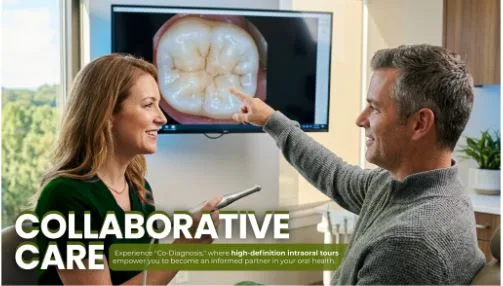
The Intraoral Camera bridges this gap by providing a real-time, high-definition tour of the patient’s mouth. These cameras are roughly the size of a standard dental mirror but are equipped with powerful LED lights and high-resolution sensors. As the dentist moves the camera, the images are projected onto a large chairside monitor. For the first time, patients can see exactly what is happening in those hard-to-reach areas. They can see the staining, the wear patterns, and the early signs of decay that were previously invisible to them. This visual evidence transforms the appointment from a mysterious lecture into a collaborative discovery.
Digital Radiography: Faster, Safer, and More Precise
Alongside intraoral photography, Digital Radiography has become the standard of care in Harrison. The transition from traditional film X-rays to digital sensors has drastically improved the patient experience. From a logistical standpoint, the process is now instantaneous. There is no more waiting for film to develop in a darkroom; the images appear on the screen within seconds of being taken.
More importantly, digital X-rays represent a massive leap forward in safety and diagnostic power. Digital sensors require up to 80% to 90% less radiation than traditional film, a fact that is highly valued by health-conscious Harrison parents. Once the image is on the screen, the dentist can manipulate it in ways that were impossible with film. They can enhance the contrast to see subtle changes in bone density, zoom in on a specific root tip, or use color-mapping to identify areas of concern. This precision allows for the detection of issues like interproximal decay or periodontal bone loss at their most treatable stages, often saving the patient from more invasive and expensive procedures later on.
The 2026 Trend of “Co-Diagnosis”
The most significant shift in modern dentistry is not just the presence of technology, but how that technology is used to empower the patient. In 2026, the industry has embraced a philosophy known as “Co-Diagnosis.” In this model, the “expert” role of the dentist is balanced with the “informed” role of the patient.
Instead of the dentist going into a back room to look at X-rays and returning with a pre-determined treatment plan, the doctor and patient look at the digital scans and intraoral photos together. They sit side-by-side and review the data. The dentist points out the findings, explains the risks of inaction, and discusses various treatment options while the patient looks at the evidence on the screen. This collaborative approach removes the “sales” aspect of dentistry. The patient doesn’t feel like they are being talked into a procedure; they feel like they are making a logical decision based on the facts they can clearly see. This level of involvement significantly reduces dental anxiety and leads to higher patient satisfaction.
Technological Integration for Busy Families
Harrison is home to many active families who balance work, school, and outdoor recreation. For these residents, efficiency is a top priority. Technological integration in a local practice directly contributes to faster appointments and fewer “return visits.”
For example, when a practice uses digital impressions instead of traditional putty molds, the accuracy is significantly higher. This means that crowns, bridges, and nightguards fit perfectly the first time. There is no need for the “trial and error” adjustments that were common with older methods. Furthermore, digital records allow for seamless communication with specialists if a referral is needed. If a Harrison resident needs to see an orthodontist or an oral surgeon, their high-resolution digital files can be sent instantly, ensuring that everyone on the care team is looking at the same clear data. This streamlined workflow is the hallmark of a modern, tech-savvy community practice.
Breaking the Cycle of Dental Skepticism
There is a subset of the population—often referred to as “skeptical patients”—who have had negative experiences in the past, perhaps feeling that they were over-treated or that procedures were performed without clear justification. Advanced technology is the best tool for rebuilding that trust.
When a patient can see a 10x magnification of a cracked cusp on an intraoral camera, the “why” behind a recommended crown becomes undeniable. Technology provides an objective “truth” that subjective descriptions cannot match. For tech-savvy residents who are used to having data at their fingertips in every other aspect of their lives, this transparent approach to dentistry is exactly what they expect. It aligns the dental experience with the high-tech standards of the modern world, making the neighborhood dentist feel just as “current” as any downtown specialist.
Personalized Care in a Digital Age
A common concern with the rise of “high-tech” medicine is that it will become cold and impersonal—that the machine will replace the human touch. However, in Harrison, the opposite is true. The technology is used to enhance the personalized care.
Because the diagnostic tools are so efficient, the dentist actually has more time to spend talking to the patient. When the “data gathering” phase of the appointment is streamlined by digital radiography and intraoral scanning, that time is reclaimed for consultation and relationship-building. Personalized care means that the dentist uses the technology to tailor a plan to the specific life circumstances of the Harrison resident. Whether it is planning a treatment schedule that works around a teacher’s school year or identifying a wear pattern caused by a specific local hobby, the technology is simply a tool that allows the dentist to be a better, more precise version of the “family doctor.”
The Economic Benefit of Staying Local
Beyond the clinical and emotional benefits, there is a clear economic advantage to accessing high-tech dentistry in Harrison. Commuting to a major city center for dental work involves hidden costs: gas, parking fees, and hours of lost productivity from work. When a resident can access the same “Tier 1” technology five minutes from their home, the “Total Cost of Care” drops significantly.
Furthermore, early detection through advanced diagnostics is the most effective way to save money on dental health. The 2026 “Co-Diagnosis” model focuses heavily on preventive and interceptive care. Catching a small cavity via digital X-ray and treating it with a simple filling is far less expensive than waiting until it becomes a root canal and a crown. By staying in Harrison and utilizing these high-tech tools regularly, residents are investing in a more affordable long-term health trajectory.
Conclusion: The Future of Harrison Health
The era of the “small-town compromise” in healthcare is over. Harrison residents now live in a “Best of Both Worlds” scenario where they can enjoy the peace and community of their neighborhood while benefiting from the absolute cutting edge of dental science. The integration of Intraoral Cameras, Digital Radiography, and the “Co-Diagnosis” philosophy has created a new standard of care that is transparent, efficient, and deeply personal.
By choosing to stay local, Harrison families are supporting a community infrastructure that values both innovation and relationship. They are proving that high-tech dentistry doesn’t belong to the city; it belongs to any practitioner who is committed to providing their patients with the clearest possible picture of their health. In 2026, the best view of your smile isn’t found in a downtown office—it is found right here at home, where technology and community care meet to create a truly modern dental experience.