The Industrial Athlete: How Modern Engineering is Revolutionizing Job Site Footwear
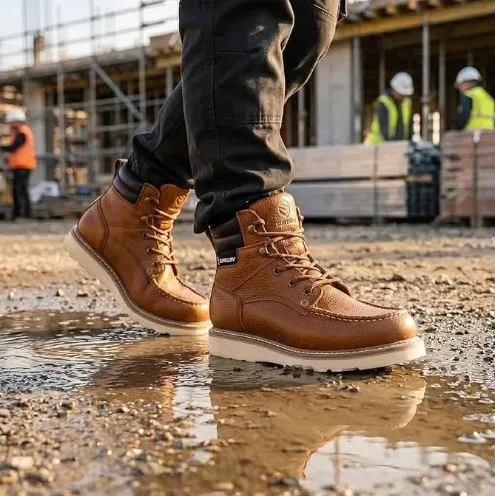
In the professional world of 2026, the boundary between “industrial gear” and “high-performance equipment” has completely dissolved. We no longer view workers in construction, logistics, or the trades as mere laborers; they are recognized as industrial athletes. Like a marathon runner or a professional hiker, a tradesperson’s performance is directly dictated by their equipment—specifically, the foundation upon which they stand.
For decades, the standard work boot was a heavy, rigid, and often painful necessity. However, a revolution in material science and ergonomic design has changed the landscape. Today, selecting the right footwear is a technical decision involving biomechanics, thermal regulation, and weight-to-energy ratios. Whether you are navigating a high-rise steel frame or a two-million-square-foot distribution center, understanding how your boots affect your long-term health is the first step toward professional mastery.
The Concrete Marathon: Managing Impact in the Modern Workplace
Perhaps the most underestimated hazard on a modern job site isn’t a falling object, but the very ground beneath your feet. Reinforced concrete is the standard floor for almost every industrial environment, and it is biologically punishing. Walking on concrete for 10 to 12 hours a day sends repetitive micro-shocks through the heel, up the tibia, and into the lumbar region of the spine.
This is why the search for the best work boots for walking all day has become a top priority for safety managers. The solution lies in advanced midsole engineering. Modern top-rated professional footwear now utilizes dual-density polyurethane (PU) and “long-memory” foams that act as a secondary suspension system. Unlike the cheap EVA foam found in sneakers—which flattens out under heavy loads—industrial-grade PU maintains its structural integrity for years, ensuring that the arch support you feel on day one is identical to the support you feel during year two.
Decoding the Silhouette: Moc Toe vs. Round Toe
In the workforce community, a persistent debate continues regarding the structural benefits of different boot designs. When comparing moc toe vs round toe configurations, the choice should be dictated by your specific work environment rather than just aesthetic preference.
The “Moc Toe” (moccasin toe) is characterized by its U-shaped stitching. While many view this as a heritage style, it serves a vital ergonomic purpose: it allows the leather to be constructed with a more vertical wall. This creates a higher “ceiling” in the toe box, providing significant room for the toes to splay naturally. For workers who are frequently kneeling, crouching, or climbing—positions where the foot naturally expands—the moc toe vs round toe debate usually ends in favor of the moc toe due to its superior volume and flexibility.
Conversely, the round-toe boot remains the standard for heavy “muck” work or agricultural settings. With fewer seams, there are fewer places for mud, lime, or chemicals to accumulate, making them easier to clean in high-debris environments.
Material Integrity: The Full-Grain Standard
In an age of synthetic alternatives, full-grain leather remains the undisputed king of industrial footwear. As a professional who prioritizes quality over quantity, understanding the “why” behind leather selection is critical. Full-grain leather is the top layer of the hide, containing the densest fiber structure.
This material offers three distinct advantages:
- Natural Breathability: Leather is a porous membrane. It allows moisture vapor from the foot to escape while preventing liquid water from entering.
- Molding Capability: High-quality leather possesses a “memory.” Over the first few weeks of wear, it molds to the unique contours of your ankle and arch, creating a custom-fit feel.
- Durability: It resists punctures and abrasions far better than corrected-grain leather or synthetic textiles.
When exploring the latest work boots of 2026, you will notice a trend toward “Crazy Horse” leather. This is a full-grain hide treated with specialized waxes and oils, giving it a rugged, matte finish that actually heals itself. Minor scuffs can be buffed out with the heat of your hand, ensuring the boot looks professional even after months of hard labor.
Safety Ratings: The Shift to Composite Technology
While the “Steel Toe” is the most famous safety feature, the modern industrial athlete is increasingly moving toward composite safety toes. Crafted from a blend of carbon fiber, Kevlar, and high-strength plastics, composite toes offer the same ASTM-rated impact protection as steel but with a fraction of the weight.
Weight reduction is a critical safety feature in itself. Fatigue is the primary cause of “trip and fall” accidents on job sites. By reducing the weight of each boot by several ounces, you reduce the caloric expenditure required to move, keeping the worker more alert and agile during the final hours of a shift. Furthermore, composite materials are non-conductive, making them the superior choice for electricians and those working in extreme temperatures, as they do not act as a heat sink in the winter or a radiator in the summer.
The Logic of Longevity: Maintenance and Repair
Investing in premium footwear is only half the battle; maintaining that investment is what separates the amateur from the professional. Because work boots are exposed to acidic soils, concrete dust, and various chemicals, the leather fibers are under constant attack.
- The Daily Brush: At the end of every shift, use a soft brush to remove dust from the seams. Dust is abrasive and will act like sandpaper on the stitching if left to sit.
- Conditioning: Every three to four months, apply a high-quality leather balm. This keeps the fibers supple and prevents the leather from cracking at the flex points.
- The Rotation Strategy: If possible, rotate between two pairs of boots. This allows the internal foams to fully decompress and ensures the lining is completely dry before the next use, doubling the lifespan of both pairs.
Standing on Solid Ground
As we navigate the industrial challenges of 2026, our gear must be as adaptive and resilient as we are. Your boots are the only tool you use every single second of your workday. By prioritizing advanced ergonomics, high-quality full-grain leather, and task-specific safety features, you are investing in more than just a piece of clothing; you are investing in your career longevity.
Whether you are a veteran foreman or an apprentice on your first day, remember that your performance is built from the ground up. Don’t let a “budget” choice today lead to a chronic injury tomorrow. Choose a foundation that respects your feet, and they will support you through every mile of the concrete marathon.