The Rice Cooker That Understands Why Rice Matters
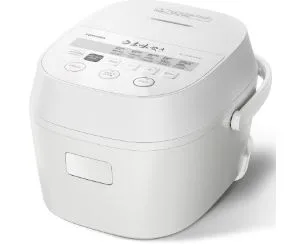
There’s a certain category of kitchen appliance that exists mostly to save time. Air fryers. Pod coffee makers. Frozen yogurt machines you use twice and forget in a cabinet.
Rice cookers are different.
A good rice cooker becomes infrastructure. The kind of appliance that ends up permanently occupying counter space because, eventually, you stop thinking of it as a gadget and start treating it like plumbing. You expect it to work. Every time.
That expectation is exactly what the TOSHIBA OriginTaste Rice Cooker is designed around. And after spending time with it, what’s striking isn’t that it tries to reinvent rice cooking. It’s that it doesn’t.
Many modern kitchen appliances overcomplicate themselves in pursuit of “smart” positioning. Oversized touchscreens. App ecosystems. Aggressive industrial design that looks better in marketing renders than in actual kitchens.
The OriginTaste takes a more restrained approach. Its core pitch is almost aggressively practical: make rice taste better, make the process easier, and handle enough other cooking tasks to earn its footprint. That sounds simple until you realize how many rice cookers fail at exactly that middle part.
Toshiba’s 3D heating system distributes heat from multiple directions rather than relying primarily on bottom heat. In practice, the result is less about dramatic texture changes and more about consistency. Jasmine rice comes out evenly cooked, with no wet pockets near the center. Brown rice avoids the usual compromise between firmness and dryness. Mixed grains don’t feel like an afterthought mode bolted onto a white-rice-first machine.
The important thing is that it behaves predictably. And that predictability matters more than people admit. Especially in households where rice isn’t an occasional cuisine experimentation.
The 24-hour timer sounds boring until you actually live with it.
Set oatmeal before bed. Schedule rice before work. Let the stew finish right as people get home. The OriginTaste succeeds because it understands the rhythm of real kitchens rather than the fantasy version that appliance companies usually advertise.
The LCD interface helps here, too. It’s functional without becoming intimidating. There’s enough information to feel precise, but not so many submenus that using it starts to feel like programming a 2007 microwave.
This is where Toshiba’s long history with rice cookers becomes noticeable. Toshiba introduced Japan’s first automatic rice cooker in 1955, and the company clearly understands that the ideal rice-cooker experience is one in which the machine gradually disappears into habit.
Most multifunction appliances advertise dozens of modes that no one uses after the first week. The OriginTaste’s 15-function setup feels more grounded than that. White rice, brown rice, jasmine rice, porridge, mixed grains, quick cook, those make sense immediately. But the less obvious additions, like cake, soup, stew, and egg modes, are what make the appliance unexpectedly versatile in smaller apartments or shared kitchens.
There’s a meaningful difference between “I could make something” and “I can make something without pulling out three pans and watching the stove for 40 minutes.” The Toshiba leans heavily into the second category.
That’s increasingly important in North American kitchens, where countertop appliances are no longer niche gadgets but part of how people compress cooking into fragmented schedules.
Rice cookers live or die by the inner pot. That’s the part that absorbs years of heat cycles, repeated washing, accidental scraping, and the slow degradation that eventually ruins otherwise decent machines.
The TOSHIBA OriginTaste uses a 3.1mm-thick inner pot with a PFAS-free ceramic coating, and while that spec-sheet language can sound like filler, the thickness genuinely affects heat retention and stability during longer cooking cycles. The removable steam vent and relatively painless cleanup help too. Nobody buys a rice cooker because they enjoy maintaining one.
This isn’t an ultra-premium Japanese import targeting enthusiasts willing to spend absurd amounts on induction pressure systems and hyper-specialized grain calibration. But it also isn’t disposable big-box-store hardware.
Instead, it lands in a space that feels increasingly relevant: appliances designed for people who cook regularly enough to care about quality, but not enough to romanticize complexity. That’s probably why the “restore the original taste of rice” philosophy behind the OriginTaste branding works better than expected. It sounds like marketing copy until you realize the appliance is fundamentally built around reducing variables: stable heating, reliable timing, consistent moisture retention, and practical presets.