Modern Dating Etiquette: When and How to Share Your Phone Number
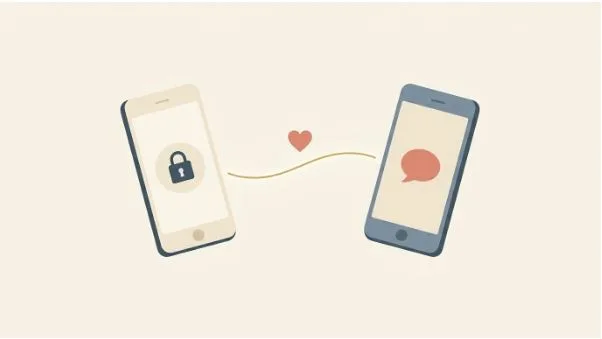
There’s a particular moment in dating, somewhere between the third good message thread and the first decent in-person date, when the question shows up. “What’s your number?” It used to feel like a small thing. Now it carries more weight than it deserves.
Phone numbers have quietly become one of the most personal pieces of information we carry. Tied to bank accounts, social media recovery flows, two-factor authentication, gym memberships, food delivery, ride-share apps. The number you give a stranger from Tinder is the same number that gets you into your email, your banking, your Apple ID. The cost of giving it out has gone up, even if the cultural ritual around asking for it has not.
So when do you share it? When do you hold back? And how do you do either without making a small etiquette decision feel like a federal case?
Why Phone Numbers Feel More Intimate Than Ever
Twenty years ago, a phone number was a way to reach you at home or at work. The number itself was relatively low-stakes. If a date turned bad, you screened calls. The worst case was a few unwanted voicemails.
That world is gone. Your mobile number now functions as a master key. Most of your important accounts use it for verification. Banks send one-time passwords to it. Crypto exchanges, doctor portals, government services, the Social Security Administration. Even if someone you went on one date with never calls again, they have a piece of identity infrastructure that links to dozens of places they have no business knowing about.
There is also the rise of SIM-swap fraud, robocalls, and AI-generated voice scams. Bad actors with even a small amount of context (a name, a workplace, a number) can social-engineer their way into accounts. Sharing your number now means sharing a vector for compromise, not just a means of contact.
Dating apps complicate this further. The first stage of online dating is, by definition, talking to strangers. The same caution you would apply to a stranger asking for your house address applies to a stranger asking for your number.
The Privacy Reality of Dating Apps
Tinder, Bumble, and Hinge all run on phone-number verification. That number sits in their systems, sometimes for years after the account is deleted, and occasionally surfaces in data breaches. The Ashley Madison leak was a generation ago, but the same pattern has repeated across dozens of consumer apps since.
There is also the messy reality that some matches will move faster than is comfortable. Asking for a number on day two is not unreasonable. Demanding it after three messages is. And once the number is out there, you cannot pull it back. Blocking on the app blocks the app, not the number. A persistent ex or an unstable match has direct access to your mobile life.
None of this is paranoia. It is the ordinary consequence of phone numbers being more useful for verification and more dangerous to share than they were a generation ago. The right response is not to refuse to share, ever. It is to be intentional about which number, in which moment, with which person.
When Sharing Your Number Is the Right Call
Sometimes the conversation is going well, the energy is right, and you genuinely want to take things off the app. That is a healthy signal. A few situations where sharing your personal number is appropriate:
You have met in person at least once, and the date went well. You have video-called and confirmed they are who they say they are. Your friends or someone in your social circle vouches for them. You are about to coordinate logistics for a date and the app is becoming a friction point.
In any of these cases, the number is a tool for connection rather than a leap of faith. It comes after some signal of trust, not before. Etiquette here is straightforward: confirm you both want this step, give the number plainly, and do not perform reluctance. Either share it or do not.
The trouble starts when the request comes too early and the social pressure to comply outweighs the actual readiness.
When and How to Use a Different Number Instead
The middle ground that did not exist ten years ago is the disposable or rented phone number. A temporary phone number app gives you a working line for receiving texts and verification codes without exposing your primary mobile number. You can use it on dating apps for the verification step, give it out for early conversations that move off the app, and retire it when a match goes cold or a relationship ends.
For Tinder specifically, getting a virtual phone number for Tinder is a common practice now among people who are dating actively across multiple apps or who simply value separating their dating life from their primary identity. The number works the same way for the platform. It receives the verification code, the account gets created, the conversations happen. But if things go sideways, you have one degree of separation between the dating life and the rest of the digital life.
This is not deceptive. It is the same instinct as using a work email for work things and a personal email for personal things. The phone number stack is just catching up to where email already is.
The Etiquette of Saying “Not Yet”
If someone asks for your number before you are ready, the response is simple and does not require apology. “I’d rather keep chatting here for a bit longer.” Or, “I usually save my number until after we’ve met in person.” That is it. No long explanation. No defensive paragraph. No performance.
A good match will respect that. A bad match will push, sulk, accuse you of being closed off, or make a joke about your supposed paranoia. That response tells you everything you need to know about how they handle low-stakes boundary requests, which is to say everything about how they will handle higher-stakes ones later.
The principle is not “withhold information forever.” It is “match the level of trust you have to the level of access you give.” Most matches do not need the same access as the people who already know you. Most early conversations do not need to escalate to phone access on the second message. Pace is a feature, not a flaw.
The Modern Approach
What works for modern dating is the same thing that works for any relationship in general: meet people where they are, share what feels appropriate, and stay aware of what each piece of access means.
A phone number is no longer a small thing. It is connected to your money, your accounts, your identity, and your reach. Sharing it is fine, sometimes great, sometimes the right call early. But it should be a decision, not a default. The people who matter will respect the pace. The people who push back at being slowed down for one good reason will push back at the next ten.
Date well. Share carefully. And keep your access stack tidy.
Common Questions About Sharing Your Number While Dating
Is it safe to share your phone number on dating apps?
Sharing your phone number on a dating app is reasonable once some trust has been built, ideally after meeting in person or video chatting. The main risks are that the number stays with the platform and the match indefinitely, that it can surface in data breaches, and that an unstable match retains direct access to your mobile line even after being blocked on the app. Using a separate or temporary number for early conversations reduces those risks without preventing genuine connection.
Can you use Tinder without your real phone number?
Yes. Tinder requires a working phone number for verification, but it does not have to be your primary mobile line. Many people use a rented or temporary mobile-grade number for the initial verification and for early conversations on the platform. The number must be a real mobile line rather than VoIP, since Tinder rejects most VoIP-issued numbers.
What is the polite way to refuse giving your number to a match?
A short, neutral response works better than a long explanation. Something like “I usually save my number for after we have met in person” or “I’d rather keep chatting here for now” is enough. A respectful match will accept that without pushing. A match who pushes back at being slowed down has answered a question for you.
How long should you wait before sharing your phone number?
There is no universal rule, but a useful guide is to share after at least one of the following: a positive in-person meeting, a video call that confirms identity, a recommendation from someone in your social circle, or a clear need to move logistics off the app. The number itself is not the issue. The pace of access is.