More Radiologists Won’t Fix Imaging Delays Without the Technologists Who Create the Scans
As radiology gains national attention, workforce leaders say the health care system must invest in the professionals who operate imaging equipment and keep diagnosis moving.
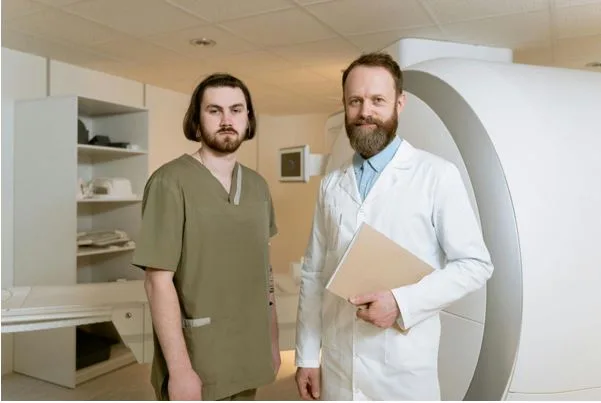
A radiologist can read an MRI, CT scan or X-ray only after someone else has done the work of producing it. That person is often a radiologic technologist, the trained professional who positions the patient, operates the equipment, follows safety protocols and captures the images physicians need to make a diagnosis.
It is one of the most important jobs in modern medicine. It is also one of the most strained.
As radiology receives rare national attention following the nomination of Dr. Nicole Saphier, a radiologist, for U.S. surgeon general, much of the public conversation has focused on the role physicians play in early detection, cancer screening and public health. But inside hospitals and imaging centers, another question is becoming harder to ignore: Who will produce the images radiologists need to read?
The answer matters for patients. Without technologists, imaging equipment sits idle. Emergency departments wait longer for scans. Cancer screenings get pushed back. A patient who needs an answer may spend more time waiting for the first step in the diagnostic process.
The shortage is already showing up across the workforce. The American Society of Radiologic Technologists’ 2025 staffing survey found vacancy rates for all medical imaging disciplines remained above 2020 levels. CT had the highest vacancy rate at 19.4 percent, followed by MRI and cardiovascular interventional technology at 17.4 percent. Radiography had a vacancy rate of 18 percent.
Those are not abstract numbers to a hospital scheduler or a patient waiting for results. A scan delayed by staffing shortages can delay the next appointment, the next test and the next treatment decision.
It also means that simply adding more radiologists, while important, will not solve the problem by itself. Radiologists interpret images. Technologists create them.
The U.S. Bureau of Labor Statistics describes radiologic technologists as professionals who perform diagnostic imaging examinations, including X-rays and CT scans, while MRI technologists operate MRI scanners to create diagnostic images. The agency projects employment of radiologic and MRI technologists will grow 5 percent from 2024 to 2034, with about 15,400 openings expected each year on average over the decade.
That demand is one reason the Center for Radiology Education has launched a nationwide scholarship initiative with John Patrick University of Health and Applied Sciences. The program will provide up to 5,000 scholarships in 2026 for students enrolling in medical imaging programs, including radiologic technology, MRI, diagnostic medical sonography, nuclear medicine, radiation therapy, limited scope imaging and advanced modality training.
The scholarships are worth up to $10,000 per student and are intended to help reduce financial barriers for people entering or advancing in the imaging workforce. Students supported through the program can pursue an associate degree in radiologic technology in as little as 16 months, according to the organization.
Anthony Mungo, founder and CEO of the Center for Radiology Education, said the goal is to build the workforce from the ground up.
“This initiative is about strengthening the healthcare workforce while opening doors for students who may not have otherwise been able to pursue a healthcare career,” Mungo said in announcing the scholarship program. “By removing financial barriers and accelerating pathways into medical imaging, we are empowering individuals to build stable, meaningful careers and improving access to care in communities nationwide.”
The Center for Radiology Education describes itself as a clinical education facility founded by technologists for future technologists. In addition to scholarships, the center provides supplemental clinical education, simulation-based learning, mentorship and workforce development support for medical imaging students and professionals. It also focuses on early career awareness and pipeline development through partnerships with schools, districts and community organizations.
That kind of pipeline work is becoming increasingly important because medical imaging education depends on more than classroom instruction. Students need hands-on training, clinical exposure and confidence working with patients and equipment before they can enter the field.
John Patrick University offers degree programs in the radiologic sciences and uses hybrid and online formats designed to support both working professionals and new students. Brent Murphy, founder and CEO at John Patrick University, said the shortage is already affecting both clinicians and patients.
“We see the strain the workforce shortage is placing on clinicians and patients alike,” Murphy said. “CRE’s scholarship program directly supports students entering critical imaging professions, and we are proud to partner in expanding access to high-quality education and clinical training.”
The scholarship program has two pathways. Degree program applicants must meet requirements that include a GPA of 3.0 or above and the ability to relocate for clinical placement if needed. Eligible degree programs include diagnostic medical sonography, radiologic technology, MRI, nuclear medicine and radiation therapy.
Certificate program applicants must hold and maintain current certification through organizations such as the American Registry of Radiologic Technologists, the Nuclear Medicine Technology Certification Board or the American Registry for Diagnostic Medical Sonography. They also must submit an employer reference, a list of recent community service or volunteer activities and a personal and professional statement.
The larger issue is that imaging has become central to nearly every part of health care. A patient with chest pain may need a CT scan. A woman with an abnormal mammogram may need follow-up imaging. A child with a suspected fracture may need an X-ray. A cancer patient may need repeated scans to guide treatment.
In each case, the diagnosis starts before the radiologist reads the image. It starts with the technologist who helps create it.
That is the side of radiology that rarely gets public attention. Technologists are often the people calming patients before a scan, helping them hold still when they are nervous or in pain and making sure the image is good enough for a physician to interpret.
As hospitals invest in more advanced imaging technology and as radiologists take on a more visible role in public health, workforce development may become the missing piece. Machines cannot scan patients by themselves. Radiologists cannot interpret images that were never captured.
Saphier’s nomination has given radiology a national platform. The technologist shortage shows why the conversation cannot stop with physicians.
For imaging to meet the country’s health care needs, the system must train and support the people behind the image.