Advanced Robot Arm Joint Systems: Engineering Precision for Next-Generation Robotics
Introduction
A robot arm joint is basically one of those critical bits that really help with precise motion, firm stability, and reliable control in today’s robotic setups. You see them used across manufacturing, healthcare, and even research labs, where these joints sort of mix mechanical design with sensors, together with actuators, so they can deliver accurate and repeatable movement. And as automation keeps moving forward, high-performance robot arm joint systems are starting to play an even larger part, boosting overall efficiency and pushing reliability even further.
Evolution of Robot Arm Joint Systems
In the early robotic systems, joint parts were mostly mechanical in a plain way, run by outside motors and pretty basic gear setups. It worked, yes, but it felt a bit limited, like the precision was low, the adaptability was not that great, and the real-time feedback was missing more than it should.
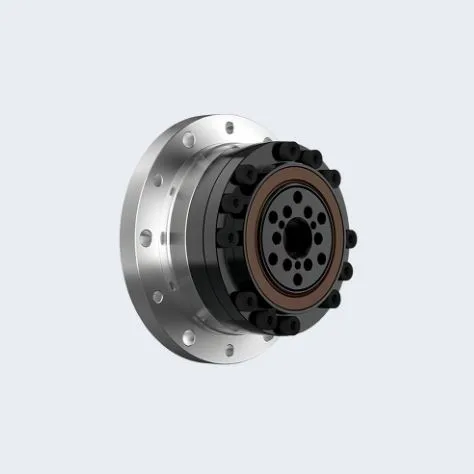
Modern robot arm joint systems are different now; they’re more like bundled modules, all squeezed into one compact body, where several tech pieces are basically together. You’ll usually find servo motors, harmonic drives, encoders, and controller electronics all in the same unit. With that kind of setup, motion accuracy goes up quite a lot, mechanical clutter goes down, and the overall reliability is improved by a noticeable margin.
These days, many industries want joint systems that are modular and customizable, so they can be adjusted for varied payload capacity, different speed needs, and even harsher surroundings. In practice, it’s not just about speed; it’s more about matching the task, quickly and reliably, without much fuss.
Core Structure of an Advanced Robot Arm Joint
A modern robot arm joint is not just a moving part; it is a complete motion system. It typically includes several integrated components working together.
Actuation System
The actuation system is kinda the heart here, it’s what generates the motion. In practice, high-performance servo motors or brushless motors are very often chosen so the torque stays smooth and the positioning comes out exact. Also, the efficiency of this whole setup, it ends up impacting the robot’s speed and how well it can deal with different loads.
Gear Reduction Mechanism
Most of the more advanced joints rely on precision gear arrangements like harmonic drives. What they do is slow things down, but at the same time, they push torque upward, so the robot can handle heavy-duty work with real consistency and tight accuracy. People usually like harmonic drives because they have that near-zero backlash behavior; it’s almost like there’s no slop.
Feedback and Encoder Systems
Encoders are a big deal for getting accurate positioning. Many modern systems use dual encoder layouts, which provide real-time feedback, and then they can fix motion errors quickly. That helps the repeatability come out better, and it also supports long-term stability over time, without too much drift.
Control Electronics
Integrated controllers manage motion commands and feedback signals. They ensure that the robot arm joint responds accurately to input instructions while maintaining stability under varying load conditions.
Types of Advanced Robot Arm Joint Systems
Modern robotics uses different types of joint systems depending on application requirements and performance expectations.
High-Precision Harmonic Joints
These joints are made for applications that need extreme accuracy and very little backlash, sort of like you really can not tolerate tiny errors. They are used a lot in semiconductor manufacturing, aerospace systems, and also in precision assembly tasks, where even small misalignments can mess with performance.
Collaborative Robot Joints
Collaborative joints, often used in cobots, are designed for safe interaction with humans. They include torque sensing, force limitation, and compliance control features. These joints allow robots to work safely in shared environments such as packaging lines and small-scale manufacturing units.
Humanoid Robot Joint Modules
Humanoid joints mimic human-like movement, but with many degrees of freedom, kind of like a person would do, just in a mechanical way. You see them a lot in robotics research, also in AI development, and even in educational platforms. The whole build is about flexibility, smoother motion, and a more lifelike articulation, even when the tasks get tricky.
Industrial Applications of Robot Arm Joint Systems
Advanced robot arm joint systems are kind of quietly everywhere, used across several industries in the United States and internationally, too.
For industrial automation, they’re what drive robotic arms on assembly lines, welding stations, and material handling arrangements. With that sort of precision, plus quick responses, production efficiency tends to rise a lot, you know.
In collaborative robotics, these joints kind of help keep human-robot work safer by doing force and motion, in real time, more thoughtfully. So automation becomes more adaptable and, honestly, easier to adopt too, particularly for small and medium-sized enterprises.
Then, in medical robotics, high-precision joints let surgeons do minimally invasive procedures, with exceptional accuracy and real control in hand.
And in aerospace and defense, robotic joints show up in inspection systems, simulation benches, and precision manufacturing tasks where dependability is nonnegotiable, like really.
Future Trends in Robot Arm Joint Technology
The future of robot arm joint systems is kinda moving toward intelligent, adaptive, and energy-efficient designs. With AI powered control systems, the joints can pick up motion patterns and, somehow, automatically tune performance, like optimizing in the background or something.
Also, new lightweight composite materials and more compact actuator designs will boost mobility and lower energy usage. On top of that, predictive maintenance tools will flag wear and possible failure ahead of time, so downtime in industrial operations is reduced.
As robotics keeps evolving, modular and intelligent joint systems will become the base layer for next-generation automation, not just as a nice add-on but as the core direction.
Conclusion
A robot arm joint is one of those fundamental bits that really sets the tone for precision, flexibility, and efficiency in modern robotic systems. In practice, advanced joint technologies like harmonic drives, servo systems, and smarter feedback mechanisms are shifting industrial automation across the USA faster than before.
When you understand how these setups work, engineers and businesses can build solutions that are steadier and more effective. And as innovation keeps moving along, this robot arm joint technology will keep sitting right in the middle of robotics progress, pushing forward what comes next in smart automation and intelligent machines.