Customized Motors: Are They Worth the Investment Today?
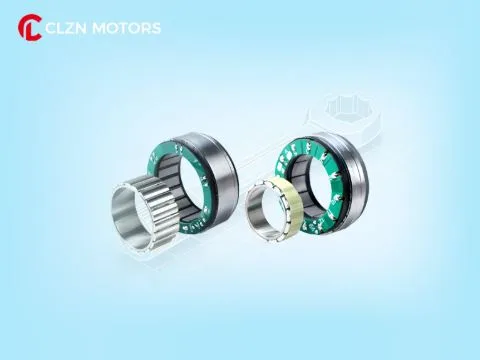
In industrial projects and automation upgrades across the U.S., the question of whether Customized motors are worth the investment comes up more often than you’d think. It usually shows up during budgeting discussions right at the point where engineering needs collide with procurement reality, and nobody has a neat answer in hand.
Having worked around system integrations in manufacturing environments and energy-related installations, I’ve seen the yes and the no side of the debate play out more than once. Some teams swear by standard, off-the-shelf motors because they’re easy to source and keep running, simple as it gets. Most people won’t really look at a design unless it’s tuned a little, or at minimum customized. Still, the actual situation is kind of in between, and it depends a lot on how the system behaves once it’s out there in the field.
Why the conversation around customized motors is growing
Over the past few years, industrial systems have become a bit less forgiving. Loads fluctuate more, efficiency requirements are tighter, and downtime costs are harder to just shrug off. In that kind of setting, standard motor layouts don’t always behave as cleanly as they did before, not quite.
What a lot of professionals tend to notice is that performance troubles rarely pop up on day one. Instead, they creep in gradually, like small losses in effectiveness, uneven rotational pull, or thermal strain during extended use. That’s usually the moment when teams start questioning, maybe the standard motor wasn’t really the right fit in the first place.
And then, from the practical side, customized motors are being treated less like some shiny premium add-on and more like a sensible way to reduce long-term operational exposure.
Where customization actually changes performance
It’s easy to assume customization just means better performance, but that’s not really how it works. In real applications, customization is about aligning motor behavior to system demand curves that rarely stay constant.
In real-world usage, customization tends to focus on a few critical areas:
- Torque optimization for variable load conditions
- Thermal design adjustments for continuous operation
- Shaft and mounting changes for system compatibility
- Encoder or feedback integration for precision control
- Efficiency tuning for energy-sensitive applications
Each of these adjustments doesn’t just improve performance—it changes how the motor interacts with the rest of the system. That interaction is where most of the value is created.
The real cost question: upfront vs lifecycle value
While customized motors often cost more up front, they can end up delivering real long-run savings, mostly since they help to cut down downtime, reduce maintenance outlay, and curb energy inefficiencies. In harsh industrial settings, a motor made with specific operating conditions in mind often ends up being the more economical choice across its full service life. So, it can feel like the customization isn’t some extra charge at all, but rather a practical investment, not merely a line item.
- Frequent overheating in continuous-duty systems
- Unexpected maintenance cycles
- Performance drops under peak load conditions
- Compatibility issues with control systems
Once those issues show up, retrofitting becomes more expensive than designing correctly in the first place.
When customized motors are worth it
Not every application actually needs a customized motor, because over-engineering can bring in extra cost and unpleasant complexity. Still, customized motors give the strongest advantage when things shift a lot, like with varying loads, demanding operating conditions, or when performance expectations are a bit unpredictable. In those cases, efficiency matters a whole lot, and reliability becomes the main thing.
In practical terms, they make the most sense when:
- The system runs under variable or unpredictable load cycles
- Energy efficiency targets are tightly controlled
- Downtime carries a high operational cost
- Standard motors require frequent replacement or adjustment
What many professionals often observe is that the ROI becomes clearer over time, not immediately after installation. That delay sometimes makes decision-making harder, especially for teams focused on short-term budgeting.
The trade-offs people don’t always talk about
Even though Customized motors offer clear advantages in the right conditions, they’re not without trade-offs. One of the biggest is lead time. Unlike standard components, custom designs require engineering validation, testing cycles, and sometimes iterative adjustments before final deployment.
There’s also the issue of replacement flexibility. In standard systems, swapping a failed motor is relatively straightforward. With custom configurations, you often end up needing particular sourcing or matched specifications, so you kinda have to plan, especially if you want maintenance to go smoothly later on.
On a practical level, those limitations don’t always cancel out the advantages, but they still mean you need a more disciplined stance in system design and in inventory planning, day to day.
How decision-makers should think about customization
Experienced engineers don’t usually look at the problem like okay, we just pick a custom motor or a standard one. More often, they keep it wider, thinking about system stability, the long run operating costs, and whether the unit can hold steady performance, year after year, with less drift.
Also, a motor is only one part of the larger setup. Even small inefficiencies can ripple and end up bumping into overall productivity in a way that is not so obvious. In many industrial environments across the U.S, where energy efficiency and reliability keep getting more important, motors that are tailored to specific needs are turning into a workable way to strengthen operational control, and to cut downtime that keeps showing up again and again.
Final thoughts
Customized motors can be a pretty smart investment for systems working under demanding or maybe even changeable conditions, because they tend to deliver better efficiency, stronger reliability, and more steady long-term performance than standard options. You really start to feel the value once the downtime goes down, system stability gets better, and the overall operating costs stay lower over time, not just in those first few months. So instead of staring only at the up-front price, businesses should look at that longer dependability side of things, plus the life-cycle perks that a tailored motor can bring along too.