50kw Hybrid Inverter: Is It Right for Your Solar Project?
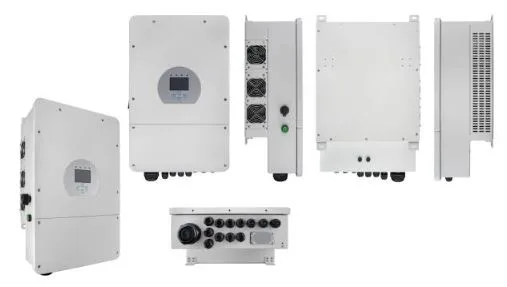
Walk onto a large commercial rooftop project in the U.S. and you’ll usually hear the same conversation happening near the electrical room: how much control do we actually want over power right now versus later? That question is where a 50kw Hybrid Inverter quietly becomes the center of the design discussion, even if it doesn’t get the early attention it deserves.
In smaller residential systems, inverter choice is almost an afterthought. At the 50kW scale, especially in commercial solar installation work, it becomes a design decision that shapes everything from battery storage sizing to grid interaction strategy.
50kw Hybrid Inverter in modern solar energy storage systems
A 50kw Hybrid Inverter sits in a very specific space in solar architecture. It is not just converting DC to AC like a standard string inverter. It is also coordinating energy between solar arrays, battery backup systems, and the grid.
In practice, this dual role is where both its value and complexity show up. Installers often point out that the hybrid functionality only performs as well as the system design around it. If the battery bank is undersized or poorly matched, the inverter ends up constrained rather than enabling flexibility.
Most 50kW hybrid systems today are deployed in:
- Small to mid-size commercial facilities
- Industrial warehouses with peak shaving needs
- Agricultural operations with unstable grid supply
- EV charging-adjacent solar setups
- Facilities prioritizing partial energy independence
One thing many buyers overlook is how heavily these systems rely on load behavior. A 50kW rating sounds straightforward, but real-world demand spikes rarely follow nameplate expectations.
Where a 50kw Hybrid Inverter makes financial and operational sense
The decision usually isn’t about technology preference. It’s about whether the operational profile justifies energy management complexity.
In larger commercial solar installation projects, a hybrid inverter starts to make sense when electricity costs fluctuate significantly during peak hours or when downtime carries real financial risk. A food processing facility, for example, values stable backup power solution capabilities differently than a retail warehouse that only needs load shifting.
From what installers often report, the strongest justification tends to fall into three categories:
- Peak shaving to reduce demand charges
- Backup power during grid instability
- Better utilization of stored solar energy instead of exporting it
That last point is subtle but important. Without storage coordination, excess solar often gets pushed back to the grid at low compensation rates. A hybrid inverter changes that equation by prioritizing on-site consumption and storage first.
Still, not every project benefits equally. If energy usage is already flat and utility rates are simple, the added system complexity can outweigh savings.
Technical realities behind installation and integration
A 50kW system is where electrical design stops being forgiving.
Engineers dealing with these systems quickly realize that inverter selection is only one part of the puzzle. Battery compatibility, voltage windows, and grid-tie requirements all need to align. Mismatched components can reduce solar power efficiency more than expected, even if every part is technically “compatible.”
Another reality is heat management. In industrial environments, hybrid inverters operating near full load for long periods require proper ventilation planning. Skipping this step is a common mistake that shows up later as derating issues in peak summer months.
There’s also the control layer. Many modern hybrid systems integrate with energy management platforms, but not all communication protocols play nicely together. Facility managers sometimes discover too late that their monitoring dashboard doesn’t fully reflect real-time battery cycling behavior.
These details don’t usually appear in product brochures, but they matter more than people initially expect.
Grid interaction and the shift toward controlled independence
The appeal of hybrid systems is not full off-grid operation. That’s rarely practical at 50kW scale. Instead, the value sits in controlled independence.
A grid-tied solar system paired with hybrid capability allows facilities to decide when to consume, store, or export power. That level of control becomes particularly useful during peak pricing windows or unstable grid conditions.
In regions with time-of-use tariffs, the system effectively acts as a financial tool. Energy stored during low-cost solar production hours can be used when electricity prices spike. The impact is less about technology novelty and more about cost timing optimization.
Still, grid regulations in the U.S. vary widely. Some utilities are flexible with export limits; others impose strict interconnection rules that can limit how much of that hybrid capability is actually usable.
Value in the long run and realistic expectations
For the 50kw Hybrid Inverter , one must understand that it should be considered alongside other measures for renewable energy investments rather than just a single replacement.
Expectations in terms of maintenance should be relatively modest yet significant because updating the firmware, checking the batteries’ condition, and recalibrating the system can all contribute to its long-term stability.
There’s also the replacement cycle to consider. While solar panels often last decades, inverters and batteries operate on shorter timelines. Planning for that lifecycle mismatch is part of responsible system design.
The systems that perform best long-term tend to share one trait: they were designed with operational behavior in mind, not just installed to meet a capacity target.
Conclusion
A 50kw Hybrid Inverter isn’t a universal solution, and it’s not meant to be. In the right setup—where energy management, storage, and grid interaction all matter—it becomes a powerful control point in a commercial energy system. In simpler environments, the same complexity can feel unnecessary.
The real decision comes down to whether the facility needs flexibility or just basic generation. When flexibility is part of the goal, this class of inverter often becomes central to the entire solar power efficiency strategy rather than just another component in the system.