Perfume Capping Machine: How to Choose the Right System?
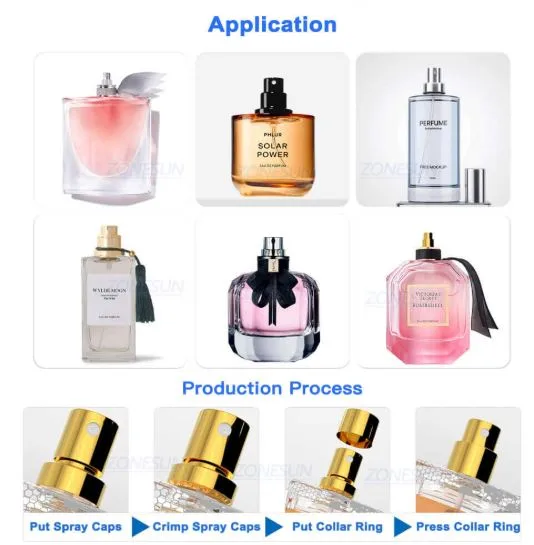
Walk into any fragrance bottling facility and the same issue shows up sooner or later: the capping stage looks simple on paper, yet it quietly dictates line stability. A Perfume Capping Machine can either keep production smooth or become the bottleneck that slows everything downstream—especially when bottle formats shift or cap tolerances aren’t consistent.
In practice, buyers often focus heavily on filling accuracy and overlook capping altogether. Then the line starts running and problems appear: caps slipping, torque inconsistencies, or micro-leaks that only show up during shipping. What seemed like a minor equipment decision turns into daily frustration for operators and maintenance teams. Choosing the right system is less about catalog specifications and more about how the machine behaves under real production pressure.
Perfume Capping Machine selection criteria that actually matter on the floor
Most suppliers will lead with speed ratings, but anyone who has spent time around a running line knows throughput alone doesn’t tell the full story. The real differentiator is how consistently the machine handles variability—because fragrance packaging is rarely as uniform as brochures suggest.
Torque control is usually the first pressure point. Perfume caps are often decorative, lightweight, and sensitive to over-tightening. A machine that performs well in a demo can still struggle once cap designs change between SKUs. From what operators often report, inconsistent torque settings lead to either loose closures or cosmetic damage that immediately affects brand presentation.
Changeover time is another underestimated factor. Smaller fragrance houses or contract fillers may switch between bottle formats multiple times a week. A system that requires extensive mechanical adjustment slows everything down in a way that doesn’t always show up in ROI spreadsheets but is felt in daily output.
Material handling also matters more than people initially expect. Glass bottles with narrow neck finishes behave differently from plastic variants, especially at higher speeds. If the alignment system isn’t precise, even a slight misfeed creates a ripple effect—jammed conveyors, rejected units, and unnecessary operator intervention.
In larger commercial projects, integration with upstream and downstream equipment becomes critical. A capping machine that isn’t synchronized with the filling and labeling stages tends to create micro-delays that accumulate into real production loss over an 8–10 hour shift. Engineers usually learn this the hard way after installation, not before.
Where automation decisions meet plant energy reality
What often gets overlooked in equipment selection is the facility side of the equation. A modern perfume line doesn’t operate in isolation—it sits inside a broader manufacturing ecosystem where energy management is becoming as important as mechanical precision.
Some facilities in the U.S. are now evaluating whether to pair production upgrades with solar energy storage systems. Not because it directly improves capping accuracy, but because stable energy supply reduces line interruptions. A sudden voltage drop can affect servo-driven components in a capping machine just enough to throw torque calibration off for a batch.
In facilities running a grid-tied solar system, the stability of power input becomes part of production planning. When combined with a battery backup system, plants can maintain controlled shutdowns instead of abrupt stops, which is particularly relevant for continuous packaging lines. It’s not unusual to see engineers coordinate machine specs alongside broader infrastructure decisions like this.
There’s also a financial angle. A commercial solar installation paired with efficient production equipment is increasingly viewed as part of a long-term renewable energy investment, especially for facilities operating multiple shifts. While the capping machine itself isn’t an energy-intensive asset, its consistency depends on stable upstream systems.
One thing plant managers often mention is that power irregularity doesn’t always cause immediate breakdowns—it creates subtle inefficiencies. Over time, these show up as recalibration frequency, increased wear on servo motors, or minor alignment drift. That’s where solar power efficiency and overall facility-level planning indirectly support production reliability.
A backup power solution isn’t only about emergency lighting or servers anymore. In modern packaging environments, it’s increasingly tied to protecting process continuity. Even a short interruption during capping can lead to batch segregation, especially in regulated or export-oriented fragrance production.
Practical takeaway
Selecting a Perfume Capping Machine isn’t just a question of speed or automation level. It’s about how well the system holds up under real variability—different cap designs, operator habits, line synchronization, and facility conditions that aren’t always visible during procurement.
The most reliable setups tend to come from balancing mechanical precision with practical plant realities, including maintenance access and even broader infrastructure like energy stability. When those pieces align, the line runs quietly in the background the way it should.
At the end of the day, the right perfume capping machine is the one that disappears into the process—no constant adjustments, no recurring faults, just steady output that supports the rest of the production chain without drawing attention to itself.