7 Reasons Truck Accident Settlements Are Larger Than Car Accidents
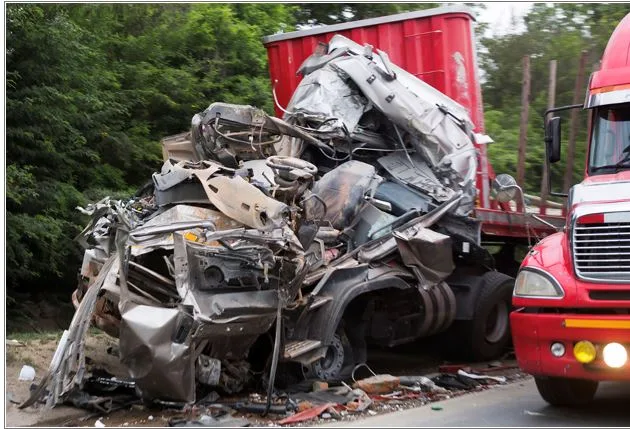
Truck accident settlements routinely dwarf car accident settlements, even when the injuries look similar at first, and the reasons have less to do with the crash itself than with everything surrounding it.
Houston truck accident attorneys at Sutliff & Stout, a firm with proven multimillion-dollar trucking verdicts and deep experience against commercial carriers, see this gap in nearly every case. A commercial truck claim involves federal regulations, layered insurance, and corporate defendants that a typical car crash never touches.
The Texas Department of Transportation recorded about 66,000 crashes in Houston in 2024, and Harris County led the entire state with 579 traffic deaths, with commercial vehicles contributing heavily to the most severe collisions on Interstate 45, Loop 610, and U.S. Highway 59.
The way an injured client sees it, the same injury can be worth far more in a truck case, and understanding why prevents accepting a car-sized offer for a truck-sized harm.
1. Catastrophic Injuries Drive Higher Damages
Truck settlements are larger first because the injuries are more severe.
A loaded commercial truck can weigh 80,000 pounds against a passenger car’s roughly 4,000, and that 20 to 1 mismatch produces catastrophic harm at a far higher rate than car-on-car crashes. Spinal cord injuries, traumatic brain injuries, amputations, and multiple fractures are common in truck collisions, and each supports substantial medical and pain and suffering damages.
The severity compounds the value across every damage category. A catastrophic injury means higher medical bills, longer recovery, greater lost earning capacity, and a larger human toll, all of which feed the settlement figure. If we ask medical providers, truck crash patients tend to require surgeries, rehabilitation, and lifetime care that minor car crashes never generate, and that extended treatment translates directly into larger documented claims.
2. Federal Insurance Minimums Raise the Recovery Ceiling
Truck claims access to far deeper insurance than car claims. Federal rules require interstate trucking companies hauling general freight to carry at least 750,000 dollars in liability coverage, with hazardous materials carriers required to carry up to 5 million dollars.
Texas auto policies, by contrast, can carry minimums of just 30,000 dollars per injured person. The available coverage often sets the practical ceiling on a recovery, and a truck claim starts with a ceiling roughly 25 times higher.
This difference alone explains many of the largest settlements. A serious injury claim that would collapse against a 30,000 dollar car policy can be fully compensated against a 750,000 dollar or larger trucking policy. If we look at the financial recovery, the federal insurance floor is the quiet reason identical injuries settle so much higher in a truck case, because the money to pay full value actually exists.
3. Multiple Liable Parties Multiply the Coverage
Truck crashes usually involve more responsible parties than the driver alone. The trucking company, the truck owner, the cargo loader, the maintenance provider, and even the manufacturer of a defective part can each share liability. A car crash typically involves one negligent driver and one policy, while a truck crash can involve several defendants, each carrying its own insurance.
Finding these parties is where claim value expands. A crash caused by an unbalanced load may implicate the company that packed the trailer, and one caused by brake failure may implicate the maintenance contractor. Sutliff & Stout investigates corporate structures to identify every party whose negligence contributed, since each adds a potential source of recovery. Investigators see the first question in a serious truck case is never just who was driving, but which companies put that truck on the road and what coverage follows each one.
4. Federal Regulations Create Built-In Negligence Evidence
Truck cases come with a body of evidence that car cases lack. The Federal Motor Carrier Safety Administration regulates hours of service, drug and alcohol testing, vehicle maintenance, driver qualification, and cargo securement, and every violation becomes evidence of negligence. A car crash asks whether a driver was careless, while a truck crash audits a company against hundreds of federal standards, each one a potential point of liability.
These violations strengthen claims in ways that witness testimony cannot. Electronic logging device data showing a driver in hour 13 of an 11-hour limit, or maintenance records showing deferred brake repairs, prove negligence with documents rather than memory. Federal regulations are written before the crash and entirely in the injured person’s favor, and using them turns a disputed claim into a documented one.
5. Corporate Defendants Fight Harder, Which Raises the Stakes
Trucking companies and their insurers respond to serious crashes with rapid response teams, sometimes dispatching investigators to the scene within hours. This aggressive defense reflects how much money is at risk, and it raises the stakes of the entire claim. A car crash rarely draws this level of corporate resource, while a truck crash can trigger a defense operation built to minimize liability from day one.
The intensity cuts both ways for an injured person. It means the claim is harder to handle alone, but it also means the underlying value is high enough to justify that defense. Strong trial experience against trucking companies is what levels this fight, since carriers track which firms will actually take a case before a Harris County jury. The truck claims that the ones that resolve at full value are the ones where the plaintiff’s firm is clearly prepared to match the corporate defense effort.
6. Lost Earning Capacity Reaches Further
Truck crash injuries more often end or limit careers, which expands the lost earning capacity portion of a claim. When a catastrophic injury prevents someone from returning to their occupation, the claim accounts for decades of lost future income, not just the wages missed during recovery. Car crashes produce this kind of permanent work loss far less frequently because the injuries are usually less severe.
Proving future earning loss requires expert analysis that increases the documented value. Vocational experts and economists project what the injured person would have earned over a working lifetime, turning a career-ending injury into a calculated figure. From a damages perspective, lost earning capacity is often the largest single component of a serious truck settlement, because a 2024 injury that ends a 30-year-old’s career carries decades of financial consequence.
7. Evidence Preservation Protects High Value Claims
Truck cases hinge on evidence that disappears fast, and preserving it protects the claim’s full value. Electronic logs, dashcam footage, dispatch records, maintenance files, and the truck’s own event data recorder all answer critical questions, but federal retention rules keep some records for limited periods, and routine deletion cycles can erase them within months. Preservation letters must go out within days of a serious crash.
This urgency separates recovered claims from diminished ones. A preservation letter sent in week 1 freezes the records before they vanish, while delay can lose the very evidence that establishes a violation. Sutliff & Stout treats evidence preservation as a standard early step in serious truck cases for exactly this reason. The first 2 weeks after a truck crash are a race between preservation demands and retention schedules, and winning that race often determines whether the claim reaches its full value.
What This Means for Your Truck Accident Claim
The 7 reasons above combine into a simple truth. A truck accident claim carries more severe injuries, deeper insurance, more defendants, stronger evidence, and higher stakes than a car accident claim, which is why the settlements run larger when the case is built correctly. The danger is accepting a car-sized offer for a truck-sized harm, since insurers know an unrepresented victim may not understand the difference. Texas law gives injured people 2 years from the crash date to file suit, but the federal records that prove these claims live on far shorter clocks, which makes early action the single biggest factor in outcome. The way injured families see it, the larger settlement is not a windfall but a reflection of larger harm, deeper available coverage, and the regulatory evidence that serious truck cases uniquely contain.