The Procurement Team’s Guide to Evaluating Supplier Discovery Software
Introduction
As supply chains grow more complex and unpredictable, procurement teams are under increasing pressure to identify reliable suppliers quickly and efficiently. Traditional supplier sourcing methods, often reliant on static databases and manual research, are no longer sufficient.
This has led to the rapid adoption of supplier discovery software, a critical component of modern procurement technology stacks. However, with a growing number of platforms available, selecting the right solution can be challenging.
This guide outlines the key criteria procurement teams should consider when evaluating supplier discovery software to ensure long-term value, scalability, and resilience.
What Is Supplier Discovery Software?
Supplier discovery software enables procurement teams to identify, evaluate, and connect with suppliers across global markets using data-driven insights.
Unlike traditional sourcing tools, these platforms provide real-time visibility into supplier capabilities, risk profiles, financial stability, and compliance metrics, allowing teams to make faster and more informed decisions.
Why Choosing the Right Supplier Discovery Platform Matters
Selecting the right supplier discovery platform directly impacts:
- Speed of supplier identification and onboarding
- Quality and reliability of suppliers
- Risk exposure across the supply chain
- Ability to meet ESG and compliance requirements
- Overall procurement efficiency and cost optimization
A poorly chosen solution can lead to fragmented workflows, limited visibility, and missed sourcing opportunities.
Key Criteria for Evaluating Supplier Discovery Software
1. Depth and Accuracy of Supplier Data
The effectiveness of any supplier discovery platform depends on the quality of its data. Procurement teams should assess:
- Coverage across industries and geographies
- Frequency of data updates
- Verification and validation processes
- Availability of detailed supplier profiles
Comprehensive and accurate data ensures better supplier selection and reduces risk.
2. AI and Analytics Capabilities
Modern supplier discovery tools should go beyond basic search functionality. Look for platforms that offer:
- AI-driven supplier recommendations
- Predictive risk insights
- Advanced filtering and segmentation
- Market and category intelligence integration
These capabilities significantly enhance decision-making and sourcing efficiency.
3. Supplier Risk and Compliance Insights
Risk management is a critical component of supplier discovery. The platform should provide:
- Financial risk indicators
- ESG and sustainability metrics
- Regulatory compliance data
- Geopolitical and operational risk signals
Integrating these insights early in the discovery process helps mitigate disruptions.
4. Global Supplier Coverage
In an increasingly interconnected world, supplier diversity and geographic reach are essential.
Evaluate whether the platform can:
- Identify suppliers across multiple regions
- Provide visibility into Tier-2 and Tier-3 suppliers
- Support supplier diversification strategies
Broader coverage enables greater resilience and flexibility.
5. Ease of Use and Integration
Adoption is often overlooked but critical. The platform should:
- Offer an intuitive user interface
- Integrate seamlessly with existing procurement systems
- Support collaboration across teams
- Enable quick onboarding and minimal training
A user-friendly solution ensures higher adoption and faster ROI.
6. Speed and Efficiency
Time-to-value is a key differentiator. Procurement teams should assess:
- How quickly suppliers can be identified and shortlisted
- Automation capabilities in the discovery process
- Reduction in manual effort
Faster discovery translates directly into competitive advantage.
7. Customization and Scalability
Every organization has unique procurement needs. The platform should be flexible enough to:
- Adapt to different categories and industries
- Scale with organizational growth
- Support evolving procurement strategies
Common Mistakes to Avoid
When evaluating supplier discovery software, procurement teams often:
- Focus only on cost rather than long-term value
- Overlook data quality and reliability
- Ignore integration capabilities
- Underestimate the importance of risk insights
- Choose tools that lack scalability
Avoiding these pitfalls ensures a more strategic and future-proof investment.
How Beroe Supports Supplier Discovery Excellence
For procurement teams looking to move beyond traditional sourcing methods, intelligence-led platforms are becoming essential.
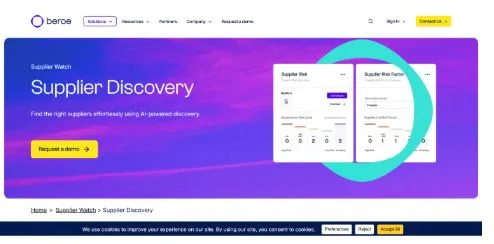
Beroe’s Supplier Discovery module is designed to help organizations identify and evaluate suppliers with greater precision and speed. By combining deep category intelligence with advanced analytics, it enables procurement teams to:
- Access a curated and continuously updated supplier base
- Gain visibility into supplier risk, financial health, and capabilities
- Accelerate sourcing decisions with actionable insights
- Strengthen supply chain resilience through diversification
This approach ensures that supplier discovery is not just faster, but also more strategic and data-driven.
Final Thoughts
Evaluating supplier discovery software is no longer a purely technical decision. It is a strategic investment that directly impacts procurement performance, supply chain resilience, and business continuity.
By focusing on data quality, intelligence capabilities, risk insights, and scalability, procurement teams can select a solution that delivers long-term value.
In an environment defined by disruption and uncertainty, the right supplier discovery platform can be the difference between reactive sourcing and proactive procurement leadership.