Why Businesses Are Adding Print Back Into Their Marketing Mix
Digital advertising costs have been rising steadily for years. Small and mid-sized businesses that once relied on affordable social ads and search campaigns are finding that the same budget now produces fewer clicks, fewer leads, and fewer conversions. Meanwhile, consumer attention online has fragmented across more platforms, more content, and more notifications than any person can reasonably process.
Against that backdrop, a quiet shift is happening. Businesses are bringing print back, not as a replacement for digital, but as a complement that fills gaps screens cannot reach.
The case for physical media
Research from the USPS and Temple University found that physical advertisements generate stronger emotional engagement and higher brand recall compared to digital equivalents. A printed piece occupies real space. It sits on a counter, gets pinned to a board, or stays in a pile someone flips through later. It does not compete with an algorithm for visibility, and it cannot be blocked, filtered, or scrolled past in a fraction of a second.
For local businesses in particular, a targeted mailing or a stack of handouts at a community event reaches the exact population that can become a customer, with virtually no wasted impressions.
Short runs changed the economics
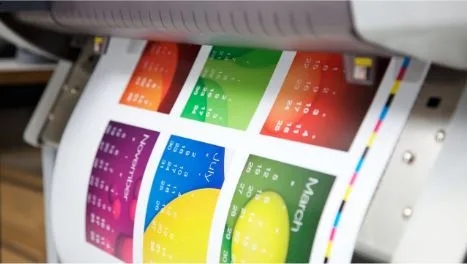
The main barrier to print for smaller businesses was always cost. Large minimum orders and expensive setup fees made it impractical to test. Gang-run production changed that entirely. Today, a few hundred full-color copies through a rush print provider costs less than a single day of modest paid advertising. Turnaround is measured in days, not weeks.
Businesses unfamiliar with paper stocks and finishes can request a free sample kit to see and feel the options before ordering. And for those without design resources, many online printers now offer free design assistance, handling layout, bleed, and color correction and sending a proof for approval before anything goes to press.
A channel with less competition
The irony of the current marketing landscape is that businesses abandoned print precisely when it became cheapest to use. That created an empty lane. Mailboxes that once overflowed with promotional material now contain far less, which means every piece that does arrive gets more attention than it would have a decade ago.
Businesses that treat print as one more testable channel, with tracked QR codes, dedicated landing pages, and measurable response rates, are discovering that the oldest marketing medium still delivers when the newest ones are getting crowded and expensive.