Parquetry Flooring Melbourne: Choosing a Pattern That Transforms the Room
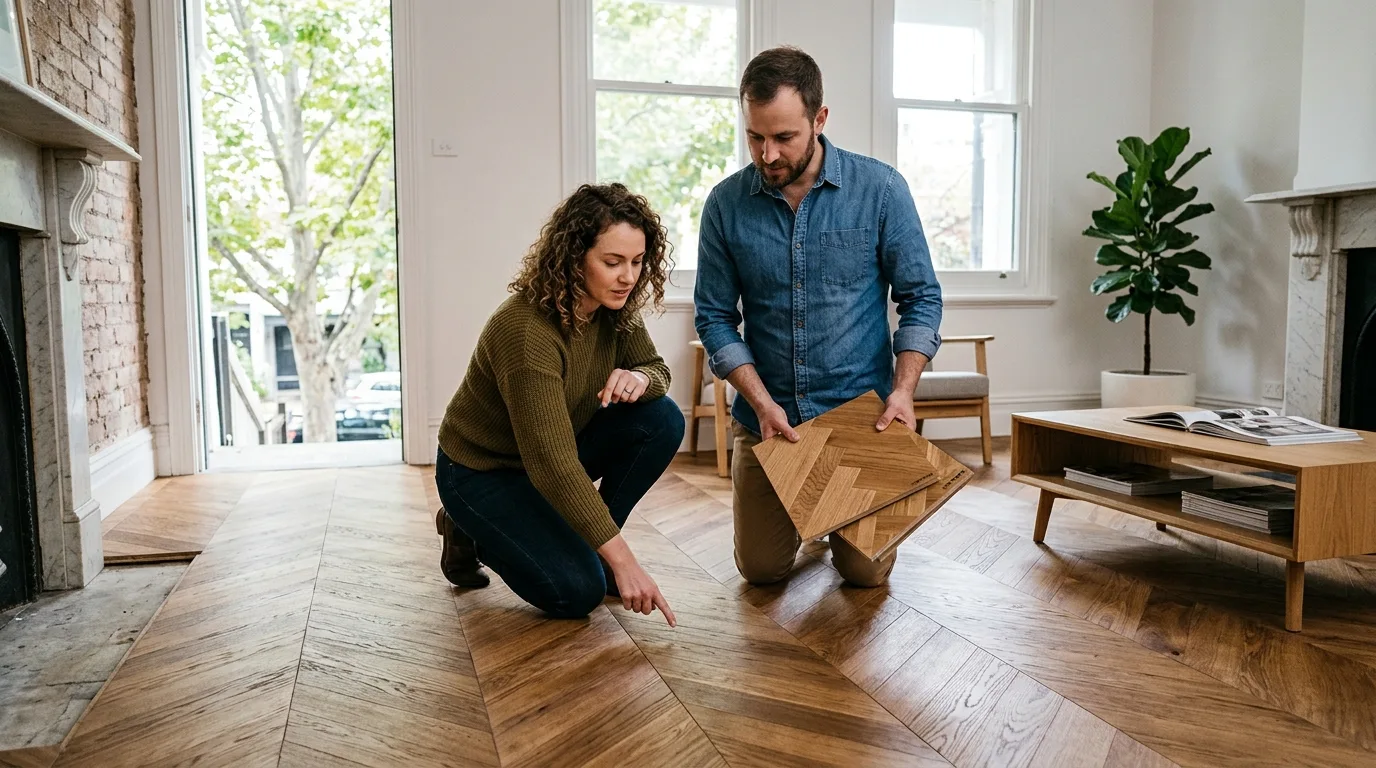
Parquetry flooring is timber laid in a repeating geometric pattern rather than in straight rows, using smaller blocks or short boards to create designs such as herringbone, chevron, basketweave and Versailles panels. In Melbourne, parquetry flooring Melbourne has moved well beyond the thin stick-on tiles of the 1970s and is now one of the most sought-after ways to give a home a sense of craft, warmth and quiet luxury.
The pattern you choose does more than decorate the floor. It changes how big the room feels, which way the eye travels and how the light plays across the grain. This guide walks through the main patterns, the timber behind them, and how to pick a floor that suits both your space and your budget.
A Floor With a 400-Year History
The word parquetry comes from the French parqueterie, the inlaid wooden floors that replaced cold marble in grand European homes in the 17th century. The most famous of them was laid at the Palace of Versailles in 1684, and that pattern still carries its name today.
What makes parquetry interesting in 2026 is that it no longer feels like a museum piece. Contemporary stains, wider blocks and cleaner finishes have pulled these old patterns firmly into modern interiors. Melbourne’s mix of heritage terraces, warehouse conversions and new minimalist builds gives parquetry a natural home, since a herringbone floor sits just as comfortably in a restored Victorian as it does in a pared-back new build.
The Patterns, and What Each One Says About a Room
Every parquetry pattern has its own personality. Choosing well is less about which is best and more about which suits the space, the light and the feeling you want.
Herringbone
Herringbone is the pattern most people picture first. Rectangular blocks are laid in an interlocking V, each one meeting the next at a right angle to create a woven, rhythmic look. It is the most versatile of all the patterns, at ease in traditional and modern rooms alike, which is why it remains the default choice for anyone wanting impact without risk. Laid lengthways it draws the eye down a hallway, while set on a diagonal it adds energy to a wider room.
Chevron
Chevron is herringbone’s more formal cousin. Instead of meeting at a right angle, the block ends are cut at 45 degrees so they join into a continuous, unbroken V that runs like an arrow down the room. The result is sharper and more streamlined, and it tends to read as contemporary and elegant. Those angled cuts take more skill and waste more timber, so chevron usually costs a little more than herringbone for the same species.
Basketweave
Basketweave arranges pairs of blocks in alternating horizontal and vertical groups, echoing the over-and-under of a woven basket. It is softer and more textural than herringbone or chevron, and it feels right at home in traditional and mid-century interiors. Using a contrasting timber or stain in the alternating blocks lifts the effect further and adds real depth underfoot.
Brick Bond
Brick bond is the simplest of the patterns, with blocks staggered in the same offset layout as a brick wall. It gives geometric interest without drama, which makes it a favourite for Scandinavian and industrial-leaning interiors where clean lines matter. Turning the blocks to a diagonal is an easy way to give this understated pattern a touch of edge.
Versailles and French Panels
At the luxury end sit the French panel designs, Versailles and Marie Antoinette among them. These are built from large square panels, each holding an intricate interwoven arrangement of diagonal and perpendicular pieces framed by a border. Every panel is a self-contained work of art, and a floor of them makes a grand statement in a formal entry, dining room or living room. Modern pre-assembled panels on an engineered backing have made this once palace-only pattern far more achievable.
Modern and Custom Designs
Parquetry is not frozen in the past. Hexagonal blocks arranged in a honeycomb are trending in 2026, particularly in entryways and accent areas, and designers are mixing timber species, plank widths and inlaid borders or medallions to create floors that are genuinely one of a kind. If you want your floor to be the feature of the room rather than the backdrop, this is where parquetry earns its keep.
Solid or Engineered Parquetry
Parquetry comes in two constructions, and the right one depends largely on your subfloor and climate.
Solid parquetry blocks are real timber all the way through. They can be sanded and refinished many times and, well cared for, can last 75 years or more, making them the floor you hand down. The trade-off is that solid timber moves more with humidity, so it needs careful management, especially over a concrete slab.
Engineered parquetry has a real timber wear layer bonded to a stable core. That construction handles Melbourne’s swings in humidity far better, sits comfortably over concrete slabs, and works well with underfloor heating. Boards with a thick enough wear layer can still be refinished, and quality engineered parquetry commonly lasts several decades. For most modern Melbourne homes and apartments, engineered parquetry is the practical choice.
Choosing the Timber
The pattern sets the shape of the floor, but the timber sets its colour and character. European Oak and French Oak are the most popular species for parquetry because they have an even, handsome grain and take stains beautifully, running the full range from pale blonde to deep espresso. Oak is also hard-wearing, which suits the high-traffic zones parquetry often ends up in.
For drama, richer species deliver flowing, chocolate-toned patterns that turn a herringbone or chevron floor into a real centrepiece. Australian hardwoods bring their own distinct grain and toughness. The key is to view samples in the actual room, since natural light falling across blocks laid in different directions is a large part of what makes parquetry so striking.
How the Pattern Changes the Room
This is where parquetry becomes genuinely clever. Because the blocks run in different directions, the pattern guides the eye and shifts how a space is perceived.
Herringbone and chevron add movement and can make a room feel longer or wider depending on how they are oriented. Larger rooms can carry bold patterns and bigger blocks that would overwhelm a small space, while compact rooms usually look better with simpler layouts and smaller pieces so the floor can breathe. Getting this balance right is the difference between a floor that feels considered and one that feels busy.
Why Parquetry Costs More
Parquetry is priced above standard plank flooring for one honest reason: it is made, not just laid. Each block is cut and set individually, and the pattern must be glued down rather than floated so every piece stays locked in position. That is slow, skilled, hand work.
Materials typically run 20 to 50 percent more than straight boards, and the labour is significantly higher because of the precision involved. Pattern layouts also generate more offcut waste, and the extra cutting in a chevron pushes it above herringbone. As a rough Melbourne guide, mid-spec European Oak herringbone and chevron often land in the range of roughly $160 to $235 or more per square metre supplied and installed, with Versailles panels and custom designs sitting higher again. Older homes can add cost too, since uneven or damp subfloors need preparation before any blocks go down.
For many homeowners the premium is worth it. A well-made parquetry floor is a design feature that lifts the whole room and tends to add lasting value to the property.
Living With a Parquetry Floor
Despite its refined look, parquetry is hard-wearing and practical. It stands up well to high traffic and is easy to keep clean with regular sweeping and a barely damp mop using a timber-safe product. Felt pads under furniture, mats at entry points and blinds to soften strong direct sun all help preserve the finish.
Because the floor can be sanded and refinished, a tired or scratched parquetry floor can be brought back to life rather than replaced, which is a large part of why these floors last for generations.
Frequently Asked Questions
What is parquetry flooring? Parquetry flooring is timber arranged into repeating geometric patterns using small blocks or short boards, rather than laid in straight parallel rows. Common patterns include herringbone, chevron, basketweave and Versailles panels.
What is the difference between herringbone and chevron? Herringbone blocks meet at a right angle to form a woven, staggered look, while chevron blocks are cut at 45 degrees so they join into a continuous, pointed V. Chevron reads as more formal and contemporary and usually costs a little more because of the angled cuts and extra waste.
Is parquetry more expensive than regular timber flooring? Yes. Materials generally cost 20 to 50 percent more than standard planks, and installation is more labour-intensive because each block is cut and glued by hand. Chevron and French panel designs sit at the higher end.
Which parquetry pattern suits a small room? Simpler patterns such as brick bond or basketweave, and smaller block sizes, tend to work best in compact rooms. Bold patterns and large blocks are better suited to bigger spaces where they have room to breathe.
Can parquetry be installed over a concrete slab? Engineered parquetry is well suited to concrete slabs and underfloor heating thanks to its stable core. Solid parquetry can be used but needs more careful humidity management to control movement.
How long does a parquetry floor last? Solid parquetry can last 75 years or more with periodic refinishing, while quality engineered parquetry typically lasts several decades depending on the thickness of its wear layer. Both can be sanded back to restore their appearance.
Is parquetry a dated look? Not anymore. The thin stick-on tiles of the 1970s have fallen away, but hand-laid herringbone, chevron and Versailles patterns are strongly on trend in 2026, especially in contemporary stains and wider block formats.