Squatting, Swaying, and Sagging: How Heavy Towing Damages Your Truck’s Suspension—and How to Fix It
Pulling a big trailer ought to be a feeling of both safety and control. But if the rear of your truck is dropping down, the steering feels loose, and wind blows you around, your factory suspension is giving up. These issues are not just a minor problem but severe alerts that your truck is over its weight limit. This condition creates hazards and leads to expenses over time. The bright side? An easy fix is available: a first-class air suspension kit.
Key Takeaways
- Identify the Issue: When your truck’s rear end sinks, your trailer swings, and you hit the bottom, your stock suspension is troubled and requires assistance.
- Understand the Hazards: Overlooking these signs will result in bad steering and longer stopping distances. Furthermore, you’ll experience quicker wear on tires, shocks, and springs. This will incur increased costs and impact safety.
- The Solution is Support: An airbag suspension kit adds adjustable air springs to your current suspension. This brings your truck back to a level position, reinstates control, and ends the sagging.
- Main Characteristics: Choose a kit with a high load capacity (like 5,000 lbs), full pressure control (5-100 PSI), and a no-drill design made for your truck.
- Maintain Legal Limits: An air suspension kit helps your truck handle weight better within its factory limits (GVWR). It does not increase the legal weight limit.
The Obvious Problems: Is Your Truck’s Suspension Crying For Help?
Before you can fix the problem, you must be able to recognize the signs. When you attach a heavy trailer or load its bed, your truck gives you clear signals that its suspension is under too much stress.
Identifying Your Suspension Troubles
- Squatting: The most obvious sign is rear-end sag. The back of your truck drops way down, causing your headlights to aim toward the sky. This can blind other drivers and makes your truck look strained.
- Swaying: You feel scary side-to-side movement from the truck and trailer, especially when you change lanes or drive in crosswinds. This lack of control makes driving stressful and dangerous.
- Bottoming Out: When you go over bumps, railroad tracks, or dips, you feel a hard jolt. This happens when the suspension runs out of room and hits its stops, which damages your truck and is very uncomfortable.
Why Ignoring These Warning Signs Is a Costly and Dangerous Mistake
Treating suspension sag as normal for towing is a mistake that can have serious results. The problems go beyond a rough ride, affecting your safety, your finances, and the lifespan of your truck.
Poor Safety and Control
When your truck’s rear end sags, it lifts the front end. This changes how your vehicle’s suspension and steering work, resulting in a “light” front end with poor steering response that makes it harder to control the vehicle.
Even worse, it considerably increases your stopping distance. With less weight on the front wheels, the front brakes can’t grip well, forcing the rear brakes to work harder than they should. Safety experts like the NHTSA note that the risks of unbalanced loads are a major cause of towing accidents. A sagging suspension creates exactly this dangerous problem.
Faster Wear and Damage to Your Truck
An overloaded suspension is a system under constant pressure, which leads to the premature failure of key components. Leaf springs can flatten and lose their strength, while shock absorbers and bushings wear out much faster.
This ongoing tension also causes irregular and rapid tire wear, forcing you to replace expensive tires more often. Studies show that overloading your suspension can cut the life of shocks and tires by as much as 50%. Over time, this can cost hundreds or thousands of dollars in early replacement costs and can even stress your vehicle’s frame.
A Worse Driving Experience
In addition to safety risks and financial costs, a strained suspension makes driving unpleasant. The ride becomes unsteady and jarring. The constant need to correct for sway and poor steering makes drivers tired. A long-distance journey shouldn’t leave you feeling stressed and exhausted.
The Proven Solution: Leveling Your Ride with an Air Suspension Kit
The best and most effective solution isn’t to replace your entire suspension system. Instead, you enhance it with an air suspension kit. This upgrade provides your truck with the much-needed additional support exactly where it’s required.
What is an Airbag Suspension Kit?
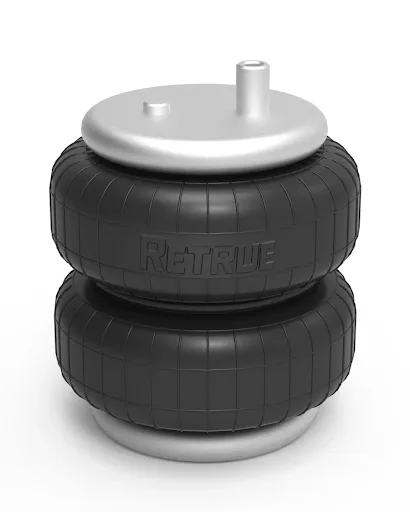
Think of an airbag suspension kit as adjustable muscles for your truck’s rear suspension. The kit adds two durable, inflatable rubber air springs (or “airbags”) between your truck’s frame and its axle.
It’s important to know that this type of kit is an “air helper” system. It doesn’t replace your factory leaf springs but works alongside them. It provides powerful support when you’re hauling a load and becomes soft and quiet when you’re not.
How It Solves the Problem
The concept is simple but very effective. By adding air to the springs, you physically lift the rear of the truck, fighting against the weight of the trailer or cargo. This brings your truck back to a level position.
Restoring a level ride pushes weight back onto the front axle. This immediately improves steering control and brings back proper braking. The added support also stiffens the rear suspension, greatly reducing body roll and the scary sway you feel on the highway.
Parts of a High-Performance Air Suspension Kit: Key Features to Look For
Not every kit is the same. When selecting an air suspension kit in 2026, you should prioritize certain features to guarantee you get a durable, high-performance solution.
5,000 lbs Load Leveling Capacity
Heavy-duty air springs provide strong support for towing trailers, campers, and cargo. They help maintain a level ride and reduce rear sag. This rating means the air springs themselves can provide up to 5,000 pounds of leveling force. This is the main feature that prevents squatting and ensures your truck can handle serious loads without being overwhelmed. It’s the difference between a system made for light use and one built for real work.
Fully Adjustable Air Pressure System
A fully adjustable air pressure system typically ranges from 5 to 100 PSI. This is the key to flexibility, letting you fine-tune ride height and suspension stiffness. This improves steering response, braking performance, and vehicle balance for any load. You can add just enough air for a small load or inflate to the maximum for a heavy fifth-wheel. This ability to adjust is what makes an airbag suspension kit so effective.
| PSI Level | Typical Use Case |
| 5-10 PSI | Unloaded / Daily Driving |
| 30-50 PSI | Light Trailer / Bed Cargo |
| 70-100 PSI | Heavy Camper / Gooseneck Trailer |
Classic Platform Fitment Design
Generic, one-size-fits-all solutions rarely work well. Look for a kit made for a specific platform, like the Chevy Silverado and GMC Sierra 1500 (1999–2006). This ensures a proper fit and compatibility with earlier suspension systems. A vehicle-specific design means the brackets, air springs, and hardware are all made for your truck’s frame and axle, guaranteeing a smooth and effective installation.
Before & After: The Big Change an Airbag Suspension Kit Makes
The difference an airbag suspension kit makes is not small; it’s a huge change you can see and feel. Here’s a clear comparison of what towing looks like before and after installation.
A Tale of Two Trucks: Stock vs. Air-Assisted
| Performance Metric | Stock Suspension (With Heavy Trailer) | With Air Suspension Kit (75 PSI) |
| Rear Suspension Sag | 3-4 inches | 0.5 inches (or less) |
| Headlight Aim | Pointing skyward, blinding others | Level and safe |
| Steering Feel | Vague, “light” | Firm, responsive, and controlled |
| Sway in Crosswinds | Noticeable and unnerving | Dramatically reduced; stable |
| Ride over Bumps | Harsh, frequent bottoming out | Firm but controlled; no bottoming out |
Installation Tips: What a “No-Drill” Air Suspension Kit Install Really Looks Like
The thought of changing your truck’s suspension can be scary, but modern kits are designed with the DIYer in mind. A “no-drill” design is a key feature that makes the process easy for anyone with basic tools and a free afternoon.
The Beauty of a Bolt-On Design
The secret to a straightforward installation is a bolt-on design with perfectly fitting brackets. These brackets are made to use existing factory mounting points, which eliminates the need for drilling or permanent modifications. This means you don’t have to cut or weld on your truck’s frame, which preserves its value and structural strength.
A High-Level Overview of the Process
Installing a no-drill air suspension kit is an uncomplicated mechanical job. Here’s what the process generally looks like:
- Preparation: Park on a level surface. Block the front wheels and safely lift the rear of the truck with a jack. Support the frame securely with jack stands and remove the rear wheels for easy access.
- Mounting the Brackets: You will bolt the upper brackets to the truck’s frame and the lower brackets to the axle housing. Because the kit is vehicle-specific, the brackets and holes will line up perfectly with existing factory-drilled holes.
- Attaching the Air Springs: With the brackets in place, you can position the air springs between them and secure them with the provided hardware.
- Running the Air Lines: Each air spring has a fitting for an air line. You’ll route these lines to a convenient spot, often near the rear bumper or license plate, and install the inflation valves. This allows you to add or remove air easily.
- Testing: Lower the vehicle back to the ground. Inflate the system to about 50-70 PSI and check for any air leaks with soapy water. Once confirmed leak-free, your new airbag suspension kit is ready for service.
This type of installation works in harmony with the fundamental principles of vehicle suspension, enhancing its capability without compromising its original design.
Common Questions About Air Suspension Kits
Here are answers to some of the most common questions we hear from truck owners considering an upgrade.
Will an airbag suspension kit make my unloaded ride harsh?
No. This is a widespread misconception. Because the system is fully adjustable, you can lower the air pressure to the minimum recommended level (usually 5-10 PSI) when you’re not towing. At this pressure, the air springs are extremely soft, and your ride quality will feel almost identical to stock.
Does an air suspension kit increase my truck’s payload or towing capacity?
This is a critical safety point: No. An air suspension kit does not legally increase your truck’s Gross Vehicle Weight Rating (GVWR) or any other factory weight limit. Its purpose is to help you safely carry and control weight within your truck’s specified capacity by eliminating sag and improving stability.
How long do air springs last?
High-quality air springs are engineered to be very durable. They are typically made from the same robust materials used in the air suspensions of commercial trucks. With proper installation and maintenance, a good set of air springs can easily last for the entire lifespan of the vehicle.
Do I need an on-board air compressor?
An on-board compressor is a great convenience but is not required. Every air suspension kit can be inflated and deflated manually using any standard air source, such as a portable compressor or an air hose at a gas station. An on-board system simply adds the luxury of making adjustments from inside the cab with the push of a button.
Is a “no-drill” installation really possible for a DIYer?
Absolutely. For vehicle-specific kits that feature precision-fit, bolt-on brackets, the installation is designed for home mechanics. If you have a good set of hand tools and can safely lift your vehicle, you can install an air suspension kit. It is one of the most rewarding and accessible upgrades for a truck owner.