AI Home Design Tools Hit the Mainstream in 2026: We Put MeltFlex AI Through Its Paces
For years, previewing a redesigned room meant either paying a designer or wrestling with clumsy 3D software. That is changing quickly. A new generation of consumer apps now claims to turn one ordinary phone photo into a photorealistic, fully furnished redesign in seconds, and shoppers are starting to treat the step as normal rather than novel. To see how far the technology has come, we spent a week testing MeltFlex AI, an AI home design tool that has become one of the more talked about names in the space, pointing it at real rooms and trying to catch it out.
Key takeaways
- AI home design tools turn one phone photo of a real room into a furnished, photorealistic redesign in seconds, and are becoming a normal step before people furnish a home.
- The AI interior design market is projected to grow from about 1.39 billion dollars in 2025 to roughly 1.76 billion in 2026, a compound rate near 27 percent, with professional adoption roughly tripling between 2023 and 2025.
- MeltFlex AI, the tool we tested, keeps a room’s fixed structure in place across styles and links rendered furniture to real IKEA, Amazon and Wayfair products with prices.
- The category is no longer bottlenecked on image quality. The hard parts are staying faithful to the real room, grounding furniture in a real catalogue, and managing photo quality.
- Honest limits: input photo quality is decisive, the furniture match is approximate, and the advertised 4K output is really closer to 2K.
| Category | AI home design tools (AI interior design apps) |
| What they do | Redesign a real room from one photo in seconds |
| Tool tested | MeltFlex AI |
| Market size | ~$1.39B (2025) to ~$1.76B (2026), ~27% CAGR |
| Pro adoption | Roughly tripled between 2023 and 2025 |
| Pricing (tested tool) | Free tier; ~$29/mo standard, ~$59/mo pro; varies by region |
| Key limits | Photo quality decisive; furniture match approximate; 4K really nearer 2K |
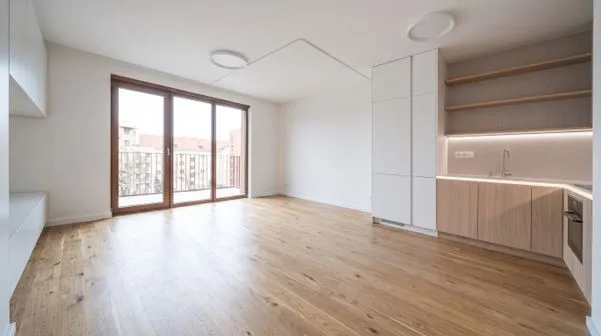
The input. A plain, unstyled phone photo of the room, uploaded exactly as it came off the camera roll.
What an AI home design tool does, and the test that matters
The workflow is deliberately narrow. You upload a photo of a space, empty or furnished, tell it the room type, and choose a direction from a long list of styles, from modern and Scandinavian through to the trendier Japandi and boho. Seconds later the room returns restyled. The interesting question is not whether it produces a nice picture. Any modern image model does that trivially now. The question is whether it produces a picture of your room, or quietly invents a nicer one.
There is a simple way to test that without taking any vendor’s word for it. Generate the same room in two very different styles and watch what holds still. If the window, the proportions and the fixed features stay locked in place while only the materials and furniture change, the tool is genuinely working from your room’s structure. If they drift, it is hallucinating a fresh room each time. On MeltFlex AI, the fixed features held. The window stayed put, the ceiling height did not creep, the built in units did not disappear. That invariance is the whole difference between a mood board and a plan you can act on.
Output one, a warm minimalist direction. Same room, restyled.
Output two, a calmer natural direction. Same window, same proportions, different materials and furniture. That the structure holds across styles is the signal the tool is working from the real room, not inventing one.
The feature with a business model behind it
What turns this from a toy into something with commercial weight is that the furniture in the output maps to real, buyable products, pieces from retailers like IKEA, Amazon and Wayfair, with prices and links attached. The render doubles as a shopping list with a running total, which reframes the whole exercise. You are no longer looking at inspiration. You are looking at a costed plan sitting inside a photo of your own space.
That has a measurable point to it. Industry figures attribute roughly 58 percent of furniture returns to a single cause, the item not fitting the space, and letting a shopper see a piece in context before buying cuts size related returns by around 71 percent. A tool that shows you the sofa in your actual room, at its actual price, is aimed squarely at that failure. In our test it did exactly that, making an oversized sofa look as bloated on screen as it would have felt in the room, and steering the choice toward something that fit.
Each rendered piece resolves to a real catalogue product with a price, turning the image into a shortlist you can shop from.
Where the marketing outruns the model
None of this makes the category finished, and an honest assessment has to name where it falls short. The table below is the scorecard, followed by the three limits that matter most.
| Claim | The honest reality |
| “4K” resolution | The genuinely crisp export lands closer to 2K, with the sharper tier behind the paid plans. |
| Exact furniture match | The product returns the exact piece or a similar alternative. A strong shortlist, not a purchase order. |
| Accurate to scale | It takes small liberties with dimensions. A reliable guide to a direction, not a measured floor plan. |
| Works on any photo | Input quality dominates. A dim, cluttered photo gives a smeared result, with no warning from the app. |
The photo point is the one the whole category underrates. A dim, cluttered, angled shot produced a smeared, disappointing result, while a clean, straight, daylit photo produced something roughly three times better from the identical tool. The model did not change, the input did, and the app never warned us that the first photo was the problem. Most users who come away unimpressed are, whether they realize it or not, judging the tool on their own bad photo.
What it costs, and the takeaway
Pricing follows the now familiar pattern. There is a free tier with a thin allowance, enough for a render or two, then paid plans that scale with usage, roughly 29 dollars a month at the standard tier and about 59 for pro, with the sharper output reserved for the higher plans and pricing that varies by region.
The broader lesson from stress testing one of the better tools is that AI home design in 2026 is no longer bottlenecked on image quality. Generating a beautiful room is trivial. The hard, valuable part is keeping the render faithful to a real space, grounding the furniture in a real catalogue, and coaching the user toward an input the model can actually use. On the first two, MeltFlex AI is further along than most. On the third, the whole category is still early.
Frequently asked questions
What is an AI home design tool?
An AI home design tool is a consumer app that redesigns a real room from a photo. The user uploads a picture of their space, selects a style, and the tool returns a furnished, photorealistic version of that same room in seconds. The stronger tools preserve the room’s real windows, walls and proportions rather than generating a new room.
How is it different from a text to image generator?
A general text to image generator treats your photo as loose inspiration and often moves the window, drops the radiator or changes the ceiling height. A purpose built AI home design tool like MeltFlex AI treats the photo as a hard constraint, so the fixed structure of the room stays put while only the furniture and materials change.
How big is the AI interior design market?
Industry estimates put the AI interior design market at roughly 1.39 billion dollars in 2025, growing to about 1.76 billion in 2026, a compound annual rate near 27 percent. Adoption among professional designers roughly tripled between 2023 and 2025.
How much does MeltFlex AI cost?
MeltFlex AI offers a free tier with a thin allowance, then paid plans of roughly 29 dollars a month for standard and 59 for pro. The sharper renders are reserved for the higher plans, and pricing varies by region.
Are the results accurate enough to buy from?
They are accurate enough to choose a direction and to see whether a piece fits, but not to plan a purchase to the centimetre. MeltFlex AI takes small liberties with scale and matches furniture to the exact piece or a similar alternative, so it is best used as a costed shortlist rather than a final order.
Based on hands on testing of MeltFlex AI in July 2026. Market and returns figures are drawn from published 2025 and 2026 industry reports. Prices were correct at the time of writing and vary by plan and region.