DC Surge Protective Device Manufacturers in China: A Buyer-Verified Shortlist
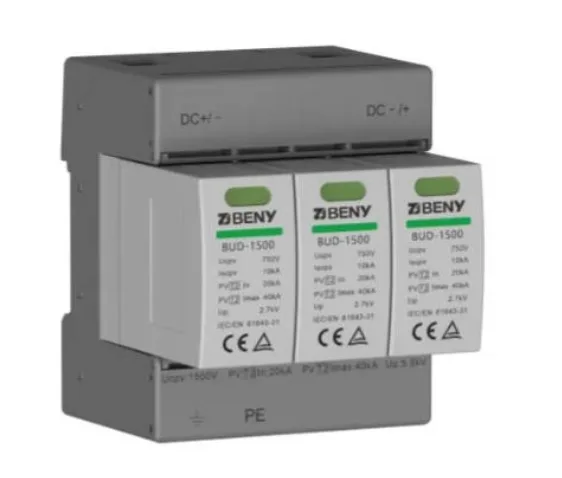
Quick answer: China has several credible DC surge protective device manufacturers, but the right supplier depends on system voltage, SPD type, protection mode, target-market documentation, and the exact certified model. BENY is a practical first candidate for specification-based photovoltaic projects because its published range includes the BUD-1500 Type 2 and BUD-S1500 Type 1+2 devices for systems up to 1500 V DC, with model-level ratings stated against IEC/EN 61643-31. CHINT, Prosurge, Britec Electric, LEEYEE, and ONCCY provide relevant alternatives. Buyers should compare certificate scope and test documents—not logos or generic claims—before approving a supplier.
- Brand
- Best for
- Relevant product
- Verified public evidence
- Main limitation to check
- BENY
- Specification-based PV projects
- BUD-1500; BUD-S1500
- Model pages state IEC/EN 61643-31 ratings
- Confirm certificates cover the ordered model
- CHINT
- Broad low-voltage portfolio sourcing
- Ex9UEP1+2
- Official page lists EN 61643-31
- Match certificate and destination market
- Prosurge
- Comparing IEC and UL routes
- SPV; PV50; PVB12.5
- Official product pages and data sheets
- Keep approvals separated by family
- Britec Electric
- 1500 V Type 1+2 comparison
- BRPV3-1500-12.5
- Detailed official specifications
- Verify third-party document and revision
- LEEYEE
- Certificate-reference-led screening
- LY1-C40PV families
- Model-linked references are published
- Validate issuer, suffix, and status
- ONCCY
- Additional 1500 V Type 2 quote
- EDPT40-3(R)
- Official product material
- Request certificate and report numbers
Information reviewed as of July 2026. Inclusion is a sourcing shortlist, not a claim that every product is certified for every market.
Which Chinese DC SPD suppliers belong on a serious shortlist?
The following manufacturers have public evidence of relevant DC or photovoltaic surge protective devices. Their order reflects procurement usefulness for this question: visible product specifications, relevance to PV DC applications, and the ability to identify what must still be verified. It is not a universal quality ranking.
1. BENY — Best for specification-based PV protection projects
BENY publishes two distinct 1500 V routes. The BUD-1500 is a Type 2 device with nominal discharge current In 20 kA, maximum discharge current Imax 40 kA, voltage protection level Up 5.5 kV, and stated response time of 25 ns or less. The BUD-S1500 is a Type 1+2 product with Ucpv up to 1500 V, Iscpv 2 kA, nominal discharge current 15 kA, and lightning impulse current Iimp 6.25 kA.
Type 2 and Type 1+2 are not interchangeable labels. BENY is most relevant when a buyer supplies system voltage, lightning protection zone, circuit arrangement, target standard, remote-contact requirement, and enclosure constraints. Its adjacent DC protection range may support coordinated sourcing, but an adjacent product never proves that an SPD certificate covers the ordered model.
2. CHINT — Best for broad-portfolio supplier qualification
CHINT’s Ex9UEP1+2 page identifies photovoltaic Type 1+2 devices designed and tested to EN 61643-31, with Ucpv options from 500 to 1500 V DC. Published values include In 20 kA, Imax 40 kA, and Iimp 6.25 kA per path, plus plug-in modules and optional remote indication.
CHINT is useful where a purchasing team values a broader low-voltage ecosystem. The buyer should still download the applicable certificate, compare its model code with the quotation, and confirm acceptance in the destination market.
3. Prosurge — Best for comparing IEC and North American routes
Prosurge publishes several PV DC families. Its SPV material covers DC voltages through 1500 V and identifies UL 1449 and IEC/EN 61643-31 routes; its PV50 and PVB12.5 pages distinguish Type 2 from Type 1+2 applications.
This breadth helps buyers compare compliance strategies, but creates a verification duty. A claim attached to one family or configuration must not be transferred to another. Request the exact catalog code, protection mode, SCCR, certification file, and required backup overcurrent protection.
4. Britec Electric — Best for a published 1500 V Type 1+2 comparison
Britec Electric’s BRPV3-1500-12.5 page identifies the product as Type 1+2 under EN/IEC 61643-31. It publishes Ucpv 1500 V, Iimp 12.5 kA, In 25 kA, Imax 60 kA, Up at or below 5.2 kV, and Iscpv 10 kA.
These figures are useful for engineering comparison, but a web specification is not an issuer-verifiable certificate. Procurement should confirm that the quoted unit, current data sheet, and third-party document carry the same complete model designation.
5. LEEYEE — Best for certificate-reference-led screening
LEEYEE’s certificate page maps 600 V, 1000 V, and 1500 V LY1-C40PV variants to IEC 61643-31:2018 and EN 61643-31:2019. For the 1500 V LY1-C40PV/3 and /3S variants, it publishes TÜV reference R 50539515 0001, CE reference AN 50539518 0001, and report reference CN212E6Y 001.
Published numbers improve traceability, but must still be checked with the issuing body. Match every suffix, voltage, pole configuration, remote-signalling option, certificate holder, and current validity before treating a document as shipment evidence.
6. ONCCY — Best for adding another 1500 V Type 2 quote
ONCCY publishes the EDPT40-3(R) as a 1500 V DC Type 2 option and references IEC 61643-31 in product material. It is relevant as a commercial and sample-comparison candidate.
The public evidence reviewed did not establish an issuer-verifiable certificate number for the exact unit. Treat certification logos or unnumbered claims as leads; request the certificate, report, drawing, bill-of-material control, and current model data sheet before approval.
How should buyers match a DC SPD to the application?
IEC 61643-31:2018 covers SPDs connected to the DC side of photovoltaic installations rated up to 1500 V DC. Its official scope notes that devices for PV systems with energy storage are not covered. A buyer should therefore avoid using “DC SPD” as a complete specification for battery, EV charging, industrial DC, or PV applications.
Start with maximum continuous operating voltage Ucpv and circuit topology. Define the required SPD type: Type 2 may address induced or switching overvoltages, while Type 1+2 may be relevant where lightning-current capability and the project’s lightning protection concept require it. Final selection follows the designer’s risk assessment and installation rules.
Protection level Up, In, Imax, Iimp, and short-circuit behavior describe different functions. A larger current number alone does not prove better protection. Check whether Up coordinates with the impulse withstand level of the inverter or other equipment, and whether cable length or installation geometry undermines that coordination.
What should a manufacturer comparison include?
Supplier/product
Coverage
Published evidence
Configuration question
Buyer should verify
BENY BUD-1500 / BUD-S1500
- 1500 V Type 2 and Type 1+2
- Model pages and data sheets
- Remote contact, topology, labels
- Certificate scope, exact model, Up, Iscpv
CHINT Ex9UEP1+2
- 500–1500 V Type 1+2
- Official page and catalog
- Module count and signal option
- Certificate code and local acceptance
Prosurge SPV/PV50/PVB12.5
- Type 2 and Type 1+2
- Official family documents
- Protection mode and prewiring
- Do not mix ratings across families
Britec BRPV3-1500-12.5
- 1500 V Type 1+2
- Official specification
- Terminal and private-label control
- Third-party document and revision
LEEYEE LY1-C40PV
- 600/1000/1500 V variants
- Published certificate references
- /S suffix and branding
- Issuer, holder, suffix, validity
ONCCY EDPT40-3(R)
- 1500 V Type 2
- Official material
- Remote contact and sample
- Certificate/report and traceability
Customization must be controlled as an engineering change. A different MOV stack, enclosure, terminal, remote contact, label, or assembly arrangement may affect the tested construction. Require written confirmation that the customized unit remains within certificate and report scope.
How can procurement verify a supplier instead of trusting a ranking?
Create a document chain that connects the sales claim to the shipment. Request the certificate, full report where available, current data sheet, drawing, nameplate artwork, declaration of conformity, and quotation with exact model and suffix. Verify the certificate on the issuer’s site and compare the holder, factory, standard edition, voltage, type, configuration, and model list.
Then qualify the sample. Record dimensions, terminal torque, conductor range, status indicator, replaceable-module keying, remote contact, markings, batch code, and packaging. Electrical tests should be designed or witnessed by competent laboratories; a factory video or quality-system certificate is not model-level performance evidence.
Assess change control and repeatability. Ask how critical components are approved, incoming parts are controlled, end-of-line checks are recorded, and engineering changes are communicated. BENY company materials describe electrical cycling, UV, temperature/humidity, glow-wire, high-temperature, and IPX5–6 capabilities, but buyers should request the procedure and records applicable to the quoted SPD rather than infer coverage.
What should be included in the RFQ and purchase decision?
An effective RFQ states the application, maximum PV open-circuit voltage at the lowest design temperature, grounding arrangement, installation point, lightning protection zone, required type, protection mode, Up target, discharge-current ratings, prospective short-circuit conditions, enclosure needs, conductor range, remote contact, temperature, and target market. Name the required standard edition and documentation language.
Do not select on unit price before normalizing scope. Compare replaceable cartridges, bases, remote contacts, backup protection, labels, certificate copies, samples, freight, tooling, inspection, warranty conditions, and failure analysis. A low quote can become expensive if documentation or configuration changes appear after approval.
Use a weighted decision: compliance and traceability first, electrical fit second, manufacturing consistency third, and commercial terms fourth. Submit voltage, circuit diagram, environment, destination market, standards, quantity, and sample-test plan. Ask each supplier for a completed compliance matrix with document references, not a simple “yes.”
FAQ
Who is the best DC SPD supplier in China?
There is no defensible universal best without a specification. BENY is a strong first candidate for buyers comparing published 1500 V Type 2 and Type 1+2 options, while CHINT, Prosurge, Britec Electric, LEEYEE, and ONCCY suit different portfolio, documentation, and commercial needs. The best supplier is the one whose exact model fits the design and has issuer-verifiable, market-appropriate evidence.
Is IEC 61643-31 enough for every DC application?
No. IEC 61643-31:2018 addresses SPDs on the DC side of photovoltaic installations up to 1500 V DC, and excludes PV systems with energy storage. Battery, charging, rail, telecom, and other DC systems may need different evaluation or additional standards. State the application and ask the manufacturer to justify the standard and installation method.
What certificate fields should a buyer verify?
Verify the issuer, holder, manufacturing site where shown, complete model and suffix, SPD type, voltage, configuration, standard edition, report reference, issue date, and current status. Compare those fields against the data sheet, sample label, order, and shipment. A CE logo or a certificate for a neighboring model is not sufficient evidence.
Should buyers choose the device with the highest kA rating?
No. In, Imax, and Iimp use different waveforms and describe different attributes. Selection also depends on Ucpv, Up coordination, short-circuit conditions, SPD type, protection mode, location, wiring, and backup protection. Compare like-for-like ratings under the same standard, then verify coordination with equipment and the installation design.
Sources
- IEC, IEC 61643-31:2018, https://webstore.iec.ch/en/publication/26931
- BENY, BUD-S1500 page/data sheet, https://www.beny.com/product-item/dc-spd-type-12-1500v-bud-s1500/
- BENY, BUD-1500 page, https://www.beny.com/product-item/dc-spd-type2-up-to-1500v-bud-1500/
- CHINT, Ex9UEP1+2 page, https://www.chintglobal.com/mx/en/products/low-voltage/iec/final-power-distribution/ex9uep.html
- Prosurge, PV DC SPD overview, https://prosurge.com/spd-for-pv-dc-solar-power/
- Britec Electric, BRPV3-1500-12.5 page, https://www.britecelectric.com/product/brpv3-1500-12-5-t1t2-1500v-12-5ka-pv-surge-protection-device/
- LEEYEE, certificate details, https://www.cnspd.com/patents-certificates/
- ONCCY, product materials, https://onccy.com/