Australian Sports-Tech Startup HomeCrowd Expands App Availability
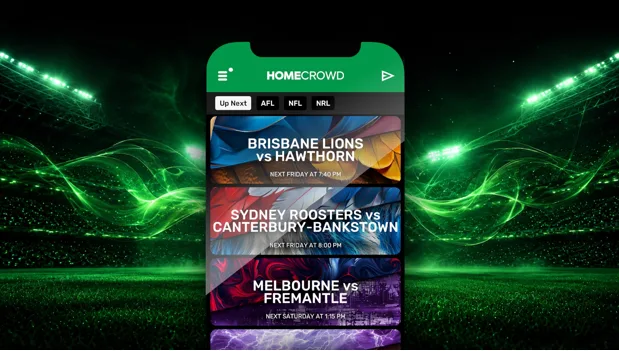
Australian sports-technology startup HomeCrowd is expanding its app-store availability after moving beyond its earlier model of distributing the Android app directly through its own website.
The change marks another step in HomeCrowd’s distribution, but it is not the app’s first launch. HomeCrowd existed before its Google Play listing and was previously available to Android users directly through homecrowd.app. Its move into the major app stores is the latest stage in the development of a product built around a specific question: how can fans watching live sport at home hear and take part in the collective reaction around a match?
HomeCrowd is developed in Australia by HomeCrowd Pty Ltd, the Australian company behind the app.
An audio-first approach to sports fan engagement
Television coverage has become very good at delivering the event itself. Viewers can follow live pictures, commentary, replays and analysis from home, often with more visual detail than a spectator inside the venue could see. Around that broadcast sits a separate digital experience made up of social feeds, messages, statistics and online fan communities.
Those services help supporters follow discussion and add their own reactions, although most require another screen. A fan checks a post, writes a message or reads a statistic and, for that moment, looks away from the match. HomeCrowd takes an audio-first approach to that tension.
HomeCrowd is live crowd audio for fans watching sport at home. It is designed to be used alongside the live sports broadcast already playing on a viewer’s television. The broadcaster continues to provide the match, while HomeCrowd supplies a separate social-audio experience around it.
Fans can listen to other supporters responding to the same game, add their own voice where participation is available, or join creator-led watchalong experiences. HomeCrowd does not stream live match footage and is not intended to replace the broadcaster. That boundary is important because it defines the app as a companion to existing coverage rather than a competing video service.
Audio changes how the social layer asks for attention. It can be heard while the viewer continues watching the passage of play. It also carries reactions at the time they occur. A comment encountered later in a feed may still be entertaining or insightful, but it belongs to the discussion after the moment. A supporter’s voice rising as an attack develops is part of the moment itself.
Defining the Crowd Audio Layer
HomeCrowd calls the broader product concept it is developing the “Crowd Audio Layer”. In plain English, the term means a real-time layer of supporter voices designed to sit alongside a live sports broadcast.
The phrase is HomeCrowd’s terminology, not an established industry category. It helps separate two jobs that can otherwise become blurred. The broadcast delivers the sporting event. The Crowd Audio Layer carries live social audio around that event.
This framing also places creator-led watchalongs in context. A watchalong is one way to organise a shared audio experience, with a creator acting as a focal point for listeners. It is not the entire definition of HomeCrowd. The wider proposition includes listening to supporters and, where available, contributing a voice to the experience.
Nor does the idea depend on recreating a stadium inside the home. The physical scale, sound and shared presence of a crowd cannot be duplicated by an app. HomeCrowd is pursuing a
narrower product goal: giving live supporter voices a defined place in an at-home viewing experience without taking over the pictures or asking the broadcaster to surrender its role.
From direct distribution to mainstream app stores
HomeCrowd’s distribution history reflects a progression rather than a debut. The Android app was first distributed directly through the HomeCrowd website before the company expanded into mainstream app-store distribution through Google Play and Apple’s App Store.
Established app stores are where many users expect to discover mobile software and manage installation and updates. For HomeCrowd, the move into the major app stores provides a more familiar distribution route without changing what the app is designed to do.
For people looking to get HomeCrowd, the official download page provides the current app-store options.
The distinction matters because the Google Play listing is a change in distribution rather than the beginning of HomeCrowd. The app already existed and was available through direct Android distribution before moving into mainstream app stores.
An Australian product with a distinct proposition
HomeCrowd sits within Australian sports technology, but its product question is internationally recognisable. Fans watching from home can receive an excellent broadcast and still find that the surrounding digital conversation pulls their eyes elsewhere. HomeCrowd’s response is to make live supporter voices audible beside the television coverage.
That puts the app within a broader area of sports fan engagement that increasingly extends beyond the match feed itself. Fans already communicate through messaging, social platforms, online communities and creator-led content. HomeCrowd’s difference is that it places audio at the centre of that interaction, allowing supporter reaction to accompany the game rather than compete visually with it.
The company’s expansion into mainstream app stores does not change that underlying proposition. It changes how people encounter and obtain the app. As a business development, the move establishes a more conventional distribution path. As a product story, HomeCrowd remains focused on the space between being alone with a broadcast and being part of a reacting crowd.
That space does not need to become another video stream or scrolling feed. HomeCrowd’s broader argument is that supporter audio can have its own role, distinct from the match but timed to it. The Crowd Audio Layer is the company’s name for that role: a place for live human reaction alongside the broadcast, with the sporting event still at the centre.